


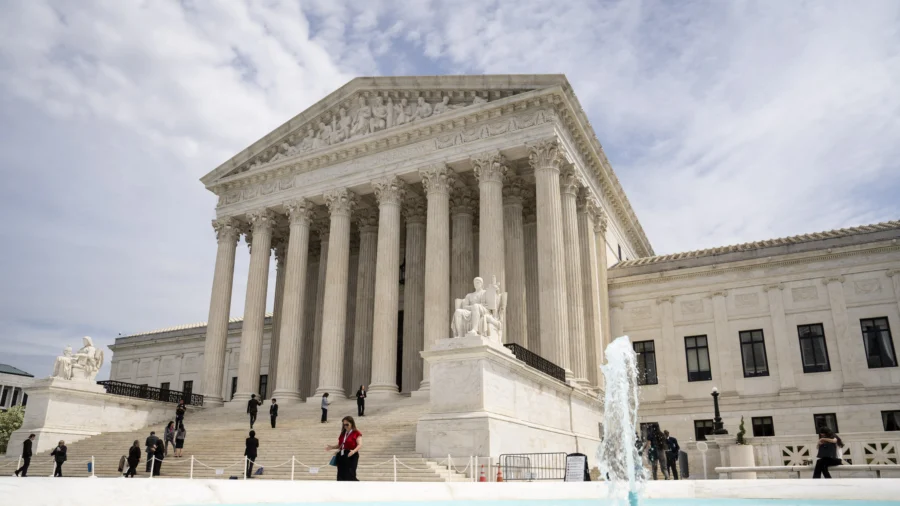
The nation’s highest court issued two major rulings on Thursday, marking significant victories for President Donald Trump's hardline immigration agenda.
SCOTUS Rules on 'Metering' Policy
In a 6-3 ruling, the Supreme Court allowed the administration to revive a policy that turns away certain asylum seekers at the U.S.-Mexico border when crossings are too overburdened to handle additional claims.The court's three liberal justices dissented.
U.S. immigration officials, under the policy, could reject asylum seekers at the border and postpone processing their claims indefinitely. Notably, the rule is separate from a broader asylum restriction implemented by the current administration after Trump returned to office, which is still being challenged in court.
Al Otro Lado, an advocacy organization for immigrants, first took legal action in 2017 to challenge the metering policy. In 2024, the United States Court of Appeals for the Ninth Circuit ruled that federal law requires border officials to inspect asylum seekers who “arrive” at designated ports of entry, even if they have not physically entered the United States. The court found that the metering policy violated that requirement.
SCOTUS Rules on TPS
In a second 6-3 ruling on Thursday, the court backed the administration’s effort to end Temporary Protected Status (TPS) for certain migrants, including many from Haiti and Syria.The ruling strengthens presidential authority over humanitarian immigration programs and removes a significant legal obstacle to the administration's efforts to scale back TPS, a status granted by Homeland Security to eligible nationals of certain countries facing ongoing civil unrest, environmental disasters, and other crises.
The court's three liberal justices also dissented in this case.
Going forward, the ruling could make legal challenges more difficult for TPS holders from any country whose protected status is revoked in the future.
Trump's border czar Tom Homan on Thursday said the ruling was "the right call," adding that TPS has never been "temporary" but should be exactly that.
"Temporary means temporary," Homan told reporters. "When the condition of that country gets better, they need to go home."
Combined with the court's separate asylum ruling, the case marked another major boost for Trump’s immigration agenda.
The Supreme Court is also expected to rule by the end of June on challenges to Trump's order limiting birthright citizenship in another high-profile, controversial case.