


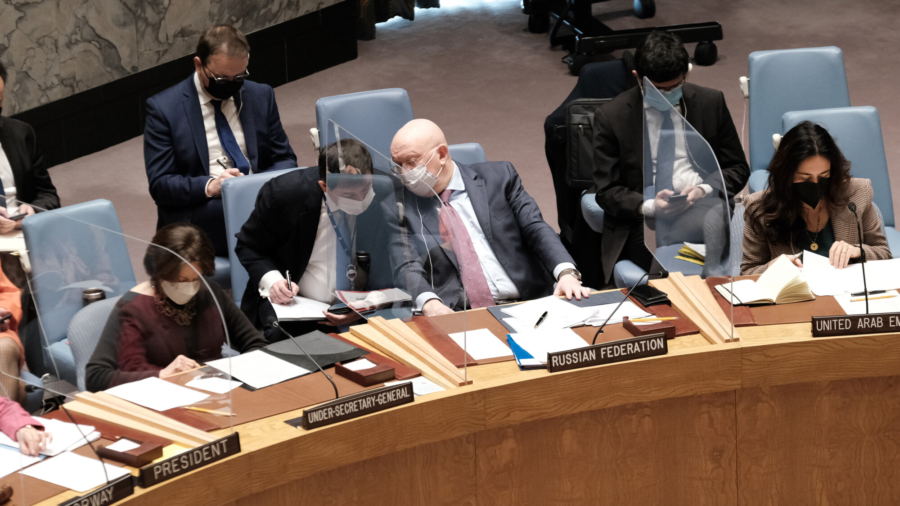
The United Nations Security Council (UNSC) on Monday met publicly at the request of the United States to discuss Russia's military build-up near its border with Ukraine.
"Imagine how uncomfortable you would be if you had 100,000 troops sitting at your border," said Thomas-Greenfield.
"They do not see, in this activity, that we are a threat," the Russian envoy said about Zelensky and Ukraine’s Defense Minister Oleksii Reznikov's comments that stated "there are no grounds to believe" that Moscow is preparing an invasion very soon, adding however that they are "possible and probable in the future."
Thomas-Greenfield dismissed a charge by Nebenzia that says Washington was trying "to whip up hysterics" and use "megaphone diplomacy" by calling the first UNSC meeting on the Ukraine-Russia situation.
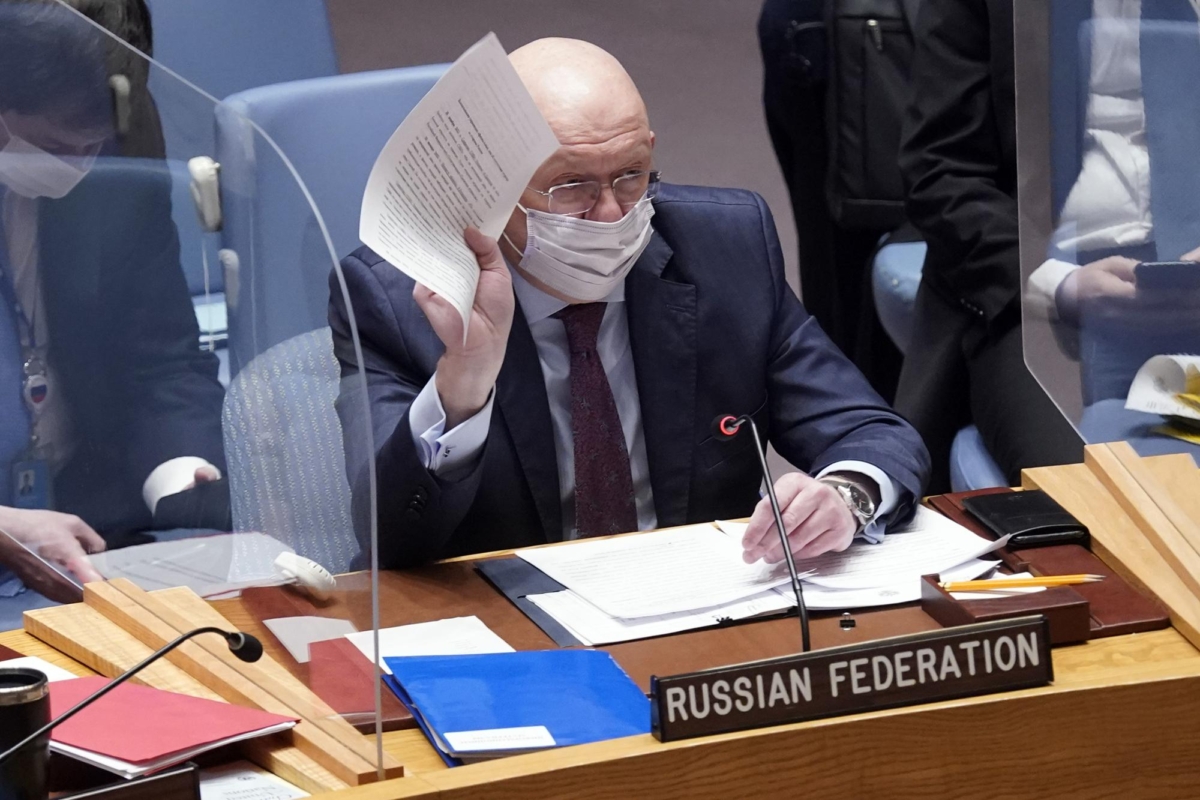
Moscow has previously signaled that it would try and block the UNSC meeting if it gets the support of nine from the 15-member body, but the United States won the UNSC vote on Monday for the Ukraine meeting to continue, with 10 votes in favor and two against. Russia is one of five permanent veto-wielding powers on the council along with the United States, France, the United Kingdom, and China.
Following the vote, U.N. Undersecretary-General for Political Affairs Rosemary DiCarlo went ahead with an open briefing, which was followed by speeches from the 15 council members. Any formal action by the UNSC is extremely unlikely, given Russia is one of the council's five veto powers, which also includes China.
Only China and Russia voted against the public meeting, with China's U.N. ambassador, Chen Xu, saying Beijing requests the council needs "quiet diplomacy" and not "microphone diplomacy."
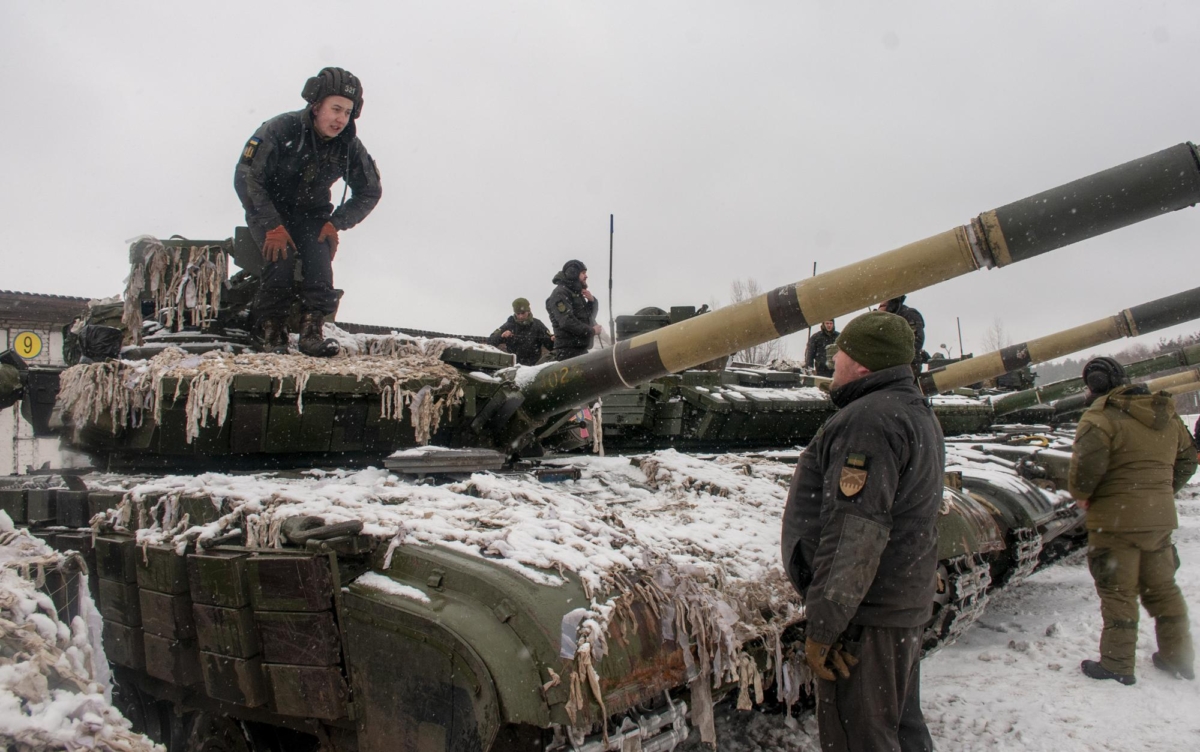
The session kicked off more high-level diplomacy this week, though talks between the United States and Russia have so far failed to ease tensions. Russia has amassed an estimated 100,000 troops near its border with its southern neighbor, with Western powers asserting Russia plans to invade.
Russia has repeatedly denied it intends to launch an attack but demanded that NATO promise never to allow Ukraine to join the alliance, halt the deployment of NATO weapons near Russia's borders, and roll back its forces from Eastern Europe. NATO and the United States call those demands impossible.
Kremlin spokesman Dmitry Peskov said on Monday that "hysteria promoted by Washington triggers hysteria in Ukraine, where people are almost starting to pack their bags for the front line."
The crucial meeting comes one day after the United States announced on Jan. 30 it will impose sanctions and economic consequences if President Vladimir Putin invades Ukraine.