


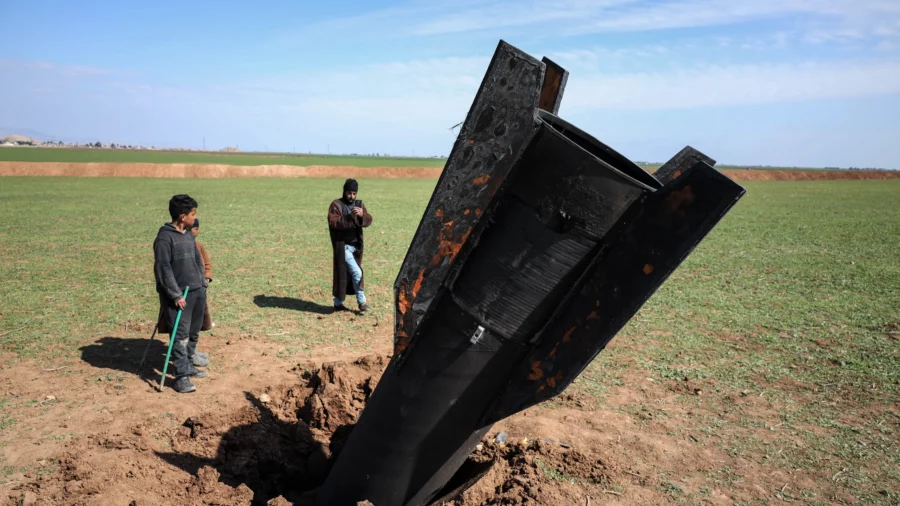
The U.S. military said on March 19 that it destroyed a ballistic missile factory being used to threaten commercial shipping in the Middle East.
"Prior to Operation Epic Fury, the Iranian regime used the Karaj Surface-to-Surface Missile Plant to assemble ballistic missiles that threatened Americans, neighboring countries, and commercial shipping," U.S. Central Command said in a post on social media.
The post included imagery showing the site on March 1 before the U.S. military struck it and on March 11 after it was struck "with precision munitions" by the United States.
A day later, U.S. Central Command wrote in a post that the military has continued to strike deep inside Iranian territory, showing video footage of strikes hitting targets. Based on the video, it's not clear where the strikes were carried out inside Iran.
An Iranian general warned on March 20 that “tourist sites, recreational areas, and leisure centers” around the world are no longer safe for the country's enemies, referring to the United States and Israel.
"We are monitoring your officials, commanders, pilots, and soldiers, and with powerful and crushing attacks, we will bring you to account for your actions," Gen. Abolfazl Shekarchi said, according to Iran International, a Persian-language news outlet based in London. “From now on, based on the information we have about you, even parks, recreational areas, and tourist and leisure centers around the world will no longer be safe for you.”
In late February, the U.S. Department of State issued a "worldwide caution" warning for Americans abroad, and in the subsequent days after the start of the Iran war, it upped travel alerts for several Middle Eastern countries. This week, U.S. Embassies in the Netherlands and Italy renewed warnings amid the risk of possible terrorist attacks.
"Following the launch of U.S. combat operations in Iran, Americans worldwide and especially in the Middle East should follow the guidance in the latest security alerts issued by the nearest U.S. embassy or consulate," the U.S. State Department said in the alert issued on Feb. 28, the same day that Operation Epic Fury began in Iran.
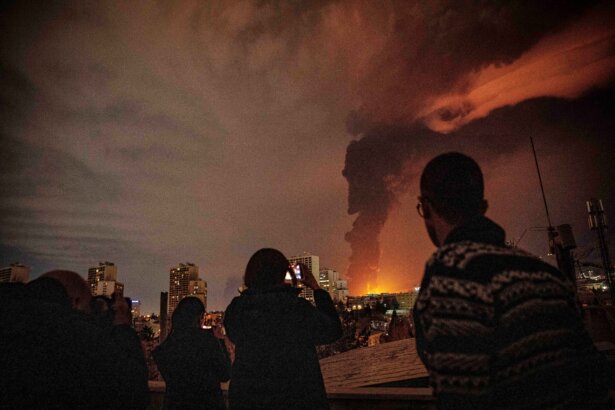
Trump again pushed other NATO members on March 20 to help secure the strait. Iran has struck commercial shipping vessels in the strait, effectively blocking traffic and raising oil prices since the start of the war.
In a post on Truth Social, Trump wrote that the U.S. military has won the conflict with Iran but said that fellow NATO allies haven't done enough despite their heavy usage of the strait.
"Without the U.S.A., NATO IS A PAPER TIGER! They didn’t want to join the fight to stop a Nuclear Powered Iran. Now that fight is Militarily WON, with very little danger for them, they complain about the high oil prices they are forced to pay, but don’t want to help open the Strait of Hormuz," he wrote in the post.