


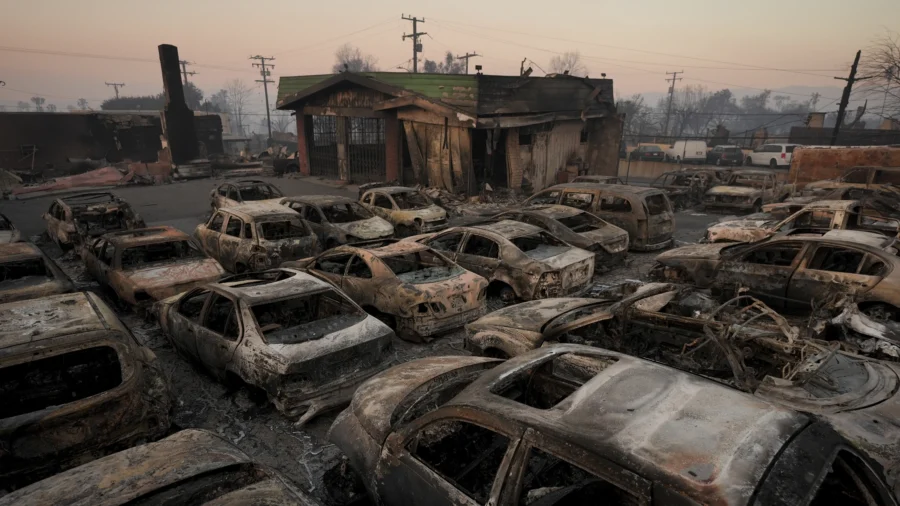
Two weeks after wildfires scorched Los Angeles, homeowners have started to move on to the recovery phase. With home insurance claims stacking up, residents already reeling from burning homes face another major insurance issue: vehicles destroyed by the fires.
The good news is in most cases, vehicle insurance covers autos destroyed by wildfires—with one major caveat.
“Car insurance can cover wildfire damage to vehicles if you have the right coverage,” Greg Martin, president of Think Safe Insurance, a Florida-based auto, home, and business insurance company, tells NTD. “This is typically covered under 'comprehensive' or so-called 'other than collision' auto insurance coverage.”
Comprehensive vehicle insurance covers issues like theft, fire, storm damage, and damage to the vehicle that isn't related to an accident. “In most cases, it will cover up to what the vehicle is worth minus your deductible,” Martin noted.
If a driver only has liability insurance to reduce their monthly costs, wildfire damage “won’t be covered,” says Christopher Schafer, deputy managing editor at Insurify, an insurance industry news and advisory platform.
“However it's yet to be determined how many vehicles were lost or damaged in the Los Angeles wildfires. Cars are an asset that many people took with them, although some did have to abandon their cars as they evacuated,” Schafer added.
Vehicle owners should also know that homeowner’s insurance won’t cover autos damaged or destroyed by fire, even if those vehicles are parked in the garage or driveway, Martin says. “Additionally, there are policy limitations on miscellaneous vehicles like golf carts, dirt bikes, and boats, based on registration and where those vehicles are used.”
If you’re not sure if your auto policy covers fire-damaged vehicles, Martin advises checking your insurance policy’s declaration section, usually located on the policy’s first page or the insurer’s mobile app or website.
Questions to Ask Before Filing a Claim
Vehicle owners in Los Angeles and elsewhere who are impacted by fire-damaged autos should check some important policy items off their list before filing any claims.“Expect claims to take longer than usual to settle because insurers are dealing with a far higher number of claims in specific regions,” says Melanie Musson, an auto insurance analyst with Clearsurance.com based in Montana. “Also, be ready to present evidence of your car’s value. If you recently bought tires or had costly repairs made, make sure to present receipts. That can change the value of your vehicle.”
Once you’ve cleared the deck get your claim in as soon as possible.
“There are going to be a lot of claims, unfortunately, so get yours started before everyone else files their claims,” Martin says. “Additionally, most digital auto insurance tools will give you trade-in, private party, and retail values.”
Most of the claims contacts Martin has spoken with have recommended using a private party value as the best insurance claim estimate. “However, the insurance adjuster will have different tools like recent sales when they are evaluating a vehicle’s estimated value,” he adds.