


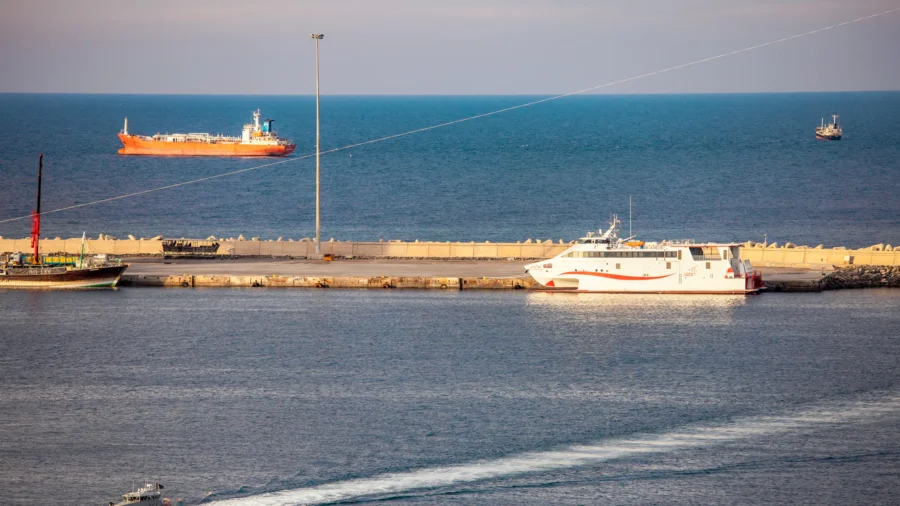
The White House on Wednesday pushed back sharply against reports that Iran had closed the Strait of Hormuz, with press secretary Karoline Leavitt telling reporters the claims were false.
Iran's semi-official Fars news agency had reported that Tehran halted oil tanker traffic through the strategic waterway in response to Israeli airstrikes on Hezbollah targets in Lebanon, citing the attacks as a violation of ceasefire terms. Leavitt dismissed those claims at her Wednesday afternoon briefing.
"With respect to the first reporting out of Iranian state media, the president was made aware of those reports before I came to the podium," Leavitt said. "That is completely unacceptable. And again, this is a case of what they're saying publicly is different."
She added that Washington had observed increased movement through the passage. "Privately, we have seen an uptick of traffic in the Strait today, and I will reiterate the president's expectation and demand that the Strait of Hormuz is reopened immediately, quickly, and safely."
The ceasefire, brokered with Pakistan's assistance, has shown signs of strain on multiple fronts.
Leavitt also noted that due to the complete dismantling of Iran's command and control center by the U.S. military in Operation Epic Fury, it has likely become “difficult for [Iran] to pass messages up and down the chain, and so we understand that.”
"I would caution a little bit of patience," she said of seeing the ceasefire take hold and the full reopening of the Strait. "But of course we want to see the ceasefire effectuated and abided by by all parties as quickly as possible."
Tehran closed the Strait of Hormuz after U.S. and Israeli strikes began in Iran in February, triggering a severe disruption to global energy markets. The 21-mile-wide passage carries roughly 20 percent of the world's seaborne oil supply—approximately 20 million barrels per day.