


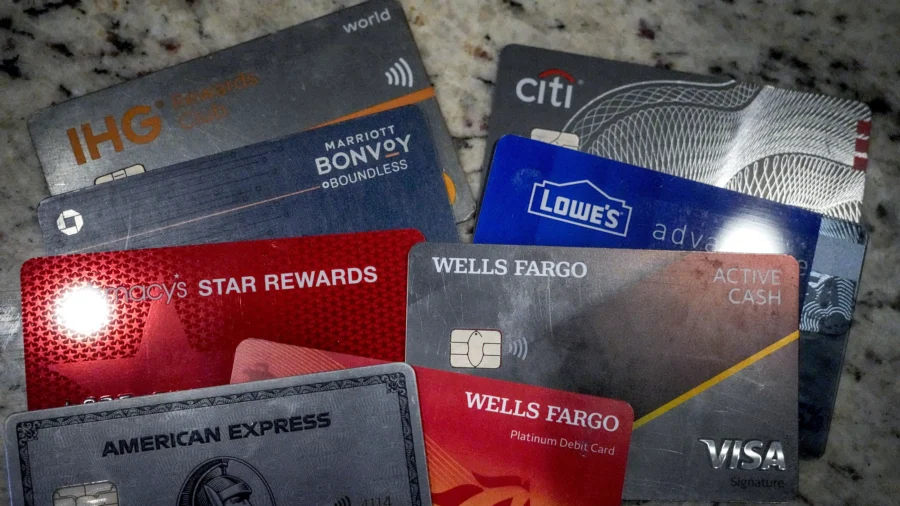
Like many consumer costs, credit card interest rates are on the rise this year, with the average retail card percentage rate standing at 30.14 percent, according to the 2025 Bankrate Retail Cards Study. That’s the second-highest retail credit card rate average since 2008, Bankrate reported.
“Card issuers say they charge higher interest rates on retail cards because these cards are easier to get, and delinquencies have increased in recent years,” Ted Rossman, Bankrate senior industry analyst, said in a statement. “But these are really high rates, and they often apply to all customers who carry balances.”
Retail Card Rates Are High For Multiple Reasons
So why are average credit card interest rates so high right now, with many over 30 percent?“At the macro level, today’s historically high credit card APRs are a direct result of the Federal Reserve’s fight against inflation,” Cynthia Chen, CEO and co-founder of Kikoff, a San Francisco-based credit-building services company, said in an email. “Through 2022 and 2023, the Fed raised its benchmark rate aggressively, and because most cards are variable and indexed to the prime rate, those hikes flowed through to cardholders almost instantly.”
Rate cuts, on the other hand, tend to filter down much more slowly and less generously, as issuers protect their margins. “That’s why, even after recent modest reductions, average APRs remain stubbornly high, with retail cards still around 30 percent,” Chen noted.
Beyond Fed policy, there are structural factors that also push rates higher.
“Creditors determine what spread above the prime rate they want to capture across their entire portfolio, balancing profitability with risk,” Chen said. “A borrower’s credit profile, e.g., credit score, repayment history, and utilization, further shapes the rate they’ll be offered.”
Additionally, retail credit card product design matters.
“Rewards cards often carry higher APRs to subsidize the perks, like cash back, points, or miles, that attract consumers,” Chen added. “Taken together, these dynamics explain why credit card rates remain elevated even as the broader economy shows early signs of relief.”
Good Ways to Cut High Card Rate Burdens
The path to card rate freedom is through using a retail card responsibly. These tips should get you on the right track.Have an aggressive payment strategy
Paying more than the monthly minimum, ideally as much as possible each cycle, reduces the principal rapidly and minimizes the total interest paid over time, Chen noted. “Setting up automatic large payments helps maintain discipline and accelerates debt reduction,” she advised.Consolidate credit card debt
You can also tackle high-interest credit card debts by consolidating them with a personal loan at a much lower rate.Use a balance transfer card
Balance transfer cards can be gold mines if you use them right, Burgess said.“Those 0 percent intro rates give you breathing room to actually pay down principal instead of just covering interest,” he noted. “Just make sure you have a solid plan to pay off the balance before that promotional rate expires, or you'll be right back where you started.”