


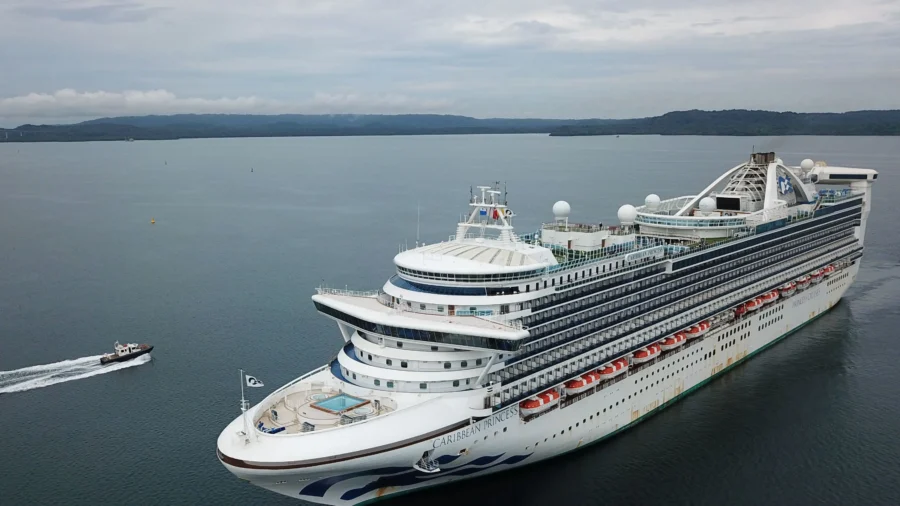
The CDC's Vessel Sanitation Program received notification of the outbreak on May 7, with 102 of 3,116 passengers—roughly 3.3 percent—and 13 of 1,131 crew members reporting symptoms including diarrhea and vomiting during the April 28 to May 11 sailing from Port Everglades.
Princess Cruises confirmed "a limited number of individuals reported mild gastrointestinal illness," saying the ship was disinfected and sanitized throughout the voyage, the company said in a statement to NTD.
The ship will undergo "comprehensive cleaning and disinfection" upon arriving at Port Canaveral on May 11 before its next departure, the statement said. The CDC said ill passengers and crew were isolated and stool specimens collected for testing.
Health officials said the illness counts reflect all cases reported during the sailing and do not indicate everyone was sick at the same time.
In response to the outbreak, Princess Cruises and the crew on the Caribbean Princess ramped up cleaning and disinfection measures in line with their outbreak prevention and response plan. The line consulted with federal health officials on sanitation protocols and reporting, while the CDC’s Vessel Sanitation Program launched a field response that includes an environmental assessment and outbreak investigation to help control the spread on board.
The CDC describes gastrointestinal illness as a commonly used term for acute gastroenteritis, or AGE, and stresses the importance of prompt reporting of symptoms to the ship’s medical center. Medical staff use a case definition that includes three or more loose stools in 24 hours—or more than is normal for that person—or vomiting accompanied by diarrhea, muscle ache, headache, abdominal cramps, or fever.
Nearly 80 passengers and crew members experienced acute gastroenteritis on that voyage, which included stops in Japan, South Korea’s Busan, and Shanghai, according to Hong Kong health authorities and the cruise line. Hong Kong’s Centre for Health Protection said investigators boarded the Westerdam when it docked March 1 to inspect sanitation and food hygiene conditions, and a temporary clinic was set up in the terminal to screen disembarking travelers.
Holland America said “the cases were mostly mild and quickly resolving” and that it carried out “enhanced sanitation procedures and conducted additional deep cleaning” after docking in Hong Kong. After sanitation checks, the Westerdam continued on to the Philippines, with Hong Kong officials notifying their counterparts there of the findings.
Symptoms usually appear within 12 to 48 hours and last one to three days, and while there is no specific treatment, most people recover with rest and hydration, though the virus can remain contagious for up to 48 hours after symptoms end and linger in the body for up to two weeks.