

2.5 Million Cataract Surgery Eye Drop Vials Recalled: FDA

Concerns that a Lupin prescription eye drop may contain foreign substance led Lupin Pharmaceuticals Inc. of Naples, Florida to initiate the voluntary withdrawal.
Published: 7/17/2026, 5:55:18 PM EDT
2.5 Million Cataract Surgery Eye Drop Vials Recalled: FDA
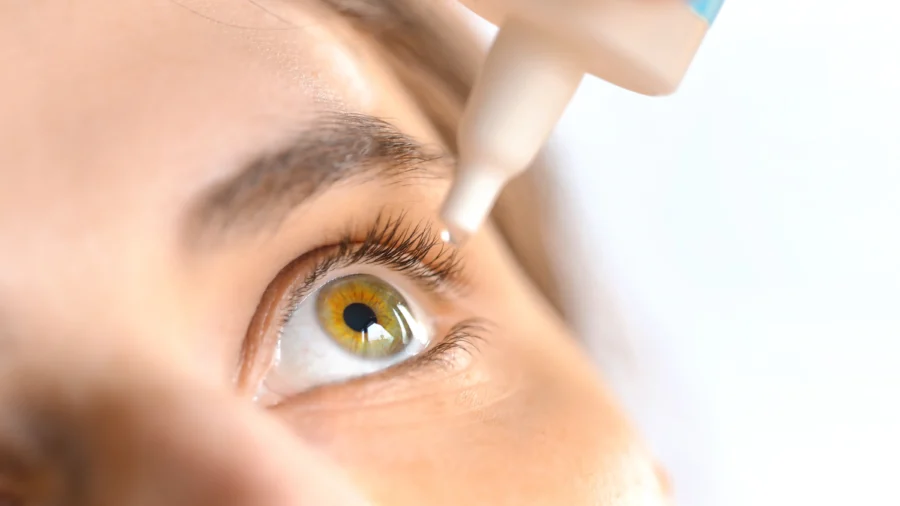
A woman applies eye drops in a stock photo. (Kim Kuperkova/Shutterstock)

The U.S. Food and Drug Administration (FDA) has assigned its second-highest risk ranking to millions of bottles of eye drops that doctors frequently prescribe to patients after cataract surgery.

Concerns that the PrednisoLONE Acetate Ophthalmic Suspension, USP, 1 percent, eye drops may contain a foreign substance led Lupin Pharmaceuticals Inc. of Naples, Florida, to initiate the voluntary withdrawal of 2.5 million vials, according to an FDA enforcement report.
“Prednisolone acetate is routinely prescribed after most ophthalmic surgeries, including cataract surgery,” UC Davis Eye Center ophthalmologist Jeffrey H. Ma said in a statement on July 13.

The recall, and the FDA's Class II recall, applies nationwide to 5 mL, 10 mL, and 15 mL sizes that were manufactured by Lupin Limited in India.

There have been no reports of adverse events related to the prednisolone recall so far.

“This is a standard part of the quality-control process,” UC Davis Department of Ophthalmology and Vision Science clinical professor Gary Novack said. “It shows the system to protect people who use these products is working.”

Ma, who specializes in diseases that affect the surface layers of the eye, routinely prescribes prednisolone acetate for his patients.

Ma said that the eye drops are commonly used to treat inflammatory eye conditions, such as iritis and uveitis, which are a group of diseases that cause inflammation of the iris and other surrounding structures inside the eye.

The recall of 2,530,182 dropper bottles was initiated on June 4, and the FDA’s designation as a Class II recall occurred on June 30.
The Class II designated recall event involved in the recall above is the federal government’s second-highest risk alert level, which is described by the FDA as a situation whereby exposure to the product “may cause temporary or medically reversible adverse health consequences.”

A Class I event, in contrast, is the FDA’s highest-level risk alert, and is described as “a situation in which there is a reasonable probability that the use of or exposure to a violative product will cause serious adverse health consequences or death.”

Meanwhile, a Class III event involves products that violate regulations but are unlikely to cause health problems, such as minor labeling errors.

Because Prednisolone is a corticosteroid eye drop and is one of the most widely prescribed topical corticosteroid eye drops, Ma advises consumers to check their eye drops to see if they are on the recall list, and if their vial is on the recall list, they should immediately contact the prescribing physician for a replacement.