


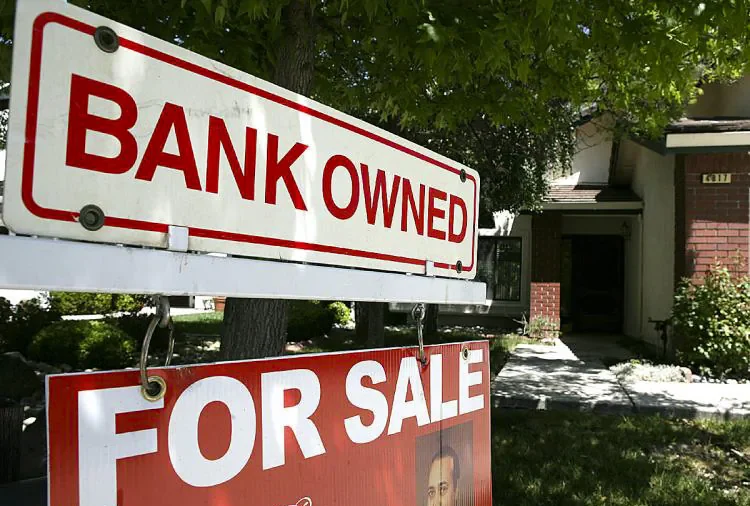
A long-dormant issue for homeowners is resurfacing in early 2026: more Americans are losing ground on their home values and may risk foreclosure.
According to industry data, about 1.1 million U.S. homeowners were underwater on their mortgages, representing the largest year-over-year increase, up 60 percent. There could be more trouble on the way, as another 3.2 million U.S. homeowners only hold 10 percent or less in home equity over the same period.
Mortgage experts say several factors can contribute to a property being underwater. “Prices are softening in some markets as values start to normalize following the steep increase in property values from 2020-2022,” Chris Natale, managing principal of diversified residential mortgage, told NTD News.
Additionally, some owners feel trapped in their properties because mortgages were locked in a few years ago at sub-4 percent rates. “It’s hard to sell and then step into a new mortgage that would be 6 percent or more right now,” Natale noted. “For owners who purchased with high leverage, only 3-5 percent down, and then added closing costs, even small value decreases lead to the property being underwater.”
Being underwater on a mortgage can be emotionally taxing, but the solution should be mathematical.
“The term 'underwater' really just means that the current payoff on your mortgage loan exceeds what you’d receive from selling your home today, after typical closing costs,” Eric Croak, a certified financial planner and president and owner at Toledo, Ohio-based Croak Capital, told NTD News. “Principal reduction is front-loaded on the amortization schedule, so even if you never miss a payment, you can owe “more” than your home would sell for,”
Today, some homeowners may face this due to market conditions. “It’s possible to be $25,000 underwater and have never missed a payment,” Croak said.
Here’s What To Do If You Suspect Your Home Mortgage Is Underwater
The primary goal when underwater on a home is to buy yourself some time, protect your options, then choose between exiting clean or holding long-term. Take these steps to get the job done.
First, assess your homeownership situation
If you don’t need to sell your property and can make payments, give the home value situation some time. “If there has been a life change, such as a layoff, major illness, or increased expenses, contact the loan servicer for a mortgage review,” Natale said. “There may be the ability to adjust the loan.”
Also, stop guessing your home's value; Zillow's Zestimate is not your home's official market value.
“It's an algorithm with a healthy margin of error,” Erik Leland, a real estate broker at Realty First, told NTD News.”It swings 10-15% in either direction depending on the market. If you're making major financial decisions based on that number, then you’re just speculating.”
Talk to a trusted real estate professional and get a fair assessment of your property
Take further action by calling a local broker and finding out how you can get a broker price opinion, which is an estimate of a property's market value conducted by a licensed real estate agent or broker.
“A good realtor will account for recent sales within a tight community radius, current pending sales, and critically, what's happening with permit activity and infrastructure investment nearby,” Leland said. “These are signals that move a home’s value before it is reflected in the local comparisons. Most brokers will do this at a low cost because they want the relationship.”
Stay current on your mortgage at all times
Always remember that while you have no control over home value fluctuations influenced by the economy and the housing market, you do have control over keeping your mortgage payments paid and your mortgage loan debt satisfied in the eyes of your lender.
Once you miss payments, you lose options. That’s why it’s never a good idea to accelerate a negative home value situation by getting behind on your mortgage payments. “Foreclosure destroys optionality,” Croak said.
If you’re having legitimate trouble with your mortgage payments, reach out to your lender and verify if you qualify for a loan modification/term extension if your income has changed. “Simply lowering your payment from $2,800 to $2,300 per-month could open other doors,” Croak added.
Going Forward, Cash Matters Up Front
Most people end up underwater on their mortgages because they made a thin down payment, overbid at closing, or believed home prices would continue to rise.
“Aggressive lending still allowed buyers to leverage debt-to-Income ratios higher than 45 percent in some cases,” Croak said. “This leaves no cushion if home prices fall 5 or 10 percent.”
Years ago, this wasn’t as big a deal because most loans were either fixed-rate or had lower reset hurdles. “Once payment resets started increasing in the mid-2000s, some homeowners were forced to choose between underwater and default,” he added.
The views and opinions expressed are those of the interviewees. They are for general informational purposes only and should not be construed as a recommendation or solicitation. NTD does not provide investment, tax, legal, financial planning, estate planning, or any other personal finance advice. NTD holds no liability for the accuracy or timeliness of the information provided.