


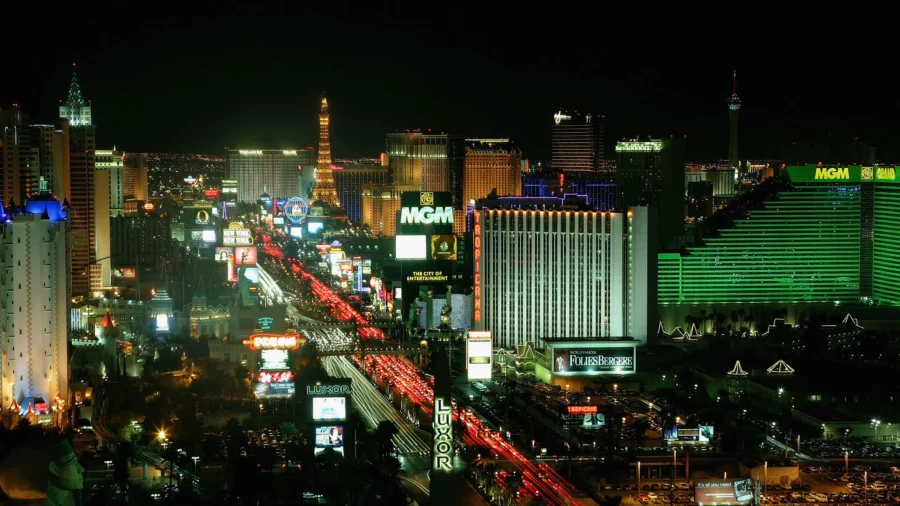
A 4.1 magnitude earthquake struck the Las Vegas area on Thursday afternoon, shaking Southern Nevada residents and drawing more than 1,500 reports to federal seismologists. The earthquake is the latest in a day-long series of quakes that raked the western United States from Oregon to the Mojave Desert.
Thursday's seismic activity stretched far up the Pacific Coast, where a cluster of moderate earthquakes struck near the Mendocino Triple Junction—a notoriously volatile region off the Northern California coast where three tectonic plates converge. Scientists consider it one of the most seismically active zones in the country.
The most powerful of those offshore quakes—a magnitude 5.7—hit in the early morning hours just west-southwest of Pistol River, Oregon, striking just before 4 a.m. Pacific time. Roughly two hours later, a magnitude 5.1 earthquake struck approximately 40 miles west of Petrolia in Humboldt County, California. A separate magnitude 5.1 quake also rattled waters about 120 miles from McKinleyville. Neither triggered a tsunami warning, and no significant damage was reported from either.
Wednesday's quakes were all relatively shallow, ranging in depth from about a tenth of a mile to 6.2 miles. Depth matters: shallower earthquakes tend to produce stronger surface shaking because seismic waves travel a shorter distance and retain more energy before reaching the ground.
With seismic events continuing to ripple across the West, the USGS is reminding residents to follow established safety procedures. Those indoors should drop, take cover under a sturdy desk or table, and hold on—staying clear of windows, fireplaces, and heavy appliances. People outdoors should move into an open area away from buildings and power lines. Drivers should pull safely off the road, avoiding bridges, overpasses, and trees, and remain inside their vehicles until shaking stops. Those near the ocean should consult tsunami safety guidelines from NOAA's Tsunami Warning Center.