
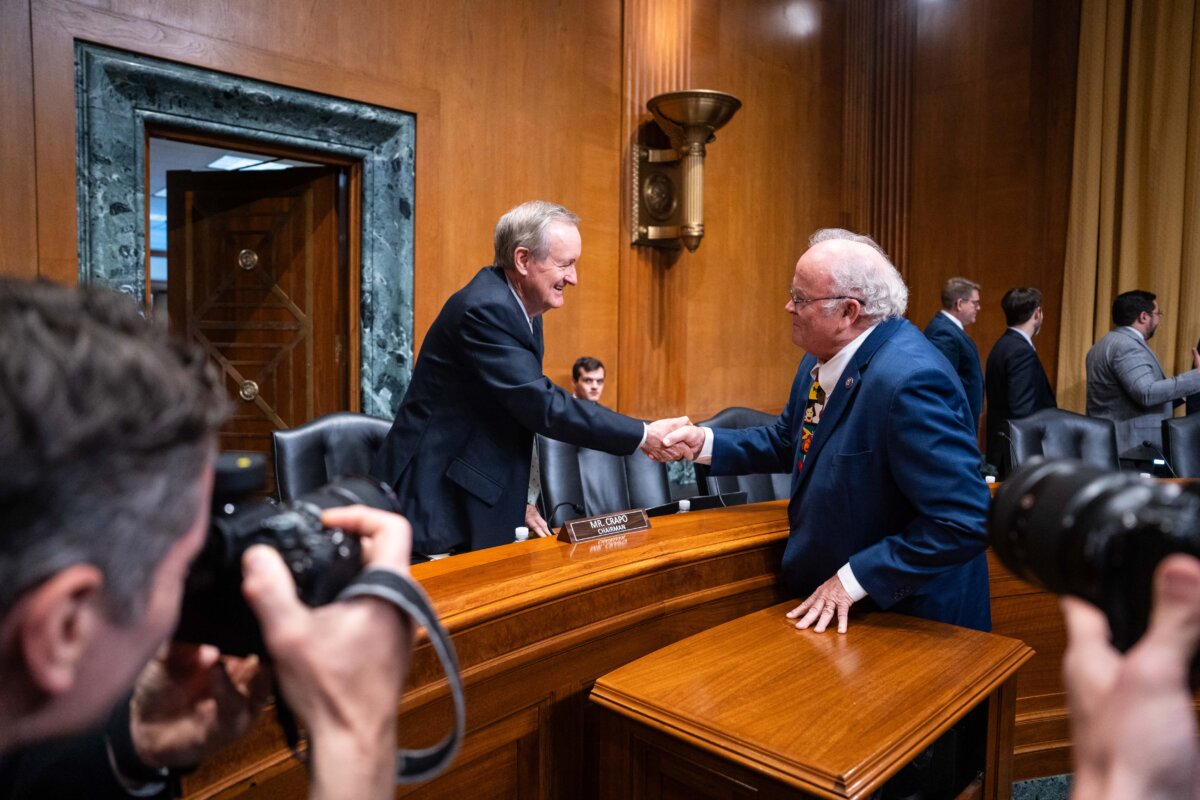
Former congressman Billy Long, President Donald Trump's nominee to head the IRS, on May 20 pledged to improve the agency to better serve taxpayers.
In testimony before the Senate Finance Committee, Long noted that taxpayers have consistently complained about delayed refunds and poor customer service. Those are among the many issues that Long pledged to correct.
As a former congressman who just left office two years ago, Long said he has a detailed understanding of how the IRS and Congress interact—a big advantage over past commissioners.
Despite general agreement that Long is an affable and motivated man, a partisan divide became evident over whether he ought to serve as IRS commissioner.
While Republicans expressed confidence in his ability to reform the agency, Democrats asked pointed questions and raised concerns over Long's political and business dealings. His hearing was delayed for five months while Democrats investigated; many other Trump nominees have waited two months or less for their hearings.
If confirmed, Long would serve as the IRS’s 51st commissioner; he would fill the remainder of former commissioner Danny Werfel’s term, which expires on Nov. 12, 2027.
1. Conflicts of Interest Denied
The committee’s ranking member, Sen. Ron Wyden (D-Ore.), said he will vote against Long because of a what Wyden called a “questionable array of campaign contributions" involving his failed 2022 Senate run. Long denies any impropriety. He says he has made all required disclosures to the Office of Government Ethics.Wyden and other Democrats also questioned Long two types of tax credits that have drawn controversy: one to encourage investments and development in Native American communities, and a COVID-era relief program for employers, the Employee Retention Credit. Wyden alleged that Long "raked in" referral fees from companies that got people to apply for tax credits for which they didn't qualify, or for programs that didn't exist.
2. Confrontation Over Trump and Harvard
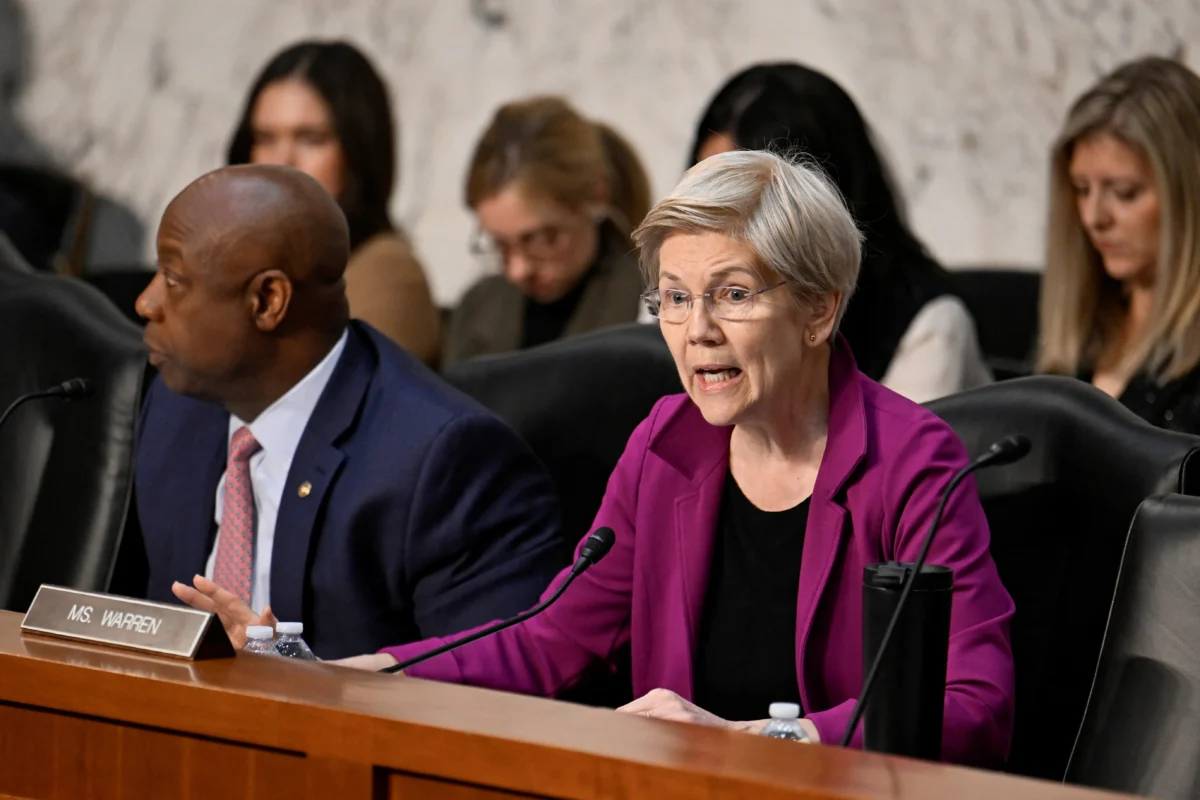
A seven-minute exchange between Long and Sen. Elizabeth Warren (D-Mass.) marked a dramatic point.Warren repeatedly tried to get the nominee to agree that federal law forbids the president from stripping Harvard University—or another taxpayer—of nonprofit status. Long kept telling Warren that he would follow the law, but the two of them could not agree upon what the law said.
Warren was referring to the Trump administration's dispute with Harvard. After the university rejected a list of demands to address anti-Semitism and “diversity, equity, and inclusion” programs, the administration froze more than $2 billion in federal funding. Harvard then sued the government.
3. Nominee Pledges New Culture
Long said it pained him to hear that no past commissioner had ever invited a 15-year IRS employee to air his concerns. That anecdote represents a top-down culture that needs to be changed, Long said, promising to arrive 90 minutes prior to office hours so that employees can share information with him.The nominee also promised to safeguard against the IRS being "weaponized" for political reasons and pledged to keep taxpayers' private information secure; several committee members described instances of illegal or inappropriate access. Some senators complained about Trump's new Department of Government Efficiency (DOGE) digging through IRS data and recommending cuts to thousands of IRS jobs at a time when the agency seems unable to keep up with its workload.
Long agreed to investigate concerns with employees and taxpayers.
He also said he would modernize the agency partly based on best practices from the private sector.
"There's a lot of big companies that deal with more people than the IRS does, and ... they seem to be able to pull off things seamlessly," he said, adding that government can learn from those companies' successes as well as their failures.
4. Direct Filing to Be Reviewed
Senator Marsha Blackburn (R-Tenn.) told Long that she and many other congressmembers want to shut down the IRS's free Direct File tax-filing service."We've had lots of complaints about the Direct File program, and it is something that was put in place without explicit congressional approval," she said, adding that "so many people feel like this is overly intrusive into their personal information to use Direct File," unlike other free tax-filing services.
Long agreed that the Direct File program is "one of the hottest topics at the IRS."
"I want to get to the bottom of it and see what is best for the hard-working employee partners that I will have at the IRS, if I'm confirmed, and the taxpayers," he said.
From The Epoch Times