


An Alabama woman has been charged with manslaughter after she allegedly initiated a fight and kept the fight going, resulting in the shooting of her unborn baby by another woman.
A grand jury indicted Marshae Jones, 27, of manslaughter on June 26 even though she didn't shoot her unborn child. Authorities said that Jones started the conflict that led to the eventual shooting.
Although the police initially charged shooter Ebony Jemison, 23, of manslaughter, the grand jury didn't indict her.
Reid said that the fight between Jones and Jemison was over the child's father. He alleged that Jones initiated and escalated the conflict to the point where Jemison had to defend herself, leading to the death of Jones's unborn baby. The shooting happened outside a Dollar General store on Dec. 4, 2018.
He added that the 5-month-old unborn baby was "dependent" on Jones to do all that she could to prevent the child from harm and that "she shouldn’t seek out unnecessary physical altercations," AL.com reported.
Jones is being held on a $50,000 bond.
Social Media Responses
A heated debated on social media began after the announcement of Jones's manslaughter charge.Twitter user Eric gave a hypothetical scenario that would justify why the shooter should have been charged.
MarkFromAlbany rebuked his scenario.
Another user questioned Jones's freedom to argue as a pregnant woman without the risk of getting shot.
Twitter user UKpolitics replied by bringing up the importance of the pregnant mother's responsibility to avoid endangering the unborn baby.
Alabama Human Life Protection Act
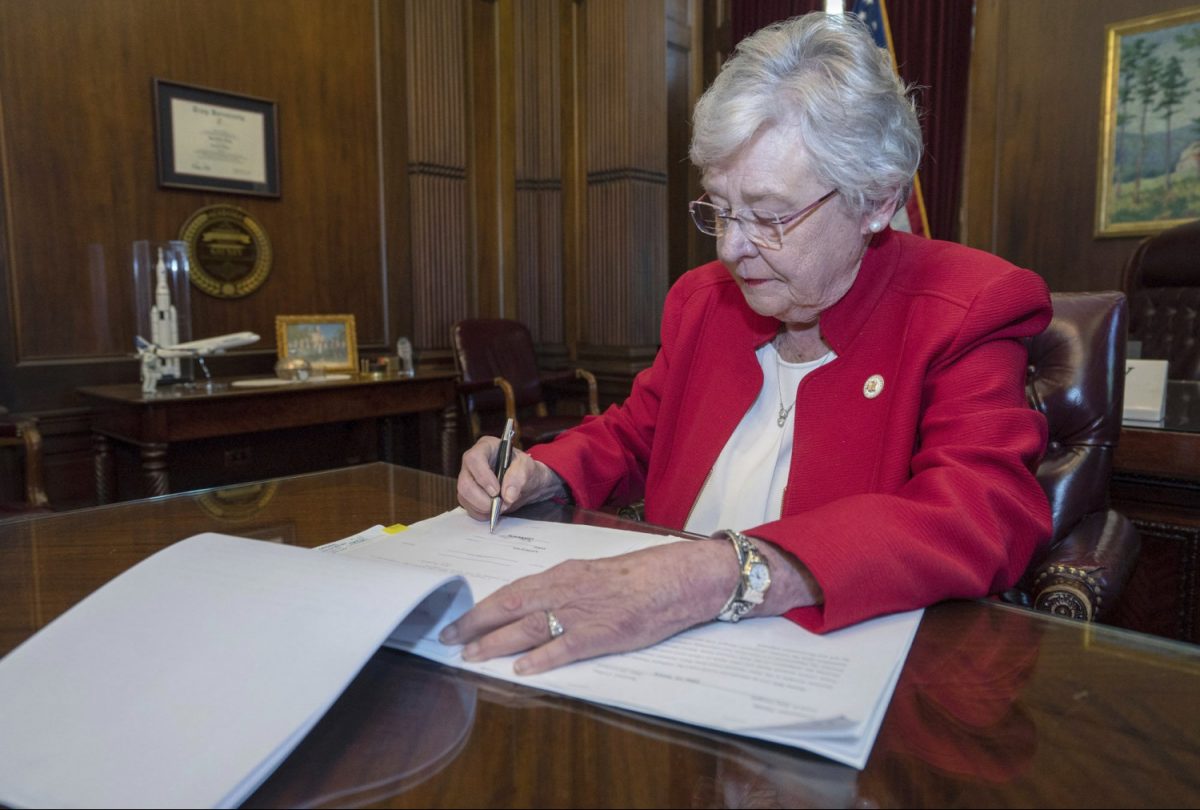
Jones's unborn child is protected by the Alabama Human Life Protection Act that classifies all unborn children as human beings.The act draws from the United States Declaration of Independence stemming from "the self-evident truth" that "all human beings are equal from creation." It also draws examples from past social reforms in U.S. history that used "the self-evident truth" as one of the fundamental reasons for the "anti-slavery movement, the women's suffrage movement, the Nuremberg war crimes trials, and the American civil rights movement."
"If those movements had not been able to appeal to the truth of universal human equality, they could not have been successful," the act reads.
Challenge to Roe v. Wade
The Alabama law takes aim at the core issue of whether an unborn child can be considered a person, as discussed in Roe v. Wade.Rep. Terri Collins (R-Decatur), who sponsored the bill, had said the goal was to pass the bill in a form that would be able to challenge the 1973 Roe v. Wade ruling in the strongest way.
In Roe v. Wade, the U.S. Supreme Court said that if unborn children are persons, then they have the right to life. The decision concluded that unborn children are not persons, and acknowledged that the case to prohibit states from banning abortions would “collapse” if “the fetus is a person,” because then its “right to life would then be guaranteed” by the Constitution.
Sen. Clyde Chambliss (R-Prattville), who sponsored the bill in the Senate, said that all unborn children deserve protection from the law, AL.com reported.
Chambliss was asked about the legal costs the state would incur if the bill is challenged in court.
“Life is a gift of our Creator and we must do everything that we can to protect life,” he responded, according to AL.com. “And if it is a couple of million dollars, that is a small, small price for those lives.”