


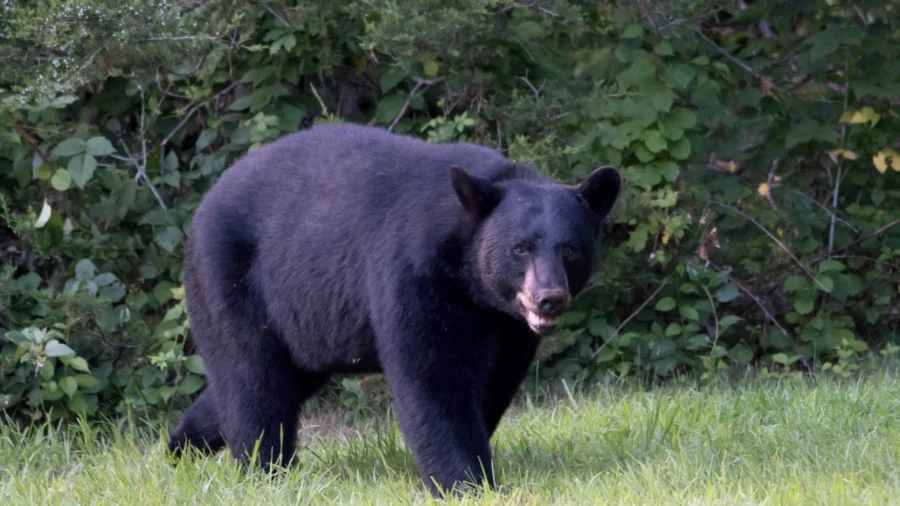
Pennsylvania wildlife officials said Thursday a bear that attacked a man last week in Carbon County has tested positive for rabies, explaining the abnormal behavior for a black bear, which isn’t usually aggressive toward people.
The incident happened on Sunday in Jim Thorpe, Carbon County, and involved an adult male bear.
The victim, Andrew Neirer, survived thanks to the help of a nearby homeowner who shot and killed the bear in his defense. Following the attack, Pennsylvania Game Commission staff removed the bear for testing.
"I think number one she was scared because she was just down at the market trying to get into the market. They're hungry. They're starving," Neirer said. He also mentioned unusual weather in the area lately, stating, "They're supposed to be in hibernation. This weather is weird lately. Hot, cold, warm, cold."
The Pennsylvania Game Commission said that while rabies in bears is rare, it carries a risk to all mammals. They noted that in this particular case, the risk of other bears being exposed to rabies is less likely as male bears typically den alone.
The latest infection comes in the wake of several other rabies-related cases across the United States.
Dr. Tomás J. Aragón, CDPH Director and State Public Health Officer, warned the public about the dangers of interacting with wild animals. "It is always safest to leave wild animals alone. Do not approach, touch, or try to feed any animals that you don't know," he said in a statement at the time.
The Pennsylvania Game Commission also warned the public to avoid contact with wild animals, urging residents to report any wildlife acting abnormally to their hotline at 1-833-PGC-WILD.
Rabies, while rare in humans, remains a serious concern as it almost always will result in death if left untreated, according to the CDPH. The disease typically manifests three to eight weeks after exposure, but symptoms can appear earlier or later.
To protect against rabies exposure health officials recommend vaccinating pets, avoiding contact with wild animals, and seeking immediate medical attention if bitten by an animal, especially wild animals or those behaving abnormally.