



Georgia voters finalized their choice for the GOP gubernatorial candidate in the state’s primary runoff election on Tuesday, sending self-funded billionaire Rick Jackson to the general election later this year against Democrat contender former Atlanta Mayor Keisha Bottoms.
While Jones entered the night as the frontrunner, boosted by the powerful endorsement of President Donald Trump, results quickly revealed that Jackson had consolidated crucial support in the Atlanta metropolitan and surrounding areas.
Jones’ key support base—the state’s rural counties—was unable to bridge the gap, cementing a roughly 5.5-point electoral upset for Jackson when the race was called.
When the race was called by the Associated Press at 9:45 p.m. ET, Jackson led with 52.7 percent of the vote to Jones’ 47.3 percent.
Jackson’s upset victory marks the second time in the past two weeks that Republican voters have rejected President Donald Trump’s pick for governor of their state, with a similar scene playing out in Iowa’s match-up between Trump backed contender Rep. Randy Feenstra (R-Iowa) and challenger Zach Lahn.
Georgia Gov. Brian Kemp also threw in a last-minute endorsement for Jones over the weekend.
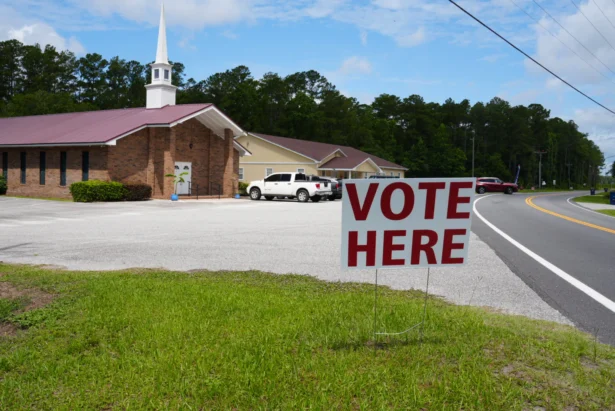
The Epoch Times spoke with voters across Georgia on the day of the primary runoff. They were mainly split in expressing who they voted for in the gubernatorial race.
Some would only speak anonymously to share who they cast their ballots for, while others were outspoken for their candidate of choice—including Mary Brown, who voted for Jones at the Camden County Recreation Center in Kingsland, Georgia.

“He’s just better looking. Does that count?” Brown said. “I want to look at someone nice looking.”
For Georgia voter Johnny Ingram, Jackson’s self-described humble beginnings into a self-made billionaire was the attractive factor of his campaign.
However, he said he feared the gubernatorial race is shifting in favor of the Democrats.
“With the prices going up, and you know, gas is crazy,” Ingram said. “I'm afraid that we're going to wind up being a Democrat state.”
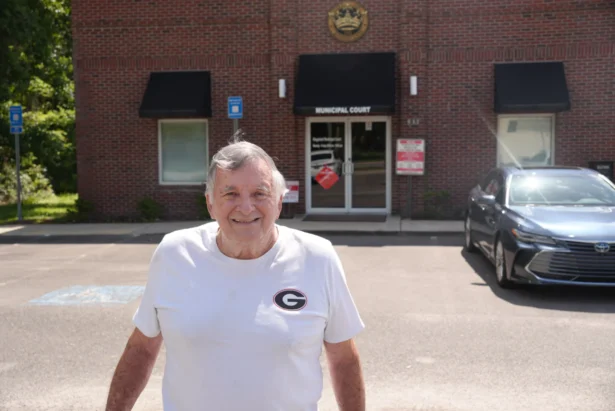
Ingram gave credit to Bottoms, the former Atlanta mayor, for running a “well-oiled campaign,” and he hopes whoever is at the top of the GOP ticket can do the same.
Chris Johnson voted at the CenterPoint Church in Brunswick, Georgia, and described himself as a “huge, mega” Trump supporter, which is why he cast his ballot for Trump-endorsed Jones.
He said he didn’t trust Jackson as a “political outsider.”
“Rick Jackson just seems like he got rich very quick,” Johnson said. “Politics in general seems shady to me, but Burt Jones just seemed to be the best choice.”

Another GOP Georgia voter, Keith Pollette, concurred that Jones is the more appealing candidate.
Pollette was signing for the lieutenant governor outside a polling precinct the day of the runoff and told The Epoch Times he has known Jones for 26 years.
“We go back a really long time, and he's just a great guy, and I wouldn’t personally support anybody else,” Pollette said. “At the same time, his position on the issues, his consistency, and his existence of a really true conservative record.”
Pollette said he knew Jones when he played college football at the University of Georgia, adding that he’s the “best shot” for the party to hold onto the governor’s seat.
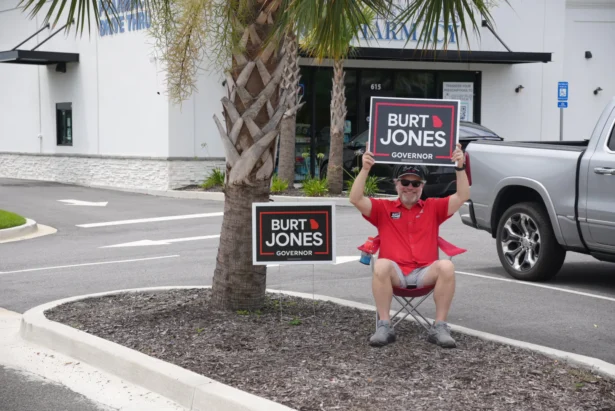
The Peach State’s Republican gubernatorial contest was a costly, competitive race between Jones and Jackson.
To date, the lieutenant governor has raised $5.2 million and spent nearly $31 million, according to state election finance records. Jackson, a healthcare executive, raised $112 million and spent $108 million.
Failing to garner more than 50 percent of the vote in that election, both went to the runoff, where Jackson prevailed.
Jones ran with similar stances on the same issues, with a promise to cut the state’s income tax, protect women’s sports, and enhance punishments for violent convicted criminals.
Jackson’s Democratic opponent for the upcoming general election on Nov. 3 has raised to date nearly $3 million and spent $2.5 million.
Bottoms won the Democratic nomination in the state’s primary election on May 19 by a wide margin, receiving 56 percent of the vote. The second-place candidate received 19 percent.
Republicans are looking to continue their streak of holding the top seat in the state, with the party winning every election for the position since 2002.