


Aerospace and defense manufacturer Boeing is hiring more than 100 factory workers a week as it ramps up production and replaces a wave of retiring employees, according to Jon Holden, a senior union leader at the International Association of Machinists and Aerospace Workers (IAM).
In comments to Reuters, published on April 16, Holden said that Boeing is bringing on between 100 and 140 factory workers weekly, the fastest pace since 2024.
The hiring reflects both growing production demands and the need to replenish an aging workforce, he added.
The Epoch Times requested commentary from Boeing but didn’t receive a response by the time of publication.
Having previously served as president of IAM District 751 for more than a decade and helping lead a major strike in 2024, Holden began a new role on April 1 as general vice president of training and apprenticeships.
He said Boeing’s unionized workforce in the Pacific Northwest has surpassed 34,000 and is continuing to grow.
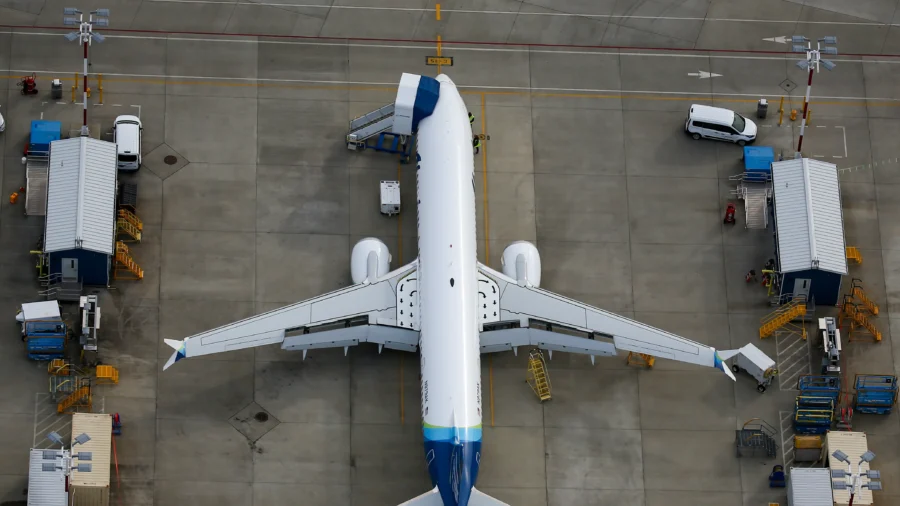
A major driver behind the hiring surge is Boeing’s plan to open a new 737 MAX production line in Everett, Washington. In an April 7 statement, the company said it will begin producing 737 aircraft at the site for the first time.
“The North Line will expand capacity for single-aisle production, allowing Boeing to better meet market demand,” the statement reads.
The new line, known as the North Line, will be capable of building multiple variants of the 737 MAX, including the 737-8, 737-9, and 737-10.
Boeing said production processes at Everett will mirror those used at its Renton facility, with the addition of new tooling designed to transport partially assembled components.
The company said that with construction and tooling in place, the focus has shifted to hiring and training hundreds of workers to support the new line. The workforce will include a mix of newly hired employees and experienced personnel from existing facilities in Renton, Everett, and Moses Lake.
“So it’s not just those working on the North Line,” Holden said. “It will be, you know, those that have to bring parts, logistics and storage. It’s going to be tooling, it’s going to be you know, transportation.”
Financial Results
Boeing’s workforce expansion follows a significant financial turnaround. On Jan. 27, the company reported a net income of $8.13 billion, reversing a $3.92 billion loss from the previous year.Core earnings per share reached $9.92, far exceeding expectations of a loss. The company attributed its stronger performance to increased aircraft deliveries, an asset sale, and federal regulatory approval.
During the final quarter of 2025, Boeing deliveries rose sharply, increasing 181 percent to 160 aircraft.
For the full year, the company delivered 600 airplanes, nearly doubling the prior year’s total and marking its highest output since 2018. Boeing’s backlog now exceeds 6,100 aircraft, valued at approximately $682 billion.