


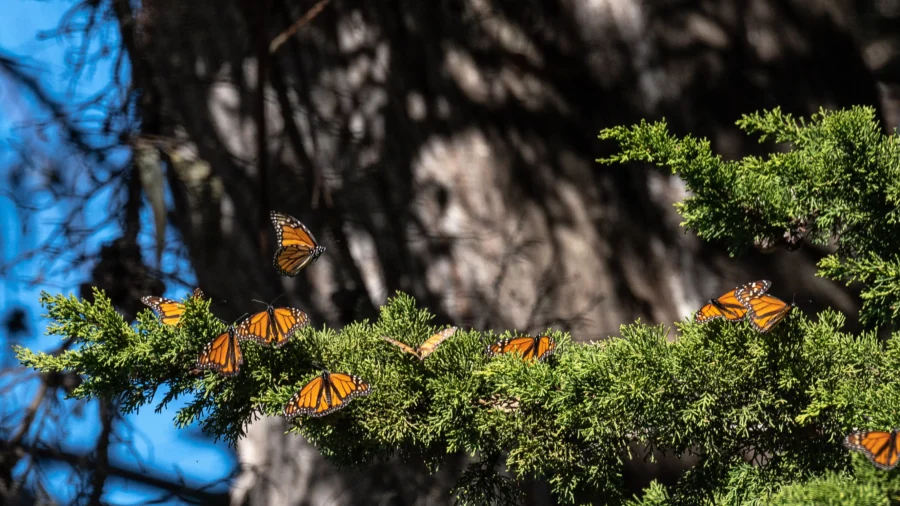
California has launched its “30 by 30” plan in 2020, aiming to conserve 30 percent of the state’s lands and coastal waters by 2030.
‘Big Tent’ Movement
California Gov. Gavin Newsom created the “30 by 30” plan via executive order in October 2020.“Californians love the outdoors,” Crowfoot said. “So we’re always looking for opportunities to conserve, protect more nature so that future generations can enjoy it.”
Meanwhile, he said that, as the fourth-largest economy in the world, California has one of the greatest diversities of animals, plants, and other wildlife, and a population of nearly 40 million.
“So how do we conserve nature, to protect this remarkable diversity of plants and animals that we have?” Crowfoot said. “And so for all of these reasons, we’re focused on what we call a ‘big tent’ movement, a big voluntary effort to find more places to conserve, ultimately to that 30 percent threshold.”
Crowfoot said that more than 22 percent of California’s lands, including national parks, were already under protection before the initiation of the “30 by 30” plan.
“[California has] about 100 million acres, and about 22 million acres are protected from development, for example, housing or roads or mining or drilling,” he said.
“The contention is that over time, as we experience more and more changes, and whether it’s drought and wildfire or flooding, we need to conserve more of our nature, both to buffer against these extremes, to protect resources like our water delivery system, and to provide more opportunities for people to be outdoors.”
He said that the environment is protected through standards and regulations and that the “30 by 30” plan is a voluntary program.
Includes Farmland
According to Crowfoot, the state’s conservation effort also includes farmlands.“California is a breadbasket of the country and the world,” Crowfoot said. “So we do have farms and ranches as part of ‘30 by 30’ but again, only voluntary.”
Under the plan, he said, those farmers and ranchers interested in participating may benefit from funding from organizations such as the California Rangeland Trust, a nonprofit serving the cattle and ranching industries. The funding would allow them to increase conservation practices and establish a conservation easement.
Crowfoot noted that more than 10 million acres of the Golden State’s land are grasslands, which are now actively grazed by cattle for beef or dairy.
Housing Versus Conservation
However, with the state’s growing need for additional and affordable housing, Khorrami questioned how the “30 by 30” plan would work with developers.“Everybody also agrees that the most important place to build housing is where jobs and infrastructure exist, which is in communities and around communities,” Crowfoot explained.
“A lot of these natural areas are far away from these job centers. ‘30 by 30’ isn’t about trying to take a city and turn it into, you know, a wilderness.”
Crowfoot said that the state recognizes the need for quicker, more affordable development, but it must be done in ways that don’t leave the environment behind. Citing an example of building a road in an area that’s an important animal habitat, Crowfoot explained that developers will make up for that environmental impact by purchasing a habitat in another area.
Water Infrastructure
While California has sufficient land for building housing, Crowfoot added that it’s important to ensure clean energy for the construction of transportation and water infrastructure.“California has always had floods and droughts, but recently, our droughts have been longer and more punishing, and our floods have been more intense and dangerous,” Crowfoot said.
“Since I’ve been in a governmental leadership position, we’ve had two millennial droughts.” Scientists once believed that a drought of that magnitude could happen only once every 1,000 years, he said, and California has had two of them separated in three years.
Because the state is less water secure, Crowfoot noted, plans to ensure sufficient water for the future are essential. Currently, the state imports water from the Colorado River and the Sierra Nevada mountain range. However, aging infrastructure requires rehabilitation, he said.
“In some cases, the aqueducts that move water have sunk, and literally, the price tag to rehabilitate them is hundreds of millions or billions of dollars,” Crowfoot said.
“In other cases, there’s opportunities to build surface storage reservoirs to be able to capture these rains when they come.”
In addition to capturing water from heavy rains in underground basins, plans also include desalination of seawater.
While large-scale projects can be challenging due to environmental impacts, Crowfoot said it’s important to plan now, as California could lose about 10 percent of its water supply over the next 20 years.
“We need to align on a shared pathway forward, because unfortunately, a lot of our water policy is the result of conflict and litigation,” he said.
“So water management in large parts of the state [is] not determined by water managers year over year, they’re determined by a judge in a federal lawsuit.”
Crowfoot added that, two years ago, Newsom proposed reducing the timeframe for lawsuits under the California Environmental Quality Act.