


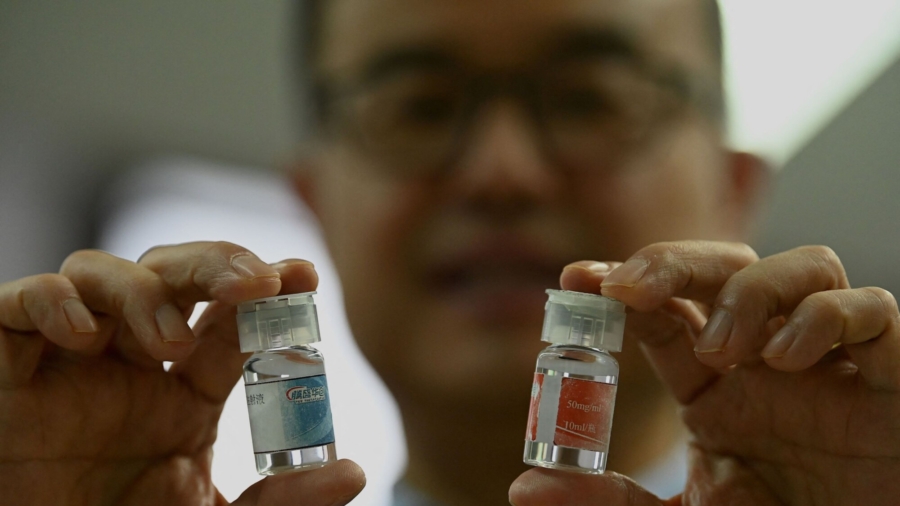
A cancer trial has reportedly become the first in the world to completely remove the disease in every patient, according to a study published Sunday in the New England Journal of Medicine.
Doctors have been unable to see any evidence of tumors among the patients when using magnetic resonance imaging, fludeoxyglucose F 18 injections, physical examinations, or via endoscopic evaluations, according to researchers.
Furthermore, the patients continued to show no signs of cancer during follow-ups ranging from 6 to 25 months and have not had to undergo surgery or receive radiation and chemotherapy.
"No adverse events of grade 3 or higher have been reported," the authors noted.
Specifically, the rectal cancer patients were given dostarlimab, a monoclonal antibody, every 3 weeks for 6 months. The patients had mismatch repair-deficient stage two or three rectal adenocarcinomas, a type of cancer.
The median age of the patients enrolled was 54 years and 62 percent were women.
Typically, such cancer patients would have needed to undergo often debilitating treatments like chemotherapy, radiation, or surgery and in extreme cases, be fitted with colostomy bags.
However, after taking dostarlimab, which is sold under the brand name Jemperli, no cases of progression or recurrence were reported in the patients who underwent the study.
"Mismatch repair-deficient, locally advanced rectal cancer was highly sensitive to single-agent PD-1 blockade," the authors wrote in conclusion, while acknowledging that extended follow-up is needed to assess the duration of response.
The study was supported by the Simon and Eve Colin Foundation, GlaxoSmithKline, Stand Up to Cancer, Swim Across America, and the National Cancer Institute of the National Institutes of Health.