


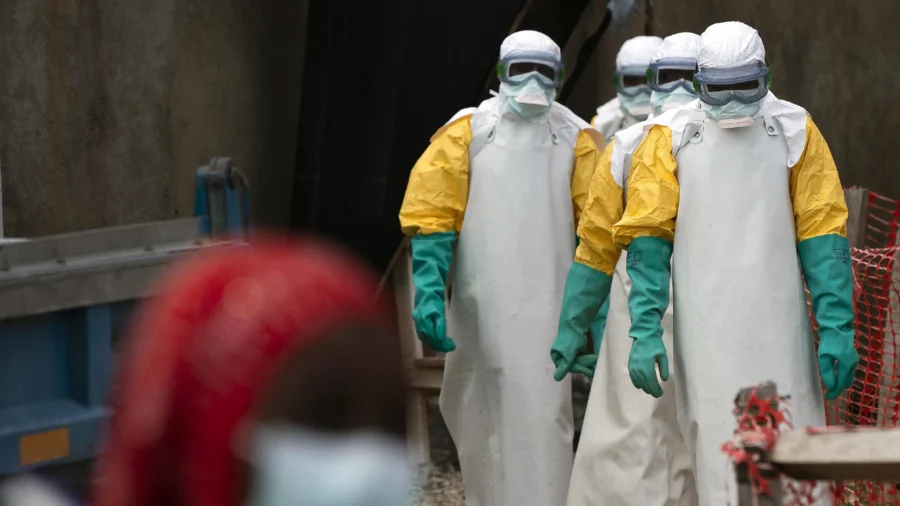
The CDC said it is closely monitoring reports of an Ebola outbreak in Ituri province in northeastern Congo and is working with the country's Ministry of Health to support response efforts through its local office. Health officials also urged travelers to follow public health guidance as authorities work to contain the outbreak and identify the virus strain.
“The risk of Ebola to the American public is considered low,” the CDC said in a statement posted on social media.
80 Suspected Deaths
The warning came hours after the World Health Organization (WHO) confirmed an outbreak of Ebola Bundibugyo in Ituri province, and announced that Uganda had confirmed a related Ebola case in a patient who traveled from Congo and later died.WHO said laboratory testing confirmed Ebola Bundibugyo in 13 of 20 samples tied to a cluster of severe illnesses and deaths in the Mongbwalu and Rwampara health zones in Ituri. The agency said 80 suspected community deaths linked to the outbreak have been reported to date.
Ebola, also known as Ebola Virus Disease (EVD), is a viral hemorrhagic fever spread through direct contact with bodily fluids from infected people or contaminated materials.
Symptoms can appear between two and 21 days after exposure and often begin with fever, weakness, and body aches before progressing to vomiting, diarrhea, and, in some cases, bleeding, according to the CDC.
The CDC updated its Ebola disease guidance Friday, saying orthoebolaviruses can carry mortality rates as high as 80 to 90 percent without treatment. The agency said healthcare workers and family members caring for infected patients face the highest risk of exposure.
WHO said the outbreak is occurring in an area facing significant challenges, including population flows tied to mining operations, insecurity, and frequent cross-border travel between Congo and Uganda.
Ugandan authorities have activated outbreak response measures, including screening, surveillance, and deployment of a mobile laboratory, according to WHO Africa.
The current outbreak involves the Bundibugyo species of Ebola, first identified in Uganda in 2007.
2014–2016 West Africa Outbreak
The virus gained worldwide attention during the massive 2014-2016 West Africa epidemic, the deadliest Ebola outbreak in history.The CDC said more than 28,600 cases and 11,308 deaths were reported across Guinea, Liberia, and Sierra Leone during that outbreak.
Historically, 11 people with Ebola virus infection have been treated in the United States, all linked to the 2014–2016 West Africa outbreak. Nine cases were imported. One imported case in Dallas led to two secondary infections among healthcare workers.
Thomas Eric Duncan, a Liberian man who traveled to Dallas, became the first person diagnosed with Ebola in the United States after seeking care at Texas Health Presbyterian Hospital in September 2014. He died days later. Both nurses recovered.
“EVD is a serious, deadly disease. Without treatment, up to 90% of Ebola virus disease cases are fatal,” the CDC said.
The agency said, “People in the United States do not have immunity to the Ebola virus,” but noted that “two monoclonal antibody treatments that are effective and have been used in previous outbreaks,” while care is largely supportive.
The CDC also warned that even limited spread could trigger public fear and disrupt normal activity, requiring an extensive public health response, including contact tracing, up to 21 days of monitoring for exposed individuals, and strict infection control measures in healthcare settings.