


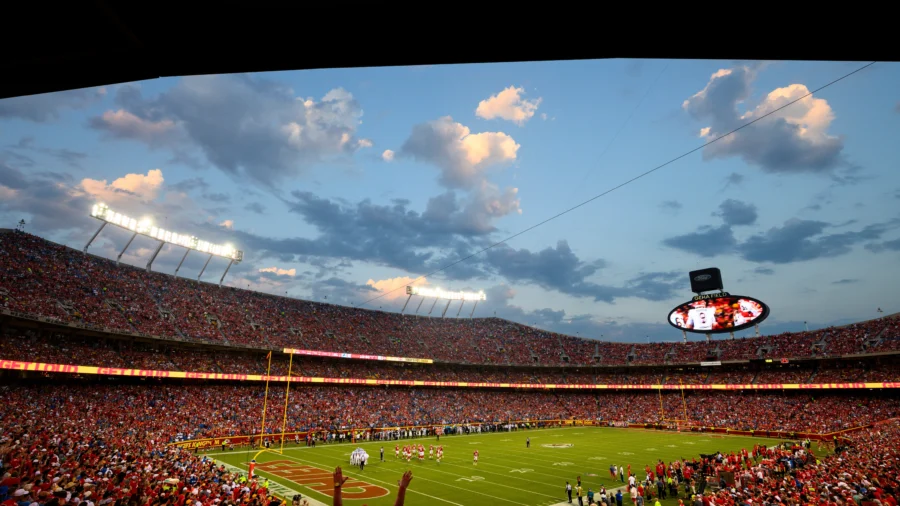
The Chiefs have called Arrowhead Stadium in Kansas City, Missouri, their home since 1972. But after a lengthy bidding war in the two states' legislatures, the Chiefs decided to cross the Missouri River in December 2025.
The stadium will cost an estimated $3 billion to build; the team estimates that construction will add approximately $8.2 billion in economic impact for the region during construction and create 36,500 full-time equivalent (FTE) job-years, the team said.
The Chiefs are also planning to build a practice facility and team headquarters in the suburb of Olathe, Kansas, along with two private ancillary mixed-use development districts.
The new stadium, practice facility, and surrounding developments will generate $1.5 billion in annual economic activity and create 8,500 FTE jobs, the team added. The project also includes a $1 billion investment in additional development in the state.
The Chiefs promised fans that the new stadium will retain or help facilitate existing fan traditions, and help the team maximize home-field advantage.
Plan Revealed
After a six-month design competition, the Chiefs hired Kansas City-based architecture firm Manica as the lead design architect, and sports architecture firm HNTB as the architect of record.The stadium will be fully enclosed with a roof made of ethylene tetrafluoroethylene (ETFE), approximately 400,000 square feet in area, to maximize visibility for military flyovers. Audio engineers were brought in to help design the stadium's size, shape, and roof geometry to maximize crowd noise. The seating bowl draws design cues from Arrowhead Stadium; it will include a drum deck for pregame and in-game ceremonies; and the franchise's most celebrated players will have their names inscribed in the ring of honor above the seating bowl.
Outside the stadium itself, the team plans to more than double the size of the Chiefs Hall of Honor, and more than quadruple the size of the Chiefs team store. The statue of Chiefs founder Lamar Hunt will be located in a "modern plaza." The stadium will also include a parking infrastructure slated to hold 20,000 spaces; the parking infrastructure "will be built specifically to enhance the tailgating experience."
Leaving Missouri
Prior to the Chiefs deciding late last year to move across the Missouri River, the state legislatures of Missouri and Kansas passed competing funding packages to attract the team, as well as Major League Baseball's Kansas City Royals and Major League Soccer's Sporting KC, along with the Kansas City Monarchs of Minor League Baseball.Missouri passed a bond package covering up to 50 percent of the stadium construction, and up to $50 million of tax credits for each stadium. But Kansas legislated $2.4 billion in bonds to cover about 60 percent of the cost, to be paid off by state sales and liquor tax revenues in the immediate surrounding area.
The nail in the coffin was when Jackson County, Missouri voters defeated a local sales tax extension to help cover the cost of renovations at Arrowhead and a new stadium for the Royals. Clark Hunt had previously maintained that his preference was to renovate Arrowhead, which was sentimental to his father, Lamar.
The lease on Arrowhead Stadium expires in 2031.