


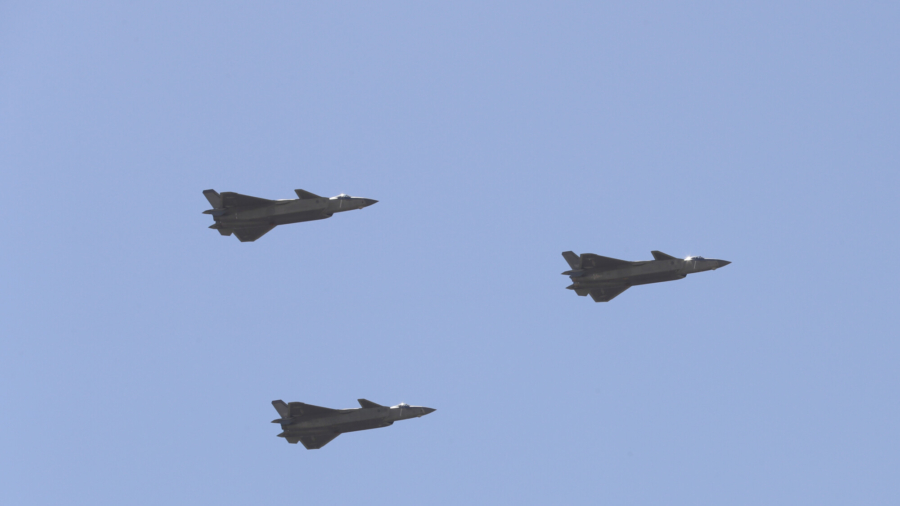
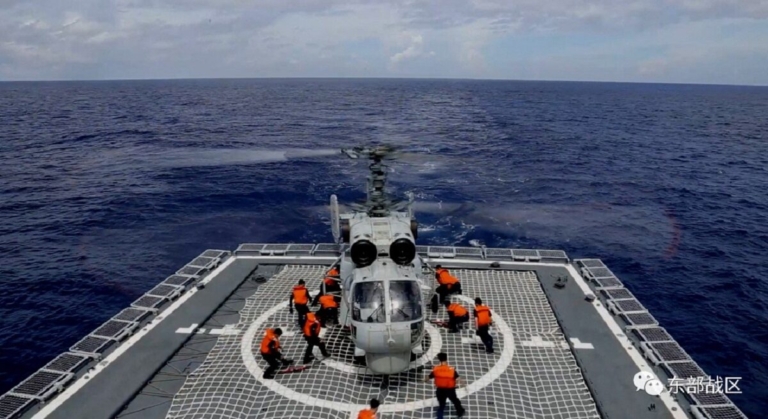
Taiwan strongly condemned military combat drills held by China on Monday, the second such drills around the democratically-governed island in less than a month.
Taiwan’s Defense Ministry said it had detected 57 Chinese aircraft and four naval vessels around Taiwan at 6 a.m. local time on Sunday, with 28 of those aircraft entering Taiwan’s air defense identification zone (ADIZ) and crossing the Taiwan Strait median line.
Meanwhile, Taiwan’s presidential office issued a statement saying both Taiwan and China have the responsibility to maintain peace and stability in the Taiwan Strait. The office also said that China was making “groundless accusations”—a response to remarks from the PLA’s Eastern Theatre Command.
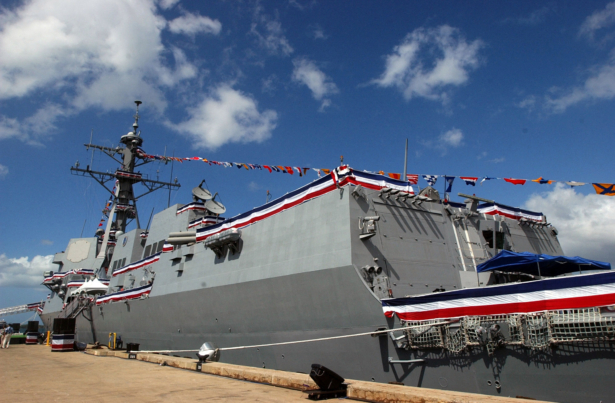
Taiwan has been a self-governing democracy since the Chinese civil war ended in 1949, but the CCP views Taiwan as its own territory. It regards Taiwan as a breakaway province that must be united with mainland China by any means necessary, and CCP leadership has not ruled out the use of force to achieve this goal.
China-Taiwan War Not ‘Inevitable’
Jake Sullivan, the White House’s national security adviser, said that tensions between the United States and Beijing can still be solved peaceably, albeit with great difficulty. He believes that the CCP can still be deterred from invading Taiwan.“It will require us following through on the commitments of the Taiwan Relations Act, which for 40 years now has said we will provide defensive articles to Taiwan. And it will require direct diplomacy with the [CCP].”
To that end, Sullivan said that maintaining the peace would require “hard work” and close “coordination with allies” to ensure that catastrophic conflict never erupted in the Indo-Pacific.
CCP leader Xi Jinping personally made veiled threats to Biden about the issue during a July teleconference, in which he suggested the United States would be damaged by any attempt to prevent China’s takeover of Taiwan.
Sullivan reframed the issue of Biden and Xi’s contentious discussions and said that the duo’s meeting in November provided “greater stability” to the Biden-Xi relationship and underscored that the two nations could still work together on other issues like climate change.
The United States formally recognizes, but does not endorse, the CCP’s position. The U.S. does not have formal diplomatic relations with Taiwan, but it’s bound by the Taiwan Relations Act to provide Taiwan with the arms necessary for self-defense and to prevent any unilateral changes to the status quo.