

China to Host Trump in Beijing This Week

Top Chinese and U.S. trade representatives are set to convene in South Korea ahead of Trump's state visit to China.
Published: 5/11/2026, 3:17:38 PM EDT
China to Host Trump in Beijing This Week
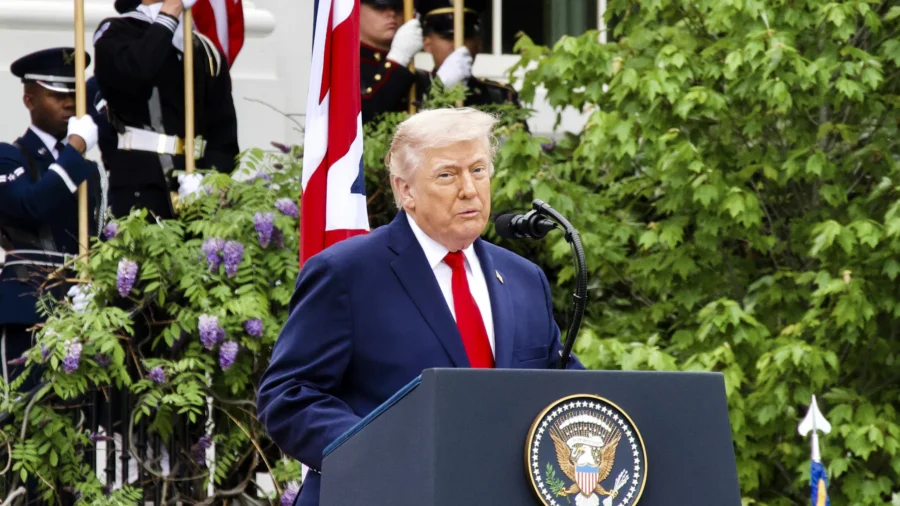
President Donald Trump speaks on the South Lawn of the White House in Washington on April 28, 2026. (Travis Gillmore/The Epoch Times)

The Chinese regime's foreign ministry has confirmed that U.S. President Donald Trump will visit China this week, marking the first time in nearly a decade that Beijing will host a sitting American president.

At the invitation of Chinese leader Xi Jinping, Trump will pay a state visit to China from May 13 to 15, according to a brief statement from China's foreign ministry on May 11.

It's the first official announcement from Beijing about the U.S. president's visit, consistent with the regime's customary practice of releasing its top leader's schedule only shortly before the visit.

The Chinese foreign ministry signaled in March that Beijing's previous sanctions on U.S. Secretary of State Marco Rubio—who is expected to travel with Trump—are no longer in effect, though it never confirmed the dates of the U.S. president's trip.
Initially slated for March 31 to April 2, the trip was postponed by Trump due to the joint U.S.–Israel military operation in Iran.

US–China Tension Over Iran

Just hours before Beijing's announcement, a senior U.S. official told reporters that the Iran war is among the topics Trump and Xi are expected to discuss at the upcoming summit. The official noted that Trump had spoken multiple times with Xi about Iran and Russia, including the revenue Beijing provides to both regimes.

As Tehran's single largest oil buyer and top trading partner, China has come under increasing U.S. scrutiny over its potential aid for Iran during the war.

The State Department on May 8 imposed sanctions on three China-based companies, accusing them of “providing satellite imagery that enables Iran’s military strikes against U.S. forces in the Middle East.”

At a regular briefing on May 11, Chinese foreign ministry spokesperson Guo Jiakun said Beijing strongly opposes Washington's sanctions, calling them unilateral and lacking a basis in international law.

China's commerce ministry has directed all companies to disregard U.S. sanctions announced last month targeting Hengli Petrochemical (Dalian) Refinery Co., a major Chinese oil refiner accused of trading in Iranian petroleum.
In a May 2 statement, the Chinese ministry said companies within China “shall not recognize, enforce, or comply” with the U.S. sanctions aimed at Hengli Petrochemical, as well as four other smaller refineries previously sanctioned by Washington. It marked the first time the Chinese authorities invoked the Blocking Ban, a set of rules introduced in 2021 to counter foreign sanctions.

Separately, the U.S. Treasury Department announced sanctions earlier this month on several Chinese and Hong Kong companies that the Trump administration said were facilitating Tehran's weapons procurement.
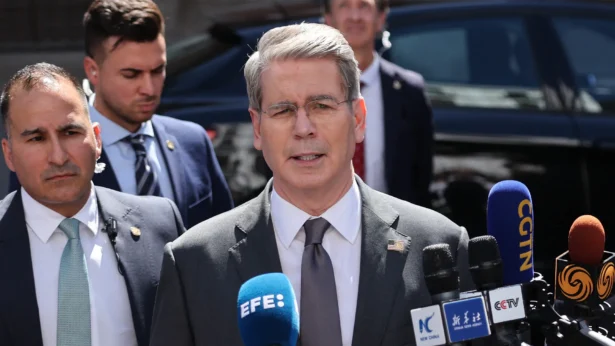
U.S. Secretary of the Treasury Scott Bessent speaks during a press conference following trade talks with Chinese Vice Premier He Lifeng at the foreign ministry in Madrid on Sept. 15, 2025. (Thomas Coex/AFP via Getty Images)
U.S. Secretary of the Treasury Scott Bessent speaks during a press conference following trade talks with Chinese Vice Premier He Lifeng at the foreign ministry in Madrid on Sept. 15, 2025. Thomas Coex/AFP via Getty Images

Trade

Ahead of the upcoming leaders' summit, top Chinese and U.S. trade negotiators are set to convene in South Korea this week for another round of talks, both sides have confirmed.
U.S. Treasury Secretary Scott Bessent said he will sit down with Chinese Vice Premier He Lifeng in Seoul on May 13, following meetings with Japanese Prime Minister Sanae Takaichi in Tokyo.

According to China's commerce ministry, the discussion between He and Bessent will build on the consensus reached during prior calls and meetings between the leaders of the two nations and cover “economic and trade issues of mutual concern.”

Bessent and He last met online on April 30, during which the U.S. Treasury chief raised concerns about China's new extraterritorial regulations, warning that they would have a chilling effect on global supply chains.

Beijing enacted a set of regulations on the last day of March, allowing the authorities to investigate and punish foreign entities that seek to move away from Chinese suppliers to comply with their home countries’ policies.

One of the new measures is the supply chain security regulations, which state that authorities can investigate and impose penalties on foreign companies and individuals engaging in actions deemed discriminatory or harmful to China's supply chain security, such as “suspending normal transactions with Chinese citizens or organizations,” according to the full text published on April 7. Penalties include restrictions on investment, imports, exports, and business transactions with Chinese entities, as well as visa cancellations and exit bans for individuals involved.

In October 2025, Trump and Xi met on the sidelines of the Asia-Pacific Economic Cooperation summit in South Korea, where they finalized a deal covering a variety of trade and economic issues, including soybeans and rare-earth minerals.
The White House said on May 10 that Trump's trip to China is of “tremendous symbolic significance” and that Americans can expect the president to “deliver more good deals.”