


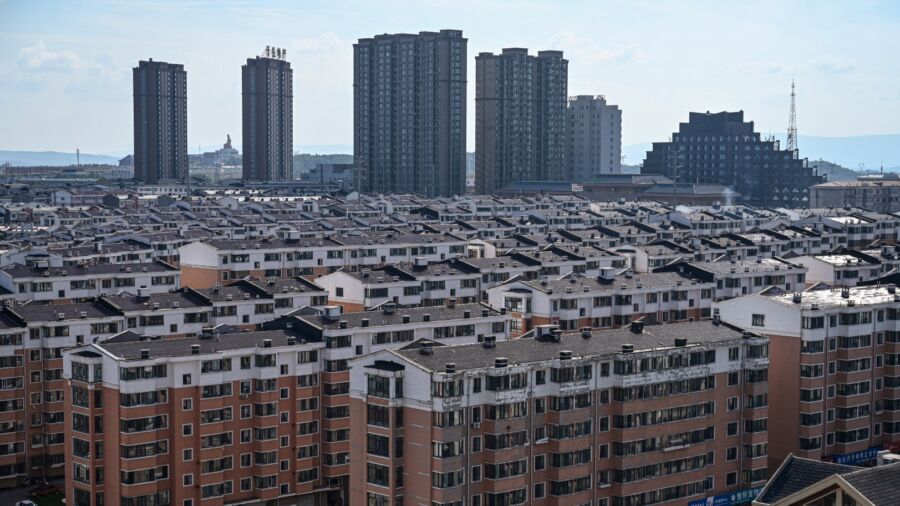
The persistent slump in China’s real estate market continues unabated. Prices for both new and existing homes declined year-on-year and month-on-month in June.
China’s real estate market peaked in 2021 before entering a phase of continuous decline that has now lasted over four years.
Recently, Beijing Fangjie, a highly famous real estate self-media account in Beijing’s housing market, shared that one of her viewers with property in a good location within Beijing’s zone 3 area told her that after listing the house for three months and cutting the price by $147,000, not a single serious potential buyer had come to view it, prompting the viewer to “ask what had happened to the market?”
Experts say that the market is still far from a stage where housing prices stop falling and stabilize, and prices will continue to trend downward.
He added that in reality, “as long as foreclosed properties are not cleared out, housing prices will keep falling relentlessly.”
Unlike Japan in the past, China’s real estate bubble involves significant government intervention, and local governments’ reliance on land sales is far more severe than Japan’s was, he said.
He said that unless this bubble bursts completely, the room for inflated prices remains very large, meaning that while the rate of decline might slow in some cities, prices in many others will continue to fall.
Xie added that since China’s population growth is slowing alongside a sharp decline in overall population, the housing supply far exceeds demand, which means this recession or bubble-bursting process will persist for some time.
The real estate decline has brought about sluggish consumer spending, and despite repeated calls from the Chinese authorities to vigorously boost consumption, results have been minimal.
Since the beginning of this year, multiple regions across China have introduced measures such as consumer vouchers, trade-in programs, and sales promotions. However, interviewees told The Epoch Times that income has not risen, while family expenses remain eaten by mortgages, education, and health care, meaning very few people will genuinely increase their spending.
Xu Zhen said that a long-term drop in housing prices signifies a shrinkage of wealth for ordinary citizens, leading to more cautious spending habits and a greater desire to pay off mortgages early, while highly leveraged households may face the dilemma of negative equity.
He said that although the authorities have elevated boosting consumption into a political mandate, the prerequisite for consumption remains rising incomes and positive expectations, observing that many families have mortgages to pay, job stability is weak, private enterprises are not investing, young people dare not marry or have children, and ordinary citizens dare not consume.