


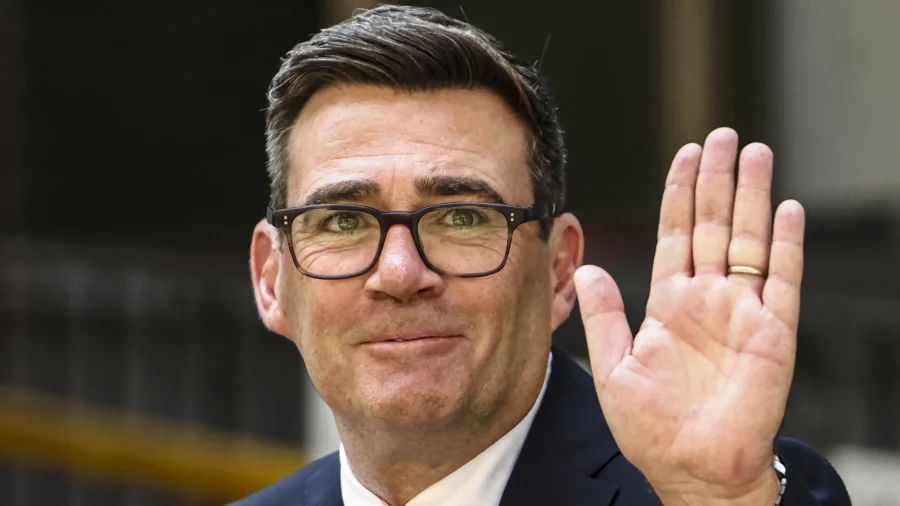
Britain’s new prime minister, Andy Burnham, spoke with President Donald Trump in a phone call covering the military alliance, Iran, and North Sea oil.
“The prime minister began by congratulating the president on a successful World Cup and agreed that England had an excellent tournament,” Downing Street said in a statement.
Outlining his vision for government, Burnham said he would be focused on ensuring reindustrialization up and down the UK to ensure “good growth in every postcode,” the statement added.
On world affairs, Burnham told Trump that ensuring the security of the UK and its allies was at the top of his agenda, and outlined his commitment to securing shipping movement in the Strait of Hormuz, according to Downing Street.
‘Outstanding Relationship’
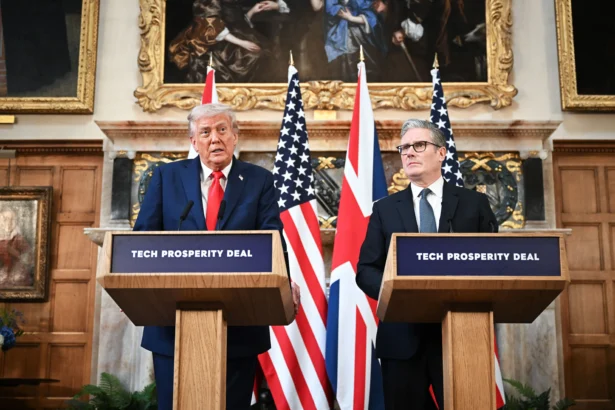
In what was Burnham’s first call to an international leader, Trump said “many subjects” were covered, including the “outstanding” relationship between the two NATO allies.Trump said he would meet Burnham “in the not too distant future” to discuss topics of mutual interest, and that he had wished the prime minister good luck.
The president wrote: “The prime minister has got a big job ahead of him, but he will be able to do it and, of course, the U.S.A. will be there to help!
“We discussed North Sea Oil, Trade, the Military Alliance, Demining of the Hormuz Strait, and many other topics. The call was interesting, and went very well.”
Previous Criticisms
As mayor of Greater Manchester, a role he held since 2017 until his recent dramatic return to frontline politics, Burnham criticized Trump on a handful of occasions, particularly in the wake of the Jan. 6, 2021, Capitol breach by the president’s supporters in Washington, when he said on X that, “any UK politician who gave Trump the time of day should be ashamed right now.”The Downing Street statement said that Burnham told Trump on the call that he “hoped that he would be able to show the president what Manchester had to offer during a visit in the future.”
The G20 summit is due to be held in the UK next year, and Burnham has pledged to shift power away from the London Westminster “bubble” through regional regeneration, championing what he has referred to as “Manchesterism.”
The prime minister held his first cabinet meeting with his newly appointed top team on Tuesday afternoon, after moving into 10 Downing Street just 24 hours earlier.
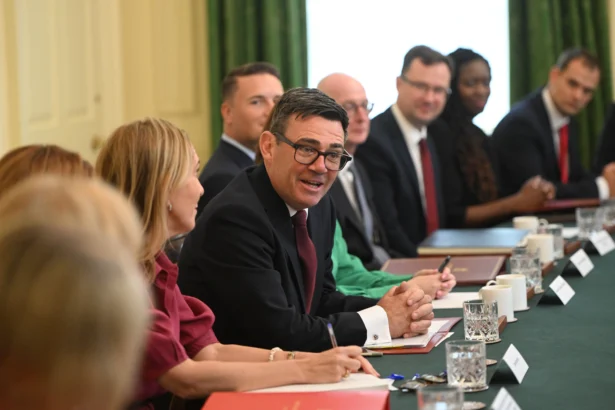
First Meeting of New Cabinet
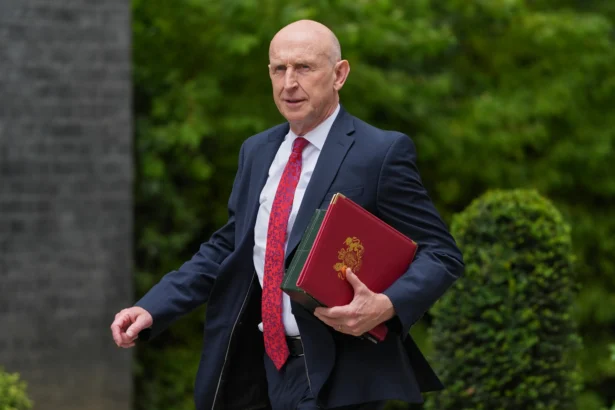
In a purge of lawmakers regarded as Starmer loyalists, Burnham appointed former Defense Secretary John Healey as head of the Treasury. As widely predicted, Rachel Reeves was fired from the role.Healey has previous experience in the Treasury, having worked as a parliamentary private secretary to Gordon Brown between 1999 and 2001 and then becoming a Treasury minister.
Former Health Secretary Wes Streeting was appointed defense secretary, despite having no experience in either the military or the MoD.
Many had tipped Streeting for a more senior role, possibly as chancellor or foreign secretary.
He has not yet been appointed to a role in Burnham’s government, although ministerial roles were still being announced as of Tuesday.
Former Labour leader and Energy Secretary Ed Miliband was appointed foreign secretary, replacing Starmer loyalist Yvette Cooper, who is now the health secretary.
In a 2018 podcast with Alistair Campbell, one of the key architects of Tony Blair’s “New Labour” project, Miliband accused Trump of "misogyny,” "racism,” and of having a “peculiar relationship” with Russia and “the truth.”
Miliband is the second member of his family to be appointed foreign secretary, after his elder brother, David, held the role under Prime Minister Gordon Brown.
The Epoch Times contacted the White House for comment but received no reply by the time of publication.
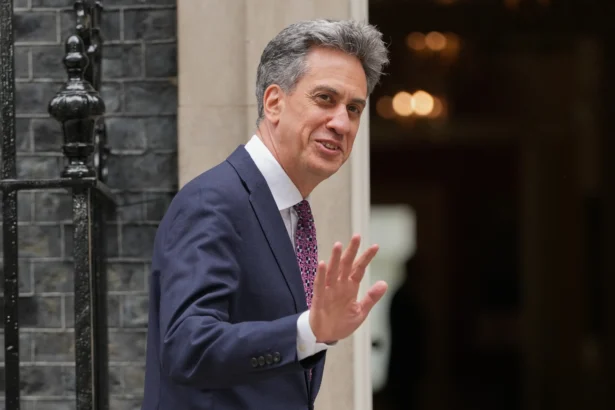
In a statement shared to X, Miliband, who was a staunch supporter of the campaign for Britain to remain in the European Union, said that as well as deepening Britain’s ties to the bloc it left in 2020, he would “nurture our strong, enduring and essential alliance with the United States.”
Miatta Fahnbulleh, who previously served as a junior minister in the energy department, was promoted to energy secretary. She is regarded as being on the left of the party and shares similar net-zero convictions to Miliband.
Shabana Mahmood remains as home secretary, tasked with dealing with immigration, an issue that has caused widespread public discontent in recent years, leading to a surge in support for Nigel Farage’s populist Reform party.
Louise Haigh, a close Burnham ally who helped engineer his rise to the top, was named first secretary of state and Chancellor of the Duchy of Lancaster, making her the de facto deputy prime minister.
Energy Policy Funding Question
Burnham’s first policy announcement was designed to help with the cost of living crisis by removing a consumer tax on electricity, which he said would give people “breathing space.”In response, Starmer loyalist Darren Jones said the cost of the policy had not been budgeted for in government spending plans.
Jones, the former chief secretary to the prime minister who headed the government advisory group for digital ID, said on X that while the small cut in energy costs was welcome, the program for the ID proposal was “unfunded.”
“The government will have to set out how it will pay for its new policies at the budget,” he wrote.
Gas prices have risen amid the ongoing conflicts in Ukraine and the Middle East, with analysts predicting that the price cap on energy bills will rise again in October.
With bond investors watching closely for how any additional fiscal support will be paid for, Burnham has repeatedly said that he will stick to the pledges in Labour’s 2024 manifesto and that fiscal discipline will be the touchstone for his new government.