

China’s wealth inequality may be far more severe than official figures indicate, according to a prominent Chinese economist whose recent remarks have reignited debate over the country’s widening wealth divide and the limits of Beijing’s “common prosperity” agenda.
Rare Remarks From a Chinese Academic
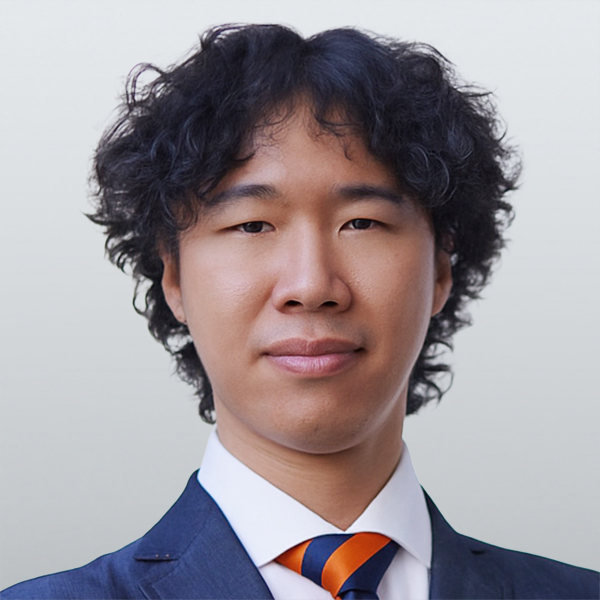
Speaking at Peking University’s National School of Development, Li argued that the core goal of “common prosperity” should be to improve the well-being of ordinary people rather than simply strengthen the state economy.His remarks drew attention after the South China Morning Post, a Hong Kong-based pro-China newspaper, reported on May 4 that Li’s research painted a far starker picture of inequality than official Chinese statistics.
According to Li, China’s wealth Gini coefficient—a common measure of inequality—has risen from 0.45 in 1995 to above 0.7 in 2023. Internationally, a Gini coefficient above 0.4 is often considered a warning threshold for severe inequality.
The estimate sharply contrasts with Beijing’s claim that the wealth gap is shrinking.
Li explained that China’s economic momentum has weakened substantially. Annual growth has slowed from roughly 8 to 10 percent 15 years ago to about 5 percent today. Income growth has also decelerated, with low-income groups seeing gains of less than 2 percent in recent years.
Li said China’s low-income population remains far larger than many people realize. He said that around 300 million Chinese people earned less than 1,000 yuan ($147) per month in 2021, while nearly 98 million earned less than 500 yuan per month. Household consumption as a share of national income remains below 2004 levels, despite years of government efforts to stimulate domestic demand.
Critics Say Official Data Understate Inequality
Tang Jingyuan, a U.S.-based China current affairs commentator, told The Epoch Times that the gap between Li’s estimates and official statistics reflects systemic distortions in China’s data collection and political incentives to downplay social tensions.He said that the Chinese regime treats such information as politically sensitive because it affects “social stability” narratives promoted by the Chinese Communist Party (CCP).
“The statistics are heavily politicized,” Tang said, arguing that researchers within the regime often receive filtered or forged data.
Davy Jun Huang, a U.S.-based economist and former columnist for the Chinese state media outlet CNTV, told The Epoch Times that a major blind spot is what he described as “gray income” among the CCP’s political elites—wealth that is rarely reflected in official wage or household surveys.
A senior official may control assets worth billions of yuan while reporting only a modest salary, Huang said.
From Growth Model to Wealth Distribution Crisis
Tang said that China’s inequality problem reflects bigger structural issues in the country’s economic model.He said that China has maintained market-driven production while increasingly relying on state-directed distribution mechanisms that channel a disproportionate share of wealth to the political elites.
Tang described China’s earlier reform era, which began in the late 1970s, as a semi-market system that allowed private citizens to accumulate wealth, but said the current environment resembles a system that is draining wealth from the common people.
CCP entities and large state-backed institutions now command an increasing share of national income, while the household share has declined, he said.
Huang also said that much of China’s wealth has become concentrated in state monopolies and in politically connected sectors controlled by what he called the “ruling class.”
Huang was also critical of Beijing’s campaign to encourage wealthy private companies and individuals to donate more to society in the name of common prosperity, rather than telling the CCP’s elites to do so.
He said that the CCP effectively takes the majority of economic output through taxes, administrative controls, and political allocation, then pressures profitable private businesses to subsidize poorer groups.
‘Lying Flat’ Becomes a Generational Response
As economic pressures intensify, Tang said that many young Chinese have become disillusioned with the promise of upward mobility.Tang said the phenomenon is often misunderstood as laziness or apathy. Instead, he described it as a rational response to what many people perceive as a system in which hard work no longer leads to meaningful economic advancement.
“If most of the value created through personal effort is ultimately absorbed by political and privileged interests, then many people conclude that working harder has little meaning,” he said.
The topic has become highly sensitive for the CCP because it directly touches on public frustration with the country’s economic and political structure, Tang added.
Huang argued that the obstacles facing the CCP’s “common prosperity” campaign stem not from a lack of resources but from political priorities.
He pointed to China’s foreign aid spending for regimes such as North Korea, arguing that Beijing continues to devote substantial resources abroad even as domestic social protections remain under strain.
“The CCP itself has become the root cause of China’s major social issues and crises,” Tang said. “Without dismantling this regime, these problems are unlikely to be resolved.”