

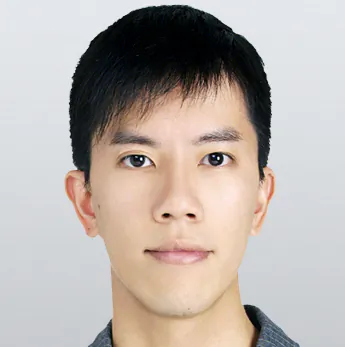
A Chinese national studying at a Canadian university has been charged with lying to American officials to conceal that he took photographs at a Chicago airport cargo facility at the direction of a suspected Chinese official, according to a federal complaint filed in Detroit on Aug. 26.
Zeng Weiheng, born in 2004, is charged with making false statements in a matter under federal jurisdiction. An undergraduate student at the University of Waterloo in Ontario, Canada, Zeng was issued a B1/B2 visitor visa in October 2022 and has entered the United States 24 times since then, according to an affidavit filed with the complaint by an FBI agent.
He was arrested on Aug. 26.
Authorities stopped Zeng for an initial screening on Aug. 23 at the Ambassador Bridge border crossing in Detroit, after linking his vehicle to a security incident at a FedEx cargo facility at Chicago O’Hare International Airport on April 21.
That day, FedEx employees saw an Asian male spending roughly 20 minutes at the facility. Surveillance footage showed the man climbing onto a construction forklift to take photographs and attempting to open a parked delivery truck and shipping trailer before driving off in a minivan bearing an Ontario license plate.
Zeng underwent three interviews with U.S. Customs and Border Protection officials during secondary screening, during which his account of his April trip changed. according to court documents.
In his first interview, Zeng claimed that he had visited tourist sites during his April trip, and the photos of planes in his phone were “pictures of model aircraft being tracked for a flight radar website,” authorities said. When pressed in a second interview, Zeng allegedly admitted going to the FedEx facility to take photos of planes and revealed that he had also trespassed at a FedEx facility at Toronto Pierson Airport in 2025.
By the third interview, Zeng revealed that a contact in China had “assigned him specific planes and their tail numbers to photograph” and he was paid $20 to $30 per photograph, the court documents allege.
In his subsequent interview with the FBI, Zeng admitted that the aircraft photography was a cover story devised by his handler, and the “true task was to obtain interior photographs of the FedEx facility,” according to the affidavit.
His Chinese contact “was primarily interested in information on transportation and logistics in the United States” and “asked for information of flight freight logistics, bus routes, and trains routes and schedules,” the affidavit said.
Zeng also told the FBI that he suspected his Chinese contact was a Chinese regime official working for one of China’s security departments, in part because the contact had provided him with “videos of scenes that only security officials would have access to.”
For his communication with the Chinese contact, Zeng said he was mailed SIM cards from China’s state-run China Telecom, which allowed him to “by-pass Canadian cellular network and connect directly with the Chinese provider network” to send text messages, according to the affidavit.
Zeng was instructed to use the SIM cards only in a Huawei-made phone, swapping in a new card every few months and destroying the old one. He was also told never to bring the phone with him on trips to the United States.
The United States has blacklisted Chinese tech company Huawei over security concerns and banned it from doing business with American suppliers, selling new network or consumer hardware in the country, or providing its equipment to U.S. telecom networks.
Zeng also told the FBI that the Chinese contact wanted him to travel to Orlando, Las Vegas, and Los Angeles “to obtain photographs of specific locations surrounding airports.” Zeng said he declined, but completed “two taskings” and received a total of 500 yuan (about $74) for the photographs he took in Toronto Pearson International Airport and O’Hare International Airport.
As for his motivation, Zeng told the FBI that he thought it would be “cool” and wanted “to have the opportunity to work with someone like [agents] at the FBI,” according to the affidavit.
The Epoch Times was unable to contact Zeng’s lawyer for comment.