


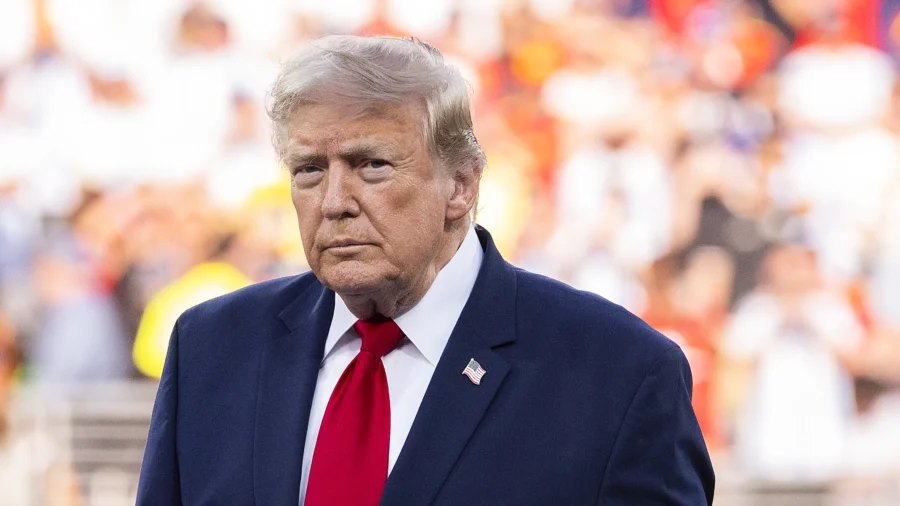
A federal judge on Aug. 28 denied President Donald Trump’s bid to transfer his New York falsified business records case to federal court.
Under federal law, cases filed in state court can be removed, or transferred, to a federal district court. A defendant files a notice of removal in federal court, which has the effect of transferring the case to federal court on a provisional basis. After the defendant notifies the state court, a hearing follows in federal court, and if removal is denied, the case is remanded back to state court.
In September 2024, Hellerstein denied Trump’s prior removal motion, finding that the U.S. Supreme Court’s July 2024 ruling that former presidents have broad criminal immunity for official acts did not alter his previous conclusion that payments to adult performer Stephanie Clifford “were private, unofficial acts, outside the bounds of executive authority.”
Hellerstein said in that ruling, “It would be highly improper for this Court to evaluate issues of unfairness or error in the state trial. Those are issues for the state appellate courts.”
In his new ruling, the judge said that Trump was seeking a “‘second bite at the apple,’ a result the law disfavors.”