


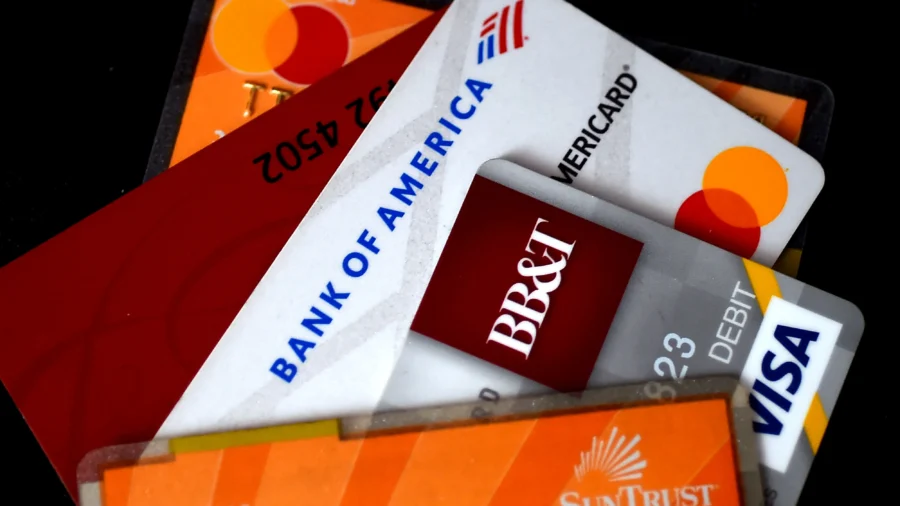
While the Fed called the overall increase in household debt “moderate” in its press release, credit card debt had increased 48 percent since the first quarter of 2021 when the impact of inflation due to COVID-19 spending and post-COVID supply and demand problems began to be felt.
With credit card interest rates at an all-time high of more than 20 percent, on average, this means more of Americans’ hard-earned income is going towards interest on their debt rather than on new purchases, savings, or investments.
Bankrate Senior Analyst Ted Rossman noted in a press release email that “According to Federal Reserve data, Americans owe 45 percent more now on their credit cards than they did in early 2021. And the credit card delinquency rate is at its highest point since 2011.”
Respondents to Bankrate’s ongoing credit card debt survey blamed inflation and high interest rates for their increasing credit card debt.
The number of Americans with credit card debt who feel less confident in their ability to get out of it has increased 24 percent since 2022, and 17 percent said they worry they might not even be able to make the minimum payments at some point over the next six months.
Only 42 percent of those who had credit card debt in the study—less than half—have a plan to pay it off.
"With credit card balances at an all-time high and the average credit card rate hovering near record territory, it’s more important than ever to pay down this debt as soon as possible,” Rossman advised.
Wallethub analyst Cassandra Happe agreed. She shared with NTD News in an email, “Increasing the amount of debt you have isn’t always bad, but it becomes a problem when it accumulates too quickly for you to be able to make on-time payments. With how high interest rates are currently, it’s easy for borrowing to become unsustainable.”
Happe emphasized the importance of having a “viable payoff plan. The best plan is to focus on paying the highest-interest balances down first while maintaining minimum payments on the rest, then repeating the process until debt-free.”
It’s likely that delinquencies, which are already high, will become even higher if more people who already carried credit card debt lose their jobs.
One thing that can help consumers pay off high-interest credit card debt, Rossman said, might seem counterintuitive.
Rossman recommends that those with good credit scores in the high 600s or better get a new credit card that offers a zero percent interest rate for balance transfers.
Transferring high-interest balances to the new card at zero percent interest will give consumers a set period of time, usually 18 to 21 months, to pay off the balance without incurring interest.
While the risk in making such a move is that some consumers end up charging more purchases on the first card once the balance has transferred, for disciplined consumers who want to pay off their balances quickly, it could be just the boost they need.