


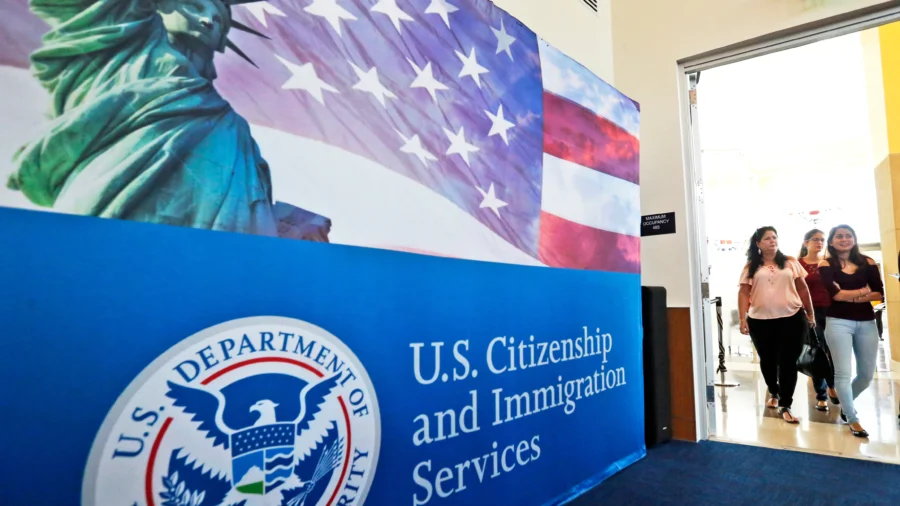
According to USCIS, the rule "prioritizes thorough screening and vetting of noncitizens before their employment authorizations are extended," directly impacting those filing EAD renewals on or after the effective date.
The policy change comes in response to growing public safety concerns, including fatal crashes involving illegal immigrants with commercial driver’s licenses (CDL) and the firebombing attack in Boulder, Colorado, in June that injured 15 people and resulted in the death of 82-year-old Karen Diamond. The man who carried out the attack, Mohamed Sabry Soliman, had previously obtained and renewed a work permit under the Biden administration’s policy, despite an expired visa.
Immigrants who file to renew their EAD on or after Oct. 30 will no longer receive an automatic extension of their EAD, the DHS said, although there are limited exceptions.
USCIS Director Joseph Edlow said, “USCIS is placing a renewed emphasis on robust alien screening and vetting, eliminating policies the former administration implemented that prioritized aliens’ convenience ahead of Americans’ safety and security.” The agency emphasized that working in the United States “is a privilege, not a right.”
The rule impacts millions of applicants. According to a working paper from the Federal Reserve Bank of Boston, initial applications for work permits reached about 1.49 million in 2023 for immigration categories related to recent arrivals. That year, the total number of applications—including renewals and replacements—was approximately 2.2 million.
In 2024, overall filings surpassed 4.5 million, with an estimated 3 million being initial applications. This surge in work-permit filings places ongoing pressure on the U.S. labor market, indicating that more foreign-born workers are joining the workforce even as overall employment growth has slowed.
The Biden administration explained the change was needed to address processing delays at USCIS, noting that without the automatic extensions, many renewal applicants risked losing their employment authorization or documentation. At the time, it was estimated that “approximately 800,000 renewal applicants would have been in danger of losing their employment authorization and/or documentation in the period beginning May 2024 and ending March 2026,” according to CIS.
USCIS now recommends that immigrants “seek a timely renewal of their EAD by properly filing a renewal application up to 180 days before their EAD expires” to avoid lapses.
The agency stated that ending automatic extensions enables more frequent and thorough vetting of applicants, allowing USCIS “to deter fraud and detect aliens with potentially harmful intent so they can be processed for removal from the United States.”
The new DHS rule does not affect EADs that were automatically extended prior to Oct. 30, and exceptions remain in place for TPS-related documentation. Officials emphasized that this policy marks a shift away from the previous administration’s focus on convenience, highlighting a new priority on public safety, national security, and thorough background checks for applicants.