


The May 28 alert, titled “Public Health Arrival Restrictions and Enhanced Ebola Screening,” requires U.S. citizens and U.S. nationals who were in those countries within 21 days before arriving in the United States to enter through designated airports for enhanced public health screening.
“This requirement applies to all U.S. citizen and U.S. national passengers who were present in those countries,” the State Department said.
Federal officials said travelers may face rerouted flights, cancellations, additional health checks, and possible travel delays.
“The CDC and the Department of Homeland Security’s (DHS) Customs and Border Protection (CBP) will apply enhanced public health screening at the designated airports in response to the Ebola disease outbreak,” the State Department said in the alert.
- Washington Dulles International Airport (IAD)
- Hartsfield-Jackson Atlanta International Airport (ATL)
- George Bush Intercontinental Airport (IAH)
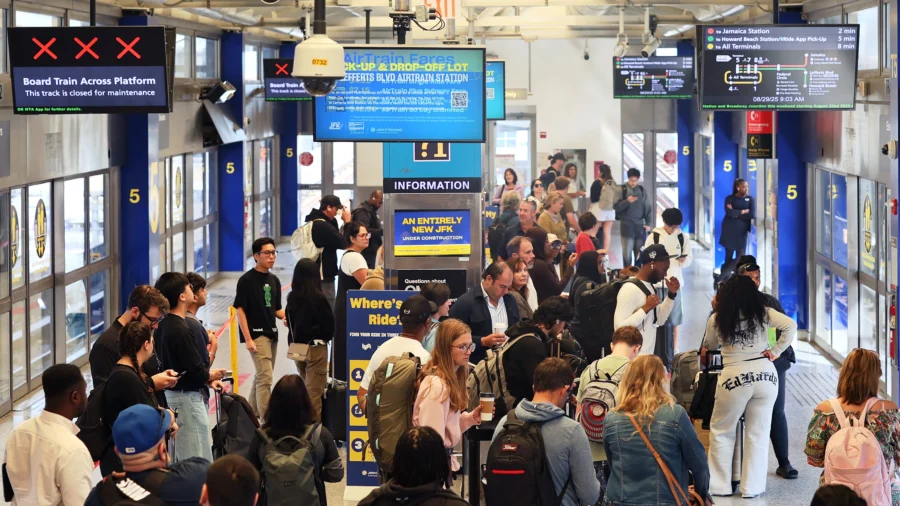
- John F. Kennedy International Airport (JFK), effective May 28 after 11:59 p.m. EDT
Health officials may also collect contact information for follow-up by state or local public health agencies, according to the CDC. Some travelers may receive additional public health assessments based on potential exposure risks.
The CDC said most travelers without symptoms will be allowed to continue to their final destinations after screening. Those travelers will receive instructions for monitoring their health for 21 days after leaving the affected countries.
“Public health entry screening cannot identify travelers who are infected but not yet showing symptoms,” the CDC said. “Ebola symptoms can develop up to 21 days after exposure.”
Travelers with fever or symptoms consistent with Ebola will receive additional evaluation from a CDC public health officer.
“If the assessment shows that a traveler may be sick with Ebola, the traveler will be transferred to a hospital for further medical evaluation and isolation,” the CDC said.
The CDC said emergency public health measures were issued “to help reduce the risk of Ebola spreading into the United States during the current outbreak response,” adding that “Ebola is a serious viral disease that spreads through direct contact with infected bodily fluids and can be fatal.”
The updated airport screenings for U.S. citizens and U.S. nationals follow federal Ebola-related entry restrictions issued earlier this month.
On May 22, DHS expanded the restrictions to include lawful permanent residents, also known as green card holders. Officials said green card holders who were in those countries within the previous 21 days are also temporarily barred from entering the U.S.
“The suspension is temporary and is currently set to remain in effect for 30 days while CDC completes a public health risk assessment and coordinates mitigation measures with partner agencies,” the CDC said.