


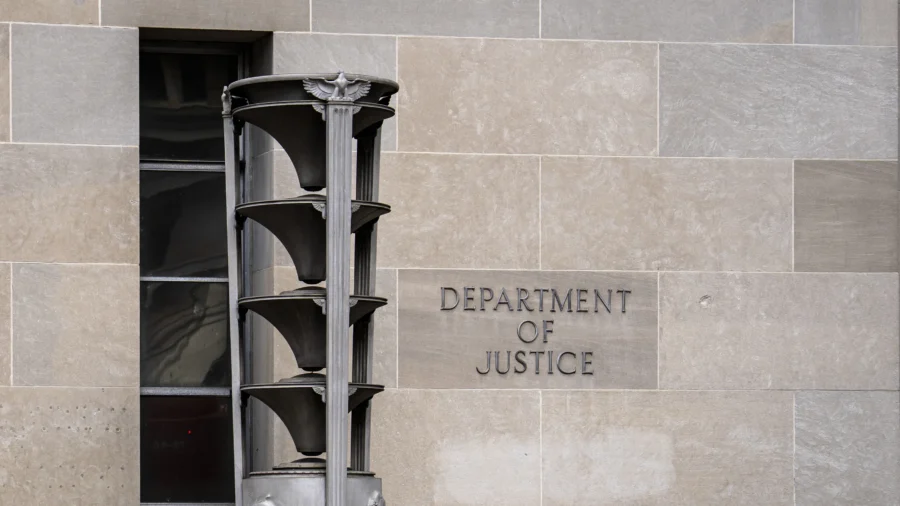
The U.S. Department of Justice announced that it plans to expand and resume use of the federal death penalty, including reinstating execution protocols, authorizing new capital prosecutions, and adding potential execution methods.
The Biden-Garland moratorium on federal executions commuted 37 of 40 federal death sentences to life without parole in December 2024. Since then, the remaining federal death row inmates include Dylann Roof, Dzhokhar Tsarnaev, and Robert Bowers.
“The prior administration failed in its duty to protect the American people by refusing to pursue and carry out the ultimate punishment against the most dangerous criminals,” said Acting Attorney General Todd Blanche.
“Under President Trump’s leadership, the Department of Justice is once again enforcing the law and standing with victims,” he said.
Among the changes, the DOJ directed the Federal Bureau of Prisons (BOP) to reinstate lethal injection using pentobarbital and expand execution protocols to include additional methods, such as the firing squad.
The DOJ said they directed the BOP to “examine relocating or expanding federal death row or constructing an additional execution facility to permit additional manners of execution.”
Capital Punishment 'Essential' for Functioning Justice System: Trump Administration
In its newly released report, “Restoring and Strengthening the Federal Death Penalty,” the DOJ said President Donald Trump recognizes capital punishment as “an essential tool” in a functioning criminal justice system.“Not only does it ‘deter and punish those who would commit the most heinous crimes,’ but death, more than any other punishment, communicates the immeasurable value of innocent human life,” Acting Attorney General Todd Blanche said. “It also provides a sense of closure and finality to the families of murder victims.”
Blanche said that by the end of Trump’s first term, the DOJ had executed 13 people convicted of murder.
Among those executed was Keith Dwayne Nelson, who kidnapped 10-year-old Pamela Butler while she rollerbladed outside her home. He forced her into his pickup truck, took her to a wooded area behind a church, and sexually assaulted her before strangling her with a wire.
After witnessing his execution, Butler’s mother told reporters, “I feel at peace now, and I feel Pammy’s soul is at peace and that she can rest.”
The DOJ said additional steps in the coming weeks will include potential rule changes to shorten the time between sentencing and execution, and limit when clemency petitions can be filed.
The DOJ says in the coming weeks it will also “revise the Justice Manual to return the Department to its historic approach to capital crimes, streamline the process for seeking death sentences, and ensure appropriate consultation with victims’ families.”