


What’s the Premonition?
In Tatsuki’s second book, a reprint of her first, “The Future I Saw: Complete Edition,” published in 2021, she predicted a huge catastrophe in July this year.Her description of the disaster, seen in a dream, is extremely vivid: On the early morning of that date, she saw a huge earthquake, a significant geological shift, and a great loss of life.
'Japanese Baba Vanga'
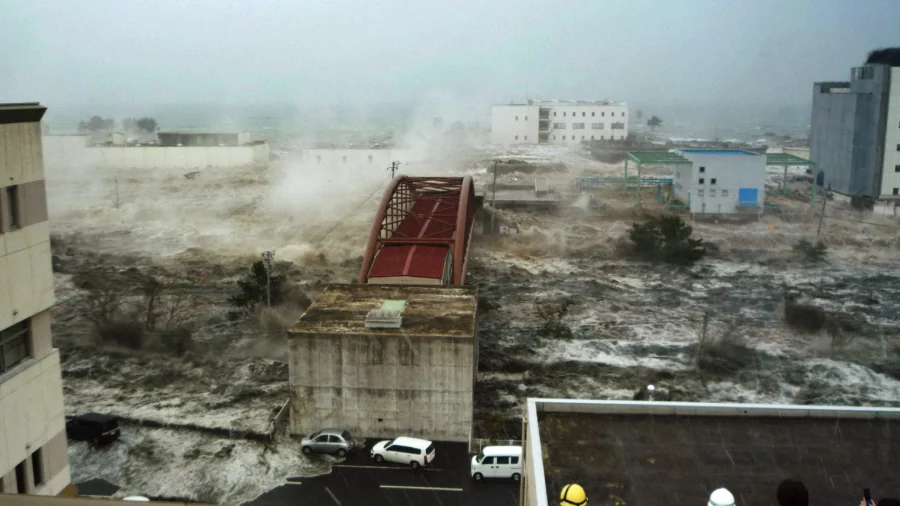
Tatsuki, born in 1954 in Yokohama, gained fame with her first book, “The Future I Saw,” published in 1999, which illustrated the dream diary she had envisioned. The cover of the book prominently features the text “A Big Disaster in March 2011.”This book was overlooked at the time, until 12 years later, on March 11, 2011, when the 9.0 magnitude earthquake triggered a devastating tsunami that led to around 18,500 deaths and the meltdowns at the Fukushima Daiichi Nuclear Power Plant.
As one of Japan’s worst natural disasters, it also caused $210–$360 billion in damage.
The alignment of her prediction brought Tatsuki huge public attention.
Other significant events Tatsuki’s supporters claim she accurately predicted include the Kobe earthquake in 1995, the death of singer Freddie Mercury in 1991, and the death of Princess Diana in 1997.
Some of her predictions failed or remain unfulfilled, like her foresight of a major eruption of Mount Fuji. Mount Fuji has remained dormant since 1707, with no major eruption as of May 2025.
Her fanbase in Japan, China, and Thailand views her as a prophetic figure, dubbing her the "Japanese Baba Vanga."
Butterfly Effect
The devastating scenes depicted in her dream have triggered a serious series of ripple effects in reality.Many tourists, mainly from mainland China, Hong Kong, and other East Asian countries, have been scared away by this prediction, canceling or delaying their Japan holidays.
The airline admitted that the decrease was due to the spread of Tatsuki’s prediction.
'We’d Rather Believe It’s True'
The prophecy has been widely shared on social media, intensifying concerns.TikTok has hosted over 50 related videos, which have collectively been seen more than 40 million times.
In Chinese-speaking regions, especially Hong Kong and Taiwan, over 220 Chinese-language videos further magnified the anxiety, surpassing 52 million views.
Miss Chen, whose friends just finished a holiday in Japan last year, told NTD, “I don’t think anyone is willing to gamble with their own life. That prophecy has had a great impact on travel to Japan. The prices of air tickets have dropped a lot.
“A friend of mine has booked a trip to Japan at the end of May. If a disaster is really going to happen, it is worthwhile to etch the glory of history in memory before that,” Chen said.
Japan’s Response
As discussions about disaster preparedness and doomsday scenarios flood social media, the Chinese embassy in Tokyo issued a formal travel advisory in April, citing “recent seismic activity” and “increased volcanic alerts,” and urging Chinese nationals residing in or visiting Japan to take “extra precautions against natural disasters.”This was interpreted by some as endorsing the rumor, further fueling the panic.
Meanwhile, Japanese authorities and agencies are downplaying the prophecy.
“So please make disaster prevention preparations in advance, such as confirming evacuation sites and evacuation routes, and securing furniture. In addition, if you feel shaking or a tsunami warning is issued, please evacuate immediately,” the statement said.
Japan, situated on the Pacific Ring of Fire, a zone of intense tectonic activity, is among the most earthquake-prone nations globally.