


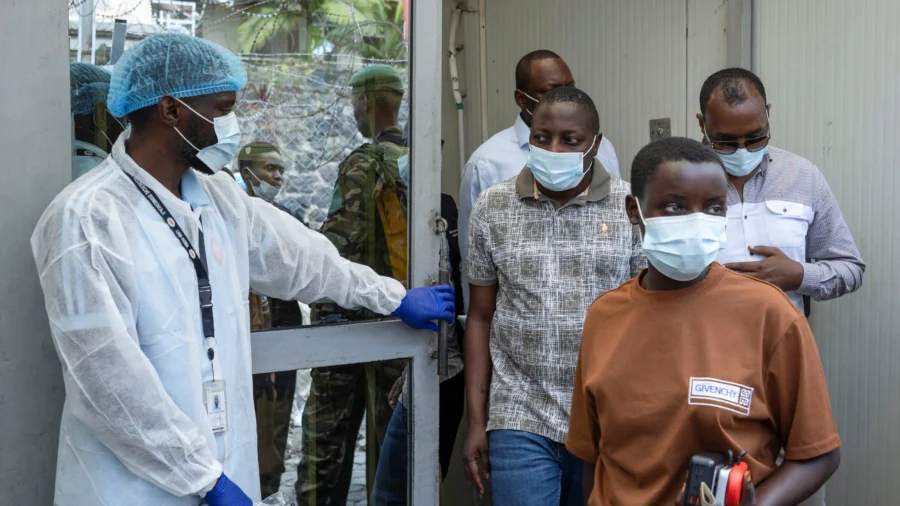
Homeland Security has ordered all U.S.-bound flights from the Democratic Republic of Congo (DRC), Uganda, and South Sudan to land at Washington-Dulles International Airport amid the deadly Ebola outbreak.
Ebola is a rare but serious illness caused by a group of viruses known as ebolaviruses. It spreads through direct contact with blood or body fluids of an infected person, contaminated objects such as needles, or infected animals.
Unlike the flu or COVID-19, Ebola is not spread through the air.
Health care workers and aid groups have struggled to respond as the outbreak is much larger than initially reported.
As of May 19, the DRC and Uganda Ministries of Health have reported a total of 536 suspected cases, 105 probable cases, 34 confirmed cases, and 134 suspected deaths.
The World Health Organization (WHO) was first alerted on May 5, 2026, about a high-mortality illness in the DRC, including the deaths of health care workers. Investigations later confirmed the outbreak was caused by the rare Bundibugyo strain of Ebola.
WHO Director-General Tedros Adhanom Ghebreyesus said he was concerned about the "scale and speed of the epidemic,” noting the emergence of cases in urban areas, deaths of health care workers, and significant population movement.
There is no available vaccine or medicine for the Bundibugyo strain responsible for the outbreak, which spread undetected for weeks following the first known death, while authorities tested for a more common Ebola virus caused by the more widely known Zaire strain.
The largest Ebola disease outbreak occurred from 2014 to 2016 in West Africa, with more than 11,000 deaths and cases spread to seven additional countries across three continents.
“These epidemics demonstrated the potential for Ebola disease to become an international crisis in the absence of early intervention,” according to DHS.