


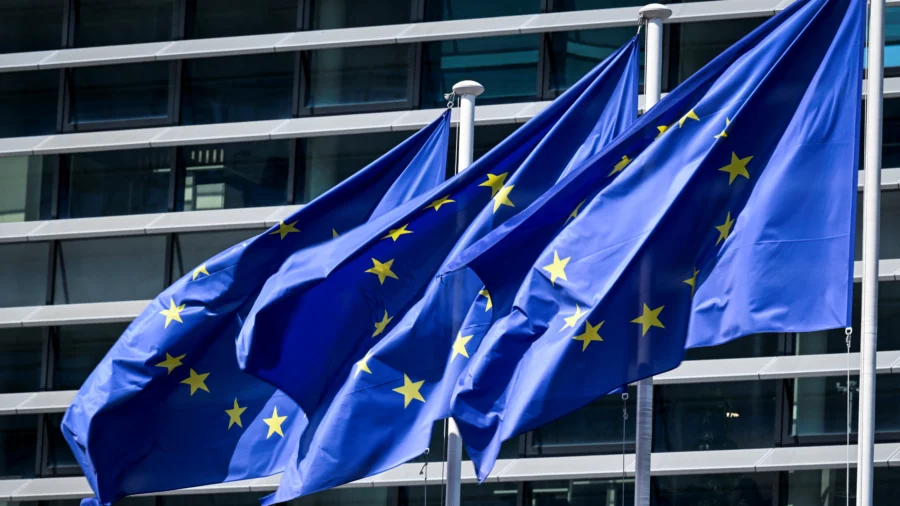
The European Parliament voted on Tuesday to heavily restrict steel imports, aiming to shield the domestic industry from global overcapacity.
The measure passed with 606 votes in favor, 16 against, and 39 abstentions. The new measures will take effect on July 1 as a long-term replacement for the EU’s current steel safeguard system.
It still needs formal approval from the Council of the European Union before it officially becomes law.
Under the new regulations, duty-free steel imports will be slashed by 47 percent from 2024 levels, capping them at 18.3 million metric tons per year—equivalent to the EU’s total steel imports in 2013. The EU considers that the global steel market has become increasingly imbalanced since then, mainly due to China’s long-term heavy subsidies to its domestic steel producers, which have led to massive overcapacity.
Furthermore, the tariff for any imports exceeding this quota will double, jumping from 25 to 50 percent.
EUROFER said that the EU will remain a highly open steel market, allowing approximately 18 million tonnes of tariff-free imports annually. However, it emphasised that safeguarding European steel production must align with securing domestic demand and called for similar strategic protections to be extended to downstream steel-containing goods.
When it proposed the new measures in October, the European Commission noted that the EU steel sector has lost 100,000 jobs since 2008 and faces further production declines without extended safeguards.
To prevent tariff evasion, the new rule introduces a strict "melt and pour" requirement—a product's true country of origin is determined solely by where the steel was originally melted and cast. This mechanism will serve as the baseline for allocating the newly restricted country-specific quotas, closing a major loophole that allows foreign producers to bypass tariffs by performing minimal processing in third-party countries.
Recent data highlights Turkey as the bloc’s consistent top supplier of finished steel products, exporting roughly 3.9 million tonnes in 2024 and maintaining this lead through 2025. South Korea follows as the second-largest exporter with an 11 to 12 percent share, while China, India, and Indonesia continue to closely compete for the remaining top five positions.
The current safeguard system was introduced in 2018 when the EU feared that millions of tons of cheap global steel originally bound for the United States would suddenly flood the European market after it imposed its own tariffs. The system established a framework of tariff-free quotas paired with a 25 percent tax on any excess imports. While it has been extended several times, it is officially set to expire on June 30, 2026.
Alongside the new regulation, a joint statement from the European Commission, Council, and Parliament committed to swiftly winding down Russian steel imports, though current sanctions exemptions for Russian steel slabs will remain in place until September 2028. The stakes are high for EU supply chains, as roughly 3.7 million tons of steel slabs were imported from Russia just last year.