


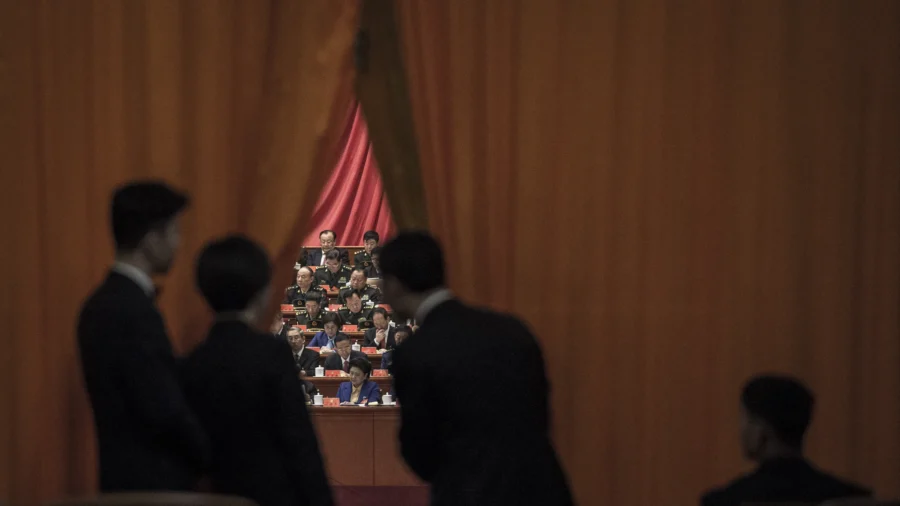
The Chinese regime is reviewing regulations for collective leadership coordination. An expert believes this paves the way for other leaders to influence decision-making at the top of the Chinese Communist Party (CCP), a move that signals a loss of Chinese leader Xi Jinping's power.
On June 30, the CCP's Politburo held a meeting. According to the state-run media outlet Xinhua, the meeting reviewed the “Regulations on the Work of the Party Central Committee’s Decision-Making and Coordination Body.”
Li Linyi, a current affairs commentator, said that the meeting aimed to establish legal status for other party factions to participate in the CCP's top decision-making process, undermining Xi's personal dictatorship.
The establishment of the new body involves the roles of “top-level design, overall coordination, comprehensive advancement, and supervision of implementation for major tasks,” Xinhua reported.
Li said this coordination body is likely backed by CCP elders and may be related to the operations of a new central leadership team.
On June 27, China’s rubber-stamp legislature, the National People’s Congress, announced the removal of Admiral Miao Hua—one of Xi Jinping’s most trusted allies—from the CCP's highest military command body, the Central Military Commission (CMC).
Since July of last year, senior military officials loyal to Xi have been successively suspended.
These include former Defense Minister Li Shangfu, who was purged; General He Weidong, vice chairman of the CMC, who has been missing since March; and Vice Admiral Li Hanjun, chief of staff of the People’s Liberation Army Navy, who was recently stripped of his National People’s Congress representative status.Recent political changes within the CCP have drawn significant attention from Western analysts.
"There is clearly a power shift occurring in China," he said.
"If Xi's own people aren't safe, who’s really in charge? Xi or someone trying to replace him? Is Xi the next Khrushchev? And who's next?"