


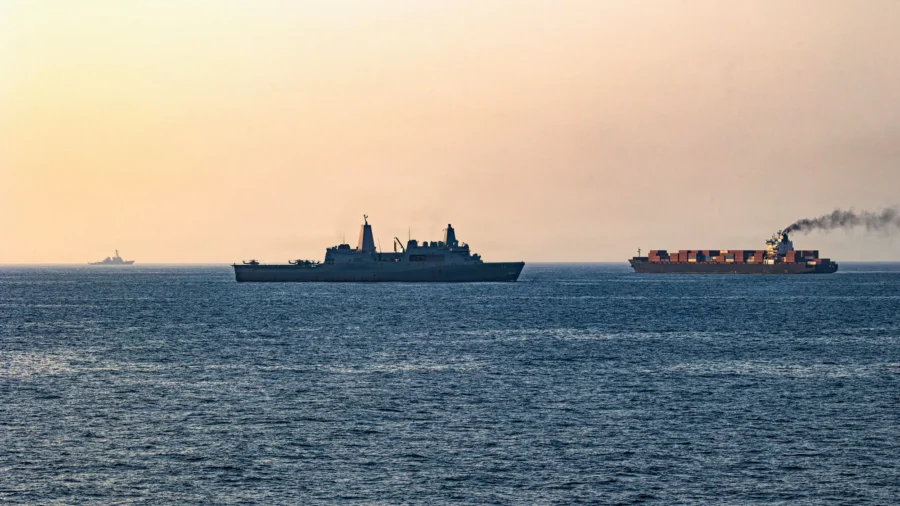
The U.S. Central Command (CENTCOM) on Monday said that the U.S. military has stopped or redirected 62 commercial ships as a blockade of Iranian ports continues to be enforced.
CENTCOM, in its update, also said it disabled four ships "to ensure compliance" with the blockade. An update posted on X a day earlier said that more than 20 U.S. warships are involved in the effort, which was announced on April 10, days after the confirmation of a ceasefire agreement between Washington and Tehran.
Last week, CENTCOM said more than 70 oil tankers are being blocked from entering or exiting Iranian ports, noting they have the capacity to transport 166 million barrels of oil worth more than $13 billion.
Also Monday, the U.S. Navy's Sixth Fleet released a statement that a nuclear-capable submarine arrived in Gibraltar, which "demonstrates U.S. capability, flexibility, and continuing commitment to its NATO allies."
The submarines, it said, have "undetectable launch platforms for submarine-launched ballistic missiles, providing the U.S. with its most survivable leg of the nuclear triad."
The updates come as U.S. President Donald Trump said Monday that the ceasefire with Iran, which was announced roughly one month ago, is faltering after he rejected a peace proposal from Iran that was submitted to the administration over the weekend.
“I would call it the weakest right now after reading that piece of garbage they sent us,” Trump added, referring to the Iranian proposal. “I didn’t even finish reading it.”
Trump did not provide details on what could come next following the Iranian proposal.
Also in the White House event, Trump stated that Iran had said it would allow the U.S. government to come in and help extract its highly enriched uranium but went back on that in its latest ceasefire proposal. “They changed their mind because they didn’t put it in the paper,” he said.
He then chided the Iranian regime for taking four days to send over the proposal when it should have "taken 10 minutes to do" before saying he wanted the regime to guarantee that no nuclear weapons are produced "for a very long period of time."
Iran has not publicly made comments on the proposal for the United States to obtain the enriched uranium, which as long been a point of contention between Tehran and Washington. U.S., European, and Israeli officials have said Iran is working to produce weapons with its nuclear program, an assertion that the Iranian regime denies.
Multiple Iranian state-run media outlets on Monday carried comments from Foreign Ministry spokesman Esmail Baghaei, who asserted that Tehran's proposal was reasonable and questioned why the U.S. government wouldn't want Iran to control the contested Strait of Hormuz. Instead, he accused the Trump administration of making "unreasonable demands."
Israeli Prime Minister Benjamin Netanyahu, who helped launch the war with Trump on Feb. 28, has also demanded that all of Iran’s highly enriched uranium be removed from the country. He told CBS’s “60 Minutes” in an interview that aired Sunday that if that can’t be accomplished through negotiations, Israel and the U.S. governments agree “we can reengage them militarily.”