

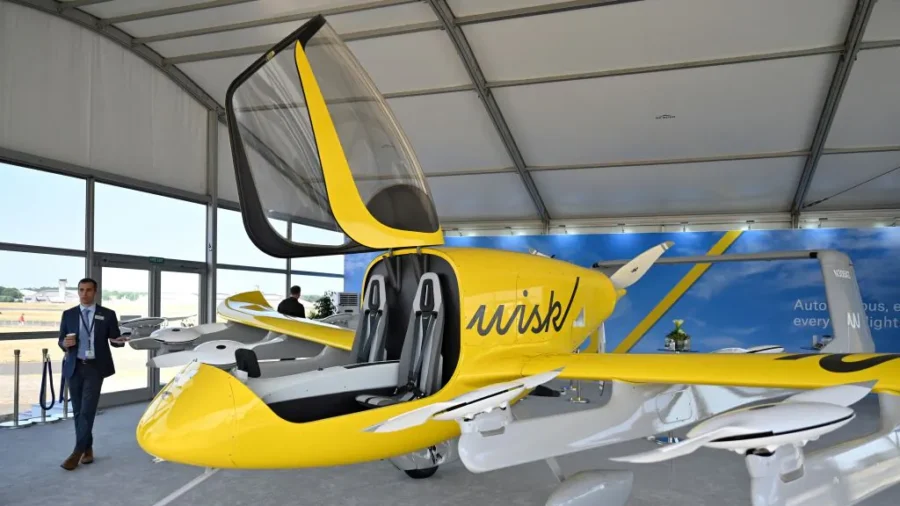
A new pilot program announced on Sept. 12 by Transportation Secretary Sean Duffy could one day see Americans traveling short distances in unmanned aerial taxis.
The Electric Vertical Takeoff and Landing Integration Pilot Program (eIPP) has five components consisting of both piloted and unmanned aircraft, the Federal Aviation Administration said. They are Short-range air taxis; long-range fixed-wing flights; cargo services; new types of airlift methods for emergency management, medical transport, or offshore energy facilities; and enhanced safety and efficiencies in automation for advanced air mobility (AAM) operations.
“The next great technological revolution in aviation is here,” he said.
“The United States will lead the way, and doing so will cement America’s status as a global leader in transportation innovation. By safely testing the deployment of these futuristic air taxis and other AAM vehicles, we can fundamentally improve how the traveling public and products move.”
“The United States must accelerate the safe commercialization of drone technologies and fully integrate (unmanned aerial systems) into the National Airspace System,” the administration said in Executive Order 14307, titled “Unleashing American Drone Dominance.”
“The time has come to accelerate testing and to enable routine drone operations, scale up domestic production, and expand the export of trusted, American-manufactured drone technologies to global markets.
“Building a strong and secure domestic drone sector is vital to reducing reliance on foreign sources, strengthening critical supply chains, and ensuring that the benefits of this technology are delivered to the American people.”
As part of the eIPP, the FAA is actively seeking participants to join in public-private partnerships that demonstrate the viability of AAM technologies that deliver benefits to the American public, it said. Private-sector companies must have a state, local, territorial, or tribal government as their development partner, the FAA noted. Applicants must submit proposals by Dec. 11.
Pilot program aircraft can be manned or unmanned, the FAA said, with some having the potential to carry passengers. The program also includes the development of new technologies that allow drones and other types of advanced air mobility craft to safely be assimilated into the national airspace system.
FAA Administrator Bryan Bedford said the pilot program is an opportunity to accelerate the development of both advanced air mobility operations and electric vertical takeoff and landing aircraft.
“We will take the lessons learned from these projects to enable safe, scalable AAM operations nationwide,” Bedford said.