

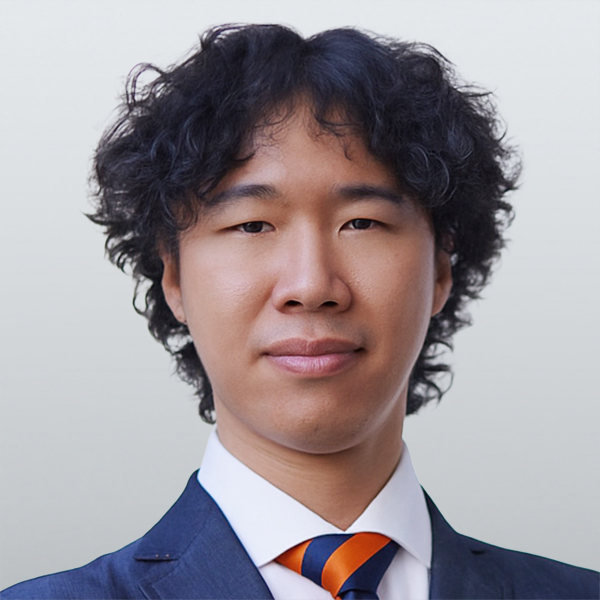
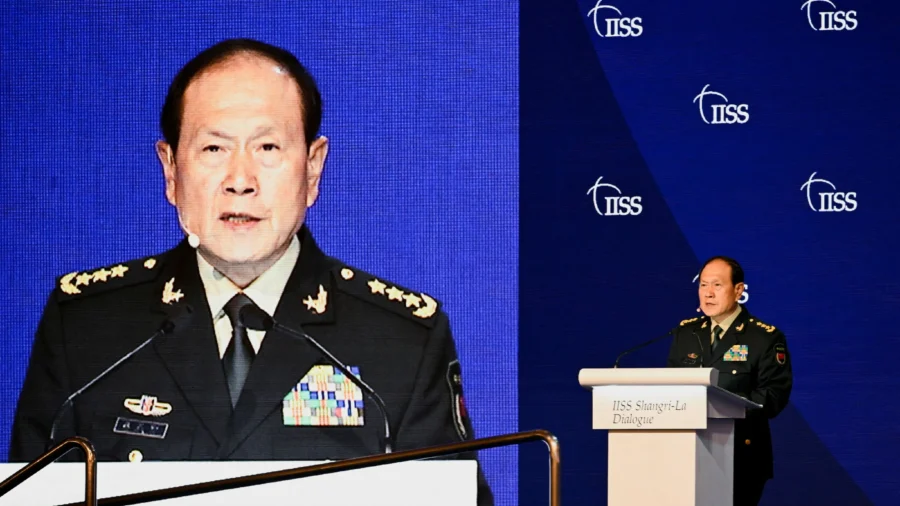
Former Defense Ministers Li Shangfu and Wei Fenghe were both sentenced by a military court martial on May 7 to death with a two-year reprieve. Under Chinese law, the sentences will be commuted to life imprisonment after two years, with no possibility of parole or sentence reduction.
The unusually severe punishment marks a dramatic fall for two of the most senior military officials in China and has fueled renewed speculation about deepening political fractures within Xi’s military establishment—particularly over the prospect of a future conflict involving Taiwan.
Both defense ministers were accused of bribery. Chinese authorities said both men caused “extremely serious harm” to the military and accused them of betraying the Chinese Communist Party’s (CCP) trust.
Xi’s One-Time Loyalists
Wei Fenghe was one of Xi’s earliest military protégés after Xi rose to power. He became the first PLA officer personally promoted to the rank of general by Xi in a standalone ceremony. Wei later served as commander of the PLA Rocket Force before becoming state councilor and defense minister after the CCP’s 19th National Congress in 2017.Li Shangfu, a so-called princeling born into the families of CCP revolutionary veterans, built his career through China’s aerospace and weapons development system. He previously led the Xichang Satellite Launch Center and later headed the PLA’s Equipment Development Department before Xi elevated him to defense minister in 2023 following the Party’s 20th National Congress.
Yuan Hongbing, a Chinese legal scholar living in exile in Australia who has informants in the CCP’s upper echelons, told The Epoch Times that the real reason behind the purge may have extended far beyond corruption.
Yuan said that internal security organs loyal to Xi concluded that both Li and Wei privately opposed Xi’s ambitions toward Taiwan and doubted China could win a military conflict across the Taiwan Strait.
Publicly, both Wei and Li delivered aggressive warnings toward Taiwan.
But Yuan said the two men privately held starkly different views.
“Their public statements were extremely hardline,” Yuan said. “But privately, they did not believe in Xi Jinping’s Taiwan war strategy at all.”
According to Yuan, they believed the probability of China losing a Taiwan conflict was “extremely high” and questioned whether Xi possessed the military capability to direct such a war successfully.
Yuan also alleged that Li and Wei engaged in what the CCP terms “non-organizational political activities”—a phrase often used in China to describe unauthorized political coordination or factional activity.
According to Yuan, the two men developed informal networks that extended beyond the military into civilian Party and regime institutions, partly as contingency planning in case a Taiwan conflict triggered political instability inside China.
He further said Li maintained longstanding ties with the family of former CCP leader Deng Xiaoping, while Wei had connections linked to the political network of former Chinese regime leader Jiang Zemin.
The allegations could not be independently verified by The Epoch Times.
Military Leadership Hollowed Out
The death sentences were issued amid an extraordinary wave of upheaval inside PLA leadership.Several current and former Rocket Force commanders, senior aerospace executives, and defense industry officials have also been swept up in corruption probes over the past two years.
According to Yuan, Xi has earned a new nickname among some Beijing insiders—“the general slayer”—a reference to the growing number of senior PLA officers purged during his rule.
Yuan said that while Xi now holds unprecedented personal control over China’s political system, repeated purges have also isolated him politically and weakened the military’s command structure.
“Xi Jinping has destroyed the PLA’s leadership system himself,” he said.
The timing of the announcement has also drawn attention. The sentences were revealed as preparations continue for a meeting between Xi and U.S. President Donald Trump.
Yuan said Beijing likely intended the harsh punishment to send a warning throughout the military ahead of any major diplomatic or political developments, while attempting to reinforce Xi’s authority at a moment when internal instability may be growing.