


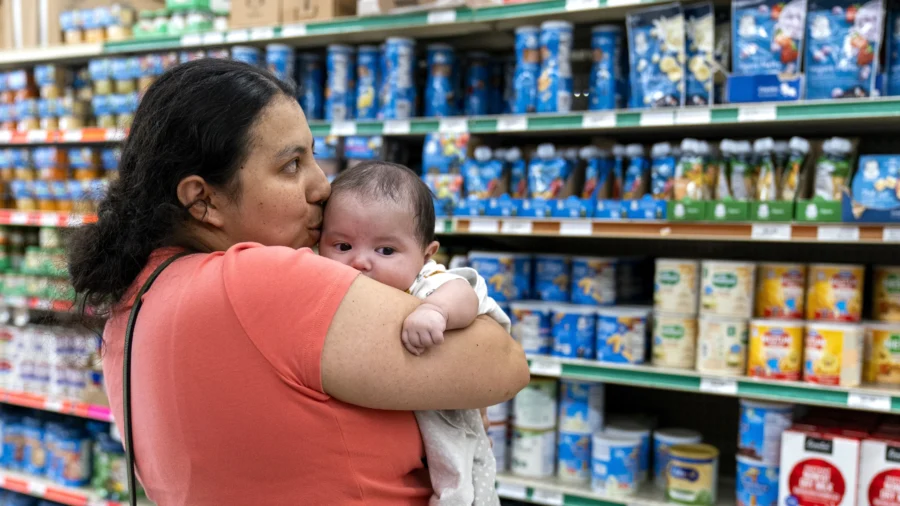
Health and Human Services (HHS) Secretary Robert F. Kennedy Jr. has directed the Food and Drug Administration (FDA) to take a fresh look at baby formula ingredients in what will be its first comprehensive review of the product since 1998.
'Operation Stork Speed'
Dubbed "Operation Stork Speed," Kennedy has vowed to review formula products as part of his efforts to improve the health of Americans.About three-quarters of U.S. infants consume formula during the first six months of life, with about 4 percent receiving it as their only source of nutrition, according to the Centers for Disease Control and Prevention (CDC).
The joint initiative between the FDA and HHS was launched in March.
The FDA kicked off its nutrient review process by issuing a request for information (RFI), which is required by law for infant formula. Through that process, the agency started seeking the public's input on ingredients to help determine whether the existing requirements should be adjusted. The FDA stated that it was open to considering the addition of other possible ingredients and how these changes could improve health.
Under current standards, according to the agency, infant formula must meet minimum and maximum levels of certain nutrients. FDA regulations require that formulas consist of 30 specific nutrients, with minimum levels for all and maximum levels for 10 of them.
The formula is typically made from cow's milk or soy with a balance of calories from protein, carbohydrates, and fat that mimics what is naturally found in breast milk.
The FDA advises mothers to nurse their babies, but many rely on formula when they can't breastfeed for various reasons. Formula has long been considered a safe alternative to breast milk.
Duty to Protect 'Most Vulnerable'
The nation experienced an infant formula shortage due to the COVID-19 pandemic, a large voluntary recall, and related supply chain issues in 2022. Roughly 20 percent of parents said they had a hard time finding formula by the summer of 2023, according to the U.S. Census Bureau,That period of time highlighted the importance of formula among American families.
The new initiative will ensure that the sole source of nutrition for formula-fed babies and children remains available, officials said.
The FDA is also increasing testing for heavy metals and other possible contaminants in infant formula and other foods typically consumed by children. The agency wants companies and stakeholders to work with federal agencies to enhance transparency and improve label clarity.
The FDA's review of baby formula follows other efforts by the Trump administration to advance the Make America Healthy Again initiative.
In April, the agency announced it would phase out petroleum-based synthetic dyes from the nation's food supply, with Kennedy asserting that the dyes have no nutritional value and have been proven toxic to children's health.
Kennedy has also ambitiously vowed a massive testing and research effort to determine the cause of autism by September.