


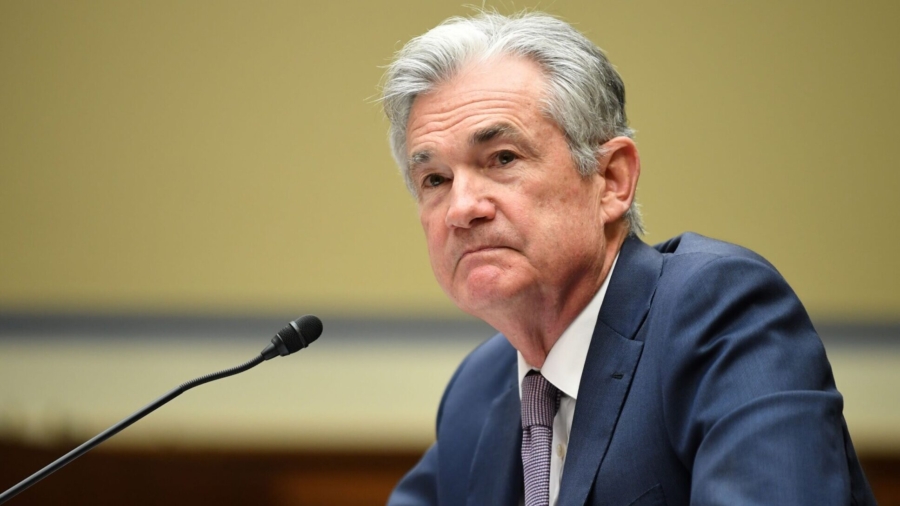
The Federal Reserve hinted at an interest rate hike in March for the first time in more than three years as the United States battles with inflation levels that have risen to a 40-year high.
The Federal Open Market Committee (FOMC), the Fed’s monetary policy arm, kept its policy interest rate near zero but said it expects that an increase in this rate would “soon be appropriate.”
FOMC also said it would bring to an end its monthly purchases of Treasury bonds and mortgage-backed securities in early March, in line with a pace of tapering it announced back in December.
“That is why we are phasing out our asset purchases and why we expect it will soon be appropriate to raise the target range for the federal funds rate,” Powell said.
The rate hikes mean that the cost of borrowing for Americans for everything from homes to cars will go up over time. Officials hope this will lead to people eventually spending less, decreasing the demand for goods and bringing down inflation.
However, Powell sought to calm fears that the higher interest rates might further worsen the economic situation facing many Americans, noting that the Fed will “use our tools both to support the economy and a strong labor market and to prevent higher inflation from becoming entrenched” and will “be watching carefully to see whether the economy is evolving in line with expectations.”
Meanwhile, the ongoing supply chain shortages, a labor crisis, and the latest wave of Omicron variant cases of COVID-19 continue to add pressure to turbulent financial markets and rising inflation levers.
In its post-meeting statement on Wednesday, the Federal Open Market Committee said that “indicators of economic activity and employment have continued to strengthen,” while “the sectors most adversely affected by the pandemic have improved in recent months but are being affected by the recent sharp rise in COVID-19 cases.”
“Job gains have been solid in recent months, and the unemployment rate has declined substantially. Supply and demand imbalances related to the pandemic and the reopening of the economy have continued to contribute to elevated levels of inflation. Overall financial conditions remain accommodative, in part reflecting policy measures to support the economy and the flow of credit to U.S. households and businesses,” the committee said.
“With inflation well above 2 percent and a strong labor market, the Committee expects it will soon be appropriate to raise the target range for the federal funds rate,” the committee said but did not provide a specific time as to when the increase will come.
Powell’s comments and the Fed’s statements on Wednesday pushed the yield on the two-year bond to its highest since February 2020, while the 10-year bond was at 1.85 percent.
Meanwhile, the broad S&P 500 index fell nearly 10 percent this month and fell slightly Wednesday.