

Nahida Bristy, a chemical engineering doctoral candidate, was identified through DNA analysis and dental records after her remains were recovered from Tampa Bay in a garbage bag, according to Chronister. A recreational kayaker found the bag Sunday after his fishing line snagged on it in the mangroves off Pinellas County. The kayaker reported smelling something he later described as indescribable before spotting what appeared to be a human body inside an open plastic bag. Pinellas County Sheriff's Office deputies and the medical examiner's office took custody of the remains.
Her friend and fellow USF doctoral student Zamil Limon had been found two days earlier—his body stuffed inside a trash bag left on the shoulder of the Howard Frankland Bridge. Limon, who studied geography and environmental science and policy, was identified through fingerprints on file with the Department of Homeland Security from when he had entered the country.
"He was literally left on the side of the highway like a piece of trash," Chronister said.
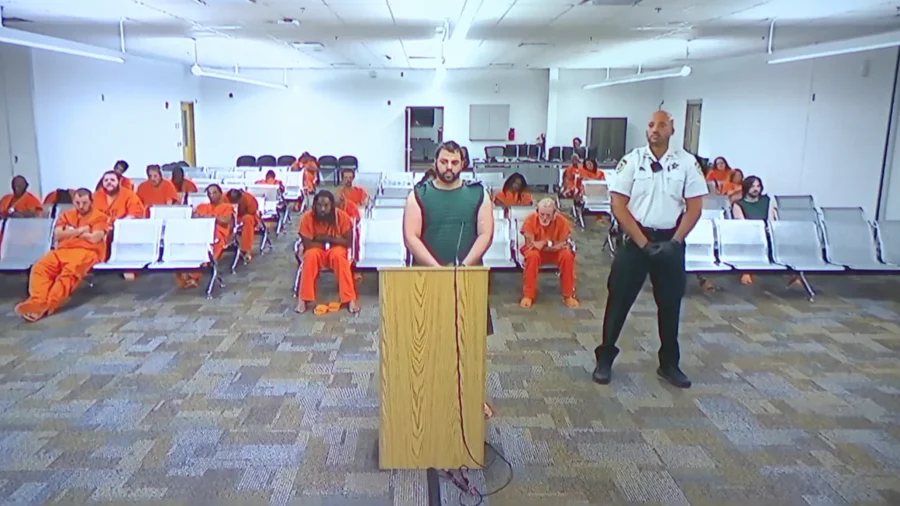
Limon's roommate, Hisham Saleh Abugharbieh, 26, has been charged with two counts of first-degree murder and remains jailed. Abugharbieh, who had dropped out of the university, was arrested after a SWAT standoff at his home, surrendering peacefully after hours of negotiation.
The investigation began April 17 when USF Police were notified that Bristy had not shown up for her thesis appointments or responded to calls—behavior Chronister said was completely out of character for her. A day later, April 18, a concerned friend contacted authorities after Limon, equally known for his reliability, also stopped answering calls and missed appointments. Investigators quickly recognized a connection between the two cases and began working on them jointly.
Detectives visited the apartment Limon shared with Abugharbieh and a third roommate. While one roommate cooperated fully, Abugharbieh gave evasive and contradictory answers. He freely discussed other topics but became guarded whenever either victim was mentioned. Investigators also noticed he had a laceration on his left pinky and a deep cut on the back of his left arm that should have required stitches—wounds he could not explain and that detectives believe were defensive injuries.
A cooperative roommate later told investigators that Abugharbieh had used a large cart to move items out of his room to the trash compactor overnight on April 16 and 17. Acting on that tip, detectives searched the compactor and found Limon's glasses, student ID, wallet, and clothing—all heavily soaked in blood.
A search warrant executed at the apartment revealed lots of blood in the kitchen that trailed down the hallway and into Abugharbieh's bedroom. Using Bluestar forensic technology, investigators were able to find blood in the outline of a human body curled in a fetal position on the floor beside the suspect's bed. Blood traces were also found in his car, later confirmed to belong to Bristy.
A forensic examination of Abugharbieh's phone—which had been entirely wiped—revealed a series of deeply disturbing internet searches from the days before the students disappeared. Those searches included queries such as "Can a knife penetrate a skull?" and "Can a neighbor hear a gunshot?" according to the sheriff. In the same period, Abugharbieh ordered heavy-duty black contractor bags, Lysol wipes, duct tape, lighter fluid, and a lighter—some through Amazon, others through DoorDash.
"This was calculating. That's what makes this so premeditated," Chronister said.
GPS data from the suspect's phone, cross-referenced with surveillance footage from a nearby fire station, placed Abugharbieh in the Clearwater and Sand Key area of Pinellas County before he stopped on the Howard Frankland Bridge—the same area where Limon's remains were later found.
A motive for the killings has not been established. "I hope we find that out," Chronister said.
Bristy and Limon's families, who live in Bangladesh, have been notified. Officials said they are working to release both bodies for religious reasons so they can be returned to their families.
Chronister said Abugharbieh showed no reaction when confronted with the evidence against him. "He was nonreactive," the sheriff said. "He was callous and showed no emotion when we showed him the information we had."