


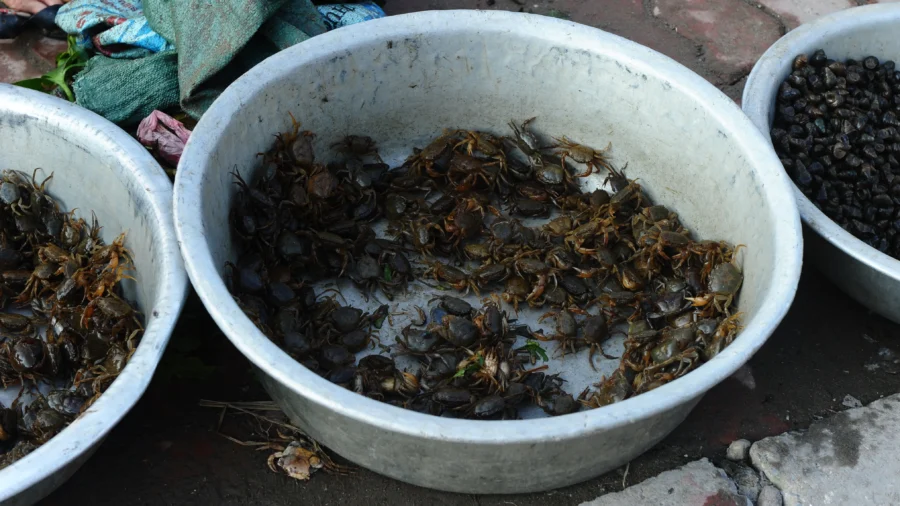
A Filipino content creator died after eating a highly poisonous crab known locally as the “devil crab” while filming a video in Barangay Luzviminda, Puerto Princesa City.
Emma Amit, 51, documented herself and others collecting seafood, including the poisonous crabs, from nearby waters. She filmed the seafood and crabs being cooked in coconut milk and sampled portions for her social media audience, according to Philippine news reports.
Amit’s health rapidly declined the next day. Neighbors reported she began convulsing and displayed clear symptoms of poisoning before losing consciousness. She was rushed to a local hospital but died on Feb. 6, two days after consuming the crab.
At least one friend who ate from the same catch also fell ill and was treated at the hospital.
What Is a ‘Devil Crab?’
The crab involved in Amit’s death has been identified as Zosimus aeneus, known as the devil crab or toxic reef crab.This crab lives on coral reefs throughout the Indo-Pacific. It contains powerful neurotoxins such as tetrodotoxin and saxitoxin in both its meat and shell.
Symptoms of Poisoning and Safety Warnings
Neurotoxin poisoning from species like the devil crab can cause symptoms including numbness around the mouth, difficulty breathing, muscle paralysis, and eventual loss of consciousness.Anyone experiencing these signs after eating seafood should seek immediate medical attention.
Other Poisonous Marine Species
Many marine species contain natural toxins that are not destroyed by cooking, according to the U.S. Centers for Disease Control and Prevention (CDC).Pufferfish can harbor tetrodotoxin—the same powerful neurotoxin found in devil crabs.
Shellfish collected during harmful algal blooms, or red tide events, can accumulate saxitoxin and other dangerous toxins and also pose a serious threat if consumed.
Ciguatera fish poisoning, often associated with reef fish like barracuda, grouper, and snapper, is the world’s most commonly reported seafood toxin illness, according to the CDC.