


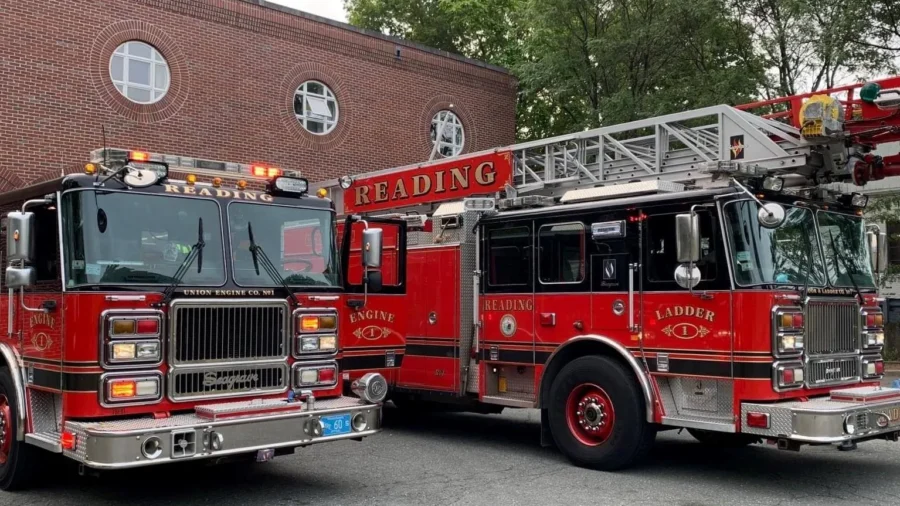
A propane tank leak prompted fire officials to evacuate 13 homes this week in a local Massachusetts neighborhood.
The emergency began at 3:30 p.m. on Aug. 4 when a Washington Street homeowner in Reading smelled the strong odor of gas and called 911.
“The source of the leak was a 20-pound propane tank that you would typically use on a barbecue grill and it was outside on the side of their house,” Reading fire chief Richard Nelson told NTD.
Propane tanks are commonly purchased at hardware stores.
A temporary shelter at the local library was created for the residents of the 13 nearby households while the police and fire departments worked alongside the state's Hazmat Team and Bomb Squad.
"They helped by bringing some resources to allow us to mitigate the hazard," Nelson said.
The primary danger of a propane leak is that it can cause a fire, according to Nelson.
“Secondary to that is that a propane tank can burst or explode, which is not a good thing,” Nelson said.
It is unclear whether the grill was actively in use at the time of the leak or if it was in storage for future use, and officials have yet to announce the exact cause of the leak.
After 2 hours, the evacuees were permitted to return to their homes around 5:30 p.m.
"The people who were asked to evacuate were extremely cooperative," Nelson noted. “They were understanding and there was no problem. They were great … excellent.”
Nelson added that while propane leaks do not happen frequently, they are a hazard first responders regularly prepare for.
He advised residents to protect their propane tanks from damage.
“If a tank starts showing rust on it, they should safely discard that tank and get a new one,” Nelson added. “If it has any damage, they should discard the tank safely and get a new one.”
Nelson commended the resident who called authorities after smelling the gas odor.
"The homeowner acted perfectly," he said. "If you ever smell gas, just call 911 for the local responders to come check to see what the problem is."
According to Allied Propane Service, 20-pound barbecue tanks carry strict safety regulations, including a Department of Transportation (DOT) requalification stamp on their collar that mandates safety inspections every 10 to 12 years.
Propane canisters are only filled to 80 percent capacity to leave room for the liquid gas to safely expand during hot summer weather, which is to prevent internal pressure spikes and surprise releases.