


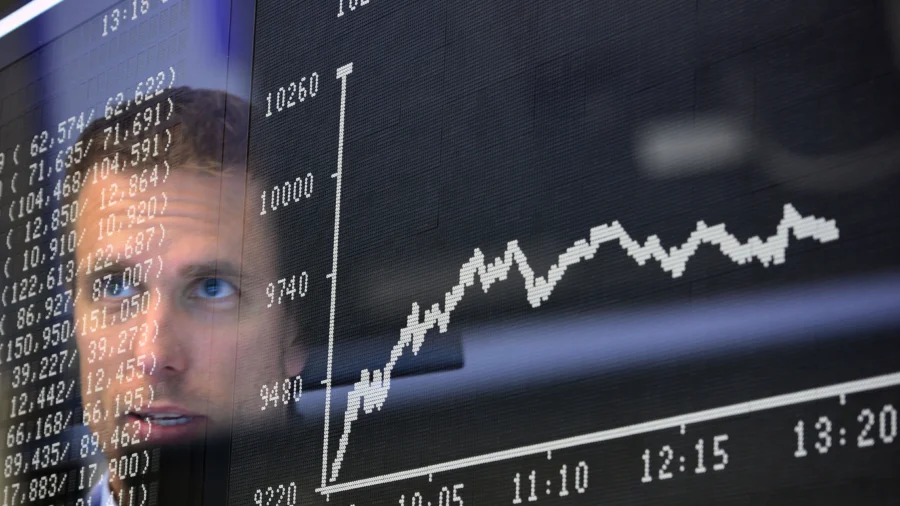
Addressing lawmakers in Berlin, Merz said Europe’s fragmented capital markets were holding back growth and innovation, warning that the bloc risked losing economic independence without major reforms.
“In the coming months and perhaps a few years, it will be decided whether Europe remains an independent economic power in the global economy, or becomes a plaything of major economic centers in Asia or America,” he said. “Our clear priority is to remain an active player in global markets and to strengthen, not weaken, Europe’s competitiveness.”
“We need a kind of European Stock Exchange so that successful companies, such as BioNTech from Germany, do not have to go to the New York Stock Exchange,” Merz said. “Only in this way can the value created from German and European research remain in Europe. Innovation, production, and prosperity must take place here, in Germany, in Europe.”
Other European companies have also looked across the Atlantic for greater access to investors and liquidity. In 2023, Dublin-based CRH shifted its primary listing to the New York Stock Exchange, leaving London and Euronext Dublin.
The CEO of the pan-European stock exchange group, Stéphane Boujnah, welcomed Merz’s proposal, saying it was ready to support market integration across the continent.
EU Competitiveness Under Scrutiny
Merz’s remarks came ahead of a European Council meeting in Brussels on Oct. 23, where EU leaders are set to discuss how to revive economic competitiveness.He said the challenge for Europe was not a lack of knowledge but of execution.
“We agree, within our country and with our European partners, that we must focus our combined efforts on restoring our competitiveness,” Merz said. “At the upcoming European Council in Brussels, I therefore intend to raise this issue of implementation again with our partners.”
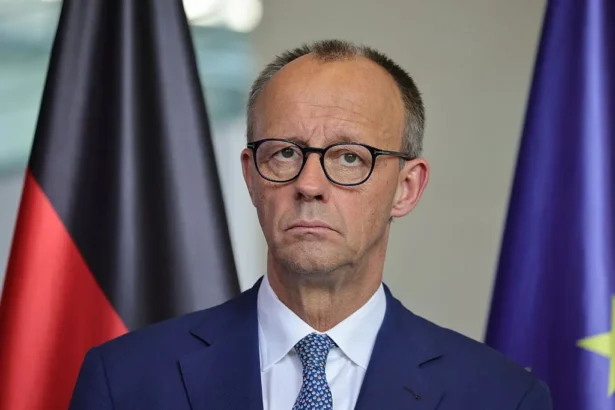
“Draghi’s report shows that much of the growth gap between the EU and the United States stems from too little productivity growth in Europe,” Merz said. “Productivity is the key to competitiveness.”
It also proposed an EU Stock Exchange for Deep Tech, covering sectors such as artificial intelligence, quantum technology, and biotechnology, to give fast-growing European start-ups better access to large-scale capital.
The report said many European start-ups struggle to raise sufficient funds within the EU because no national stock exchange offers the same scale or valuation as those in the United States, where investor pools are larger and valuations are often up to 40 percent higher.
Merz said Europe must cut red tape and accelerate decision-making if it wants to regain global competitiveness.
“Let me name the key points: an end to overregulation, faster procedures, open markets, more innovation, and more competition,” he said. “These are the goals we must achieve.”