


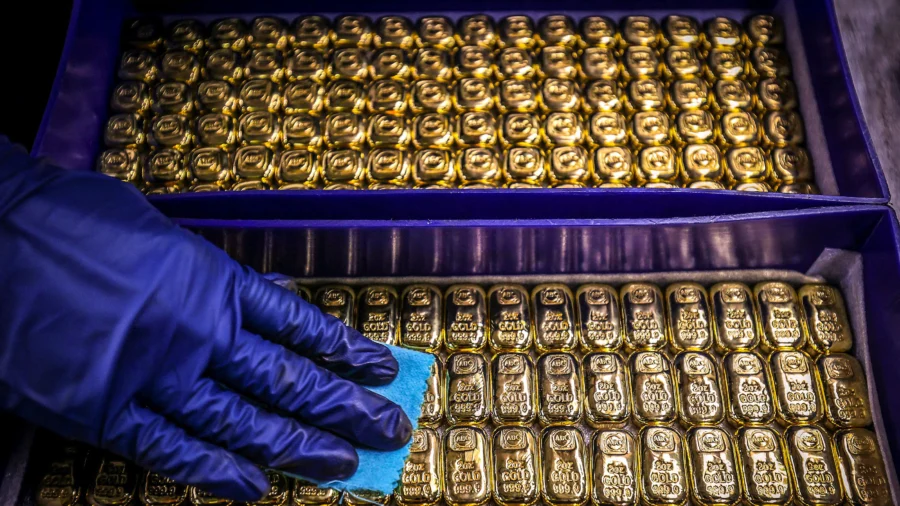
The yellow metal has enjoyed a meteoric ascent this year, adding approximately $11 trillion in valuation, although it has slumped to finish the trading week on modest profit-taking.
In 2025, gold has outperformed every other asset class, including cryptocurrencies.
Bitcoin, for example, has risen about 14 percent year to date, with its global valuation exceeding $2 trillion. However, the crypto market has slumped this month. After surpassing $127,000, Bitcoin prices have fallen about 15 percent to around $107,000.
But gold is also worth more than some of the richest companies combined, including Nvidia ($4.3 trillion), Microsoft ($3.8 trillion), Apple ($3.7 trillion), and Alphabet ($3 trillion).
Silver, the sister commodity, has also registered a stellar performance this year.
The white metal has added approximately $1 trillion in global market value, inching closer to $3 trillion. Silver prices have rallied 73 percent year to date to above $50 per ounce.
What Wall Street Says
HSBC revised its 2026 forecast for gold higher to $5,000 per ounce, attributing its gains to geopolitical risks, economic policy uncertainty, and rising global public debt.Société Générale also projects the yellow metal will touch $5,000 by the end of next year.
Catalyst Funds anticipate gold ranging between $4,800 and $5,200 in 2026.
Market watchers have presented various reasons to explain gold and silver’s enormous gains.
Gold is viewed as a safe-haven asset, with investors seeking shelter in the precious metal during market turbulence, geopolitical turmoil, and widespread economic worries.
So, when the price of gold continues posting record highs, institutional observers and retail investors begin to pay attention.
A key factor for gold has been investors pouring into exchange-traded funds (ETFs)—investment vehicles that provide paper exposure to assets—in recent months, says David Miller, senior portfolio manager and CIO at Catalyst Funds.
"ETF flows have flipped decisively positive," Miller said in a note emailed to The Epoch Times. "September saw the largest monthly inflow on record in dollar terms, pushing gold ETF AUM [assets under management] to new highs—evidence that broader investors are re-allocating, not just traders."

ING commodity strategists say other factors have also fueled gold's upward trajectory.
From China to the Federal Reserve
President Donald Trump recently threatened to impose a 100 percent tariff on Chinese goods entering the United States over its export controls on rare earths.This caused a tremor in the U.S. stock market last week, but the market rebounded when Trump assured everyone that the situation would be “fine.”
But U.S.-China tensions persist.
"If China wants to be an unreliable partner to the world, then the world will have to decouple," Bessent said.
While Trump has limited his criticisms of Federal Reserve Chair Jerome Powell as of late, the administration is still exploring potential successors.
Still, the political fire has cooled, and investors are assessing monetary policy expectations. The policy-making Federal Open Market Committee will convene its two-day policy meeting on Oct. 28–29, and the futures market is betting on another quarter-point interest rate cut. Traders are also pricing in a 25 basis-point reduction to the benchmark federal funds rate—a key policy rate that influences borrowing costs for businesses and consumers—in December.
Lower interest rates are favorable for gold because they reduce the opportunity cost of holding non-yielding bullion.
That said, what comes next has been up for debate at both the U.S. central bank and Wall Street.
Since last month’s meeting, officials have expressed a diverse array of views, from voicing caution against front-loading interest rates to supporting a more aggressive easing cycle.
"However, I expect it to be an additional 25, and I think that we’re probably set up for three 25 basis-point cuts this year, for a total of 75 basis points this year," he said on Oct. 16.
At a Council on Foreign Relations event on Oct. 16, Fed Governor Christopher Waller advocated for another quarter-point cut based on the available labor market data. While he thinks interest rates should be 125 basis points lower to reach a neutral rate, he warned against accelerating rate cuts.
Swimming in the Money Supply
Gold bugs—a description for avid gold investors—have also alluded to the M2 money supply.The M2 money supply is a broad measurement of all the money in circulation, including cash, checking deposits, savings accounts, money market securities, and other short-term liquid assets. The M2 recently reached a record high of $22.2 trillion.
An acceleration in the M2 without corresponding economic output, comparable to the pandemic-era economy, can signal future inflation. The widely watched gauge can also highlight the liquidity in the system, which can bolster demand for hard assets.
Inflation expectations have stabilized since the springtime tariff-driven spike. However, fears of elevated inflation have remained ubiquitous. The Federal Reserve Bank of New York's September Survey of Consumer Expectations, for example, revealed the one-year inflation outlook inching higher, to 3.4 percent.
In addition, if real interest rates are low, buying non-yielding gold can become an attractive proposition.
"With the first cut delivered and the dot plot pointing to additional easing through 2026, the macro setup of falling real rates plus policy uncertainty is supportive," Miller said.
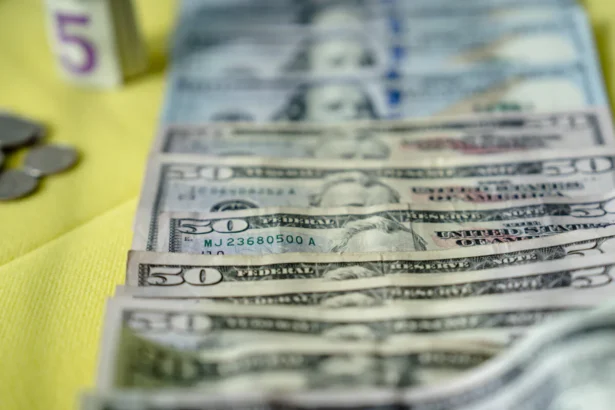
Looking ahead, the money supply may attract more attention than usual in the coming months as Fed Chair Jerome Powell delivered a dovish pivot earlier this week, pointing to a new easing cycle.
"We may approach that point in coming months, and we are closely monitoring a wide range of indicators to inform this decision," he said, adding that the institution is taking a "deliberately cautious approach" to prevent previous volatile times.
It is not only Fed policy driving gold, but also overall central bank demand.