


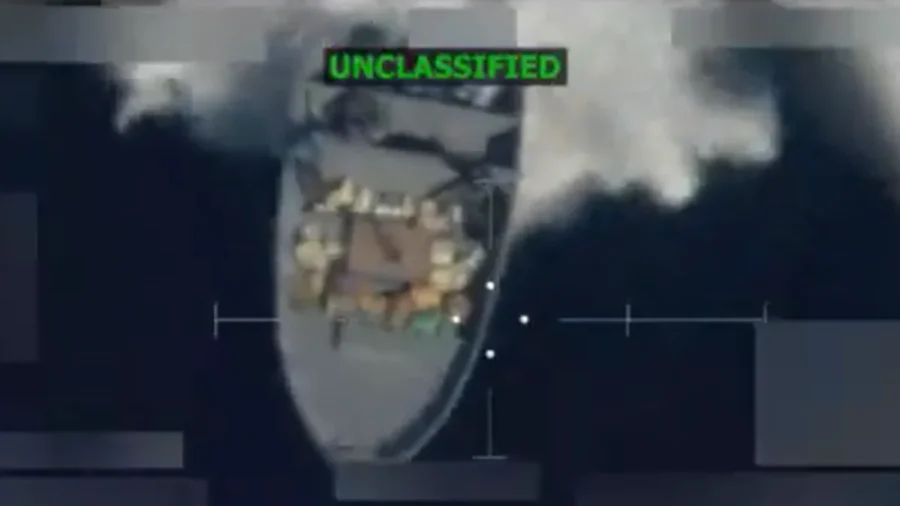
U.S. forces struck a pair of drug trafficking vessels in the eastern Pacific on Nov. 9, as part of a continuing U.S. military campaign along the coast of South and Central America.
Hegseth said there were three individuals, whom he described as "male narco-terrorists," aboard each of the two vessels. He said all six were killed in the pair of attacks.
"These vessels were known by our intelligence to be associated with illicit narcotics smuggling, were carrying narcotics, and were transiting along a known narco-trafficking transit route in the Eastern Pacific," Hegseth added.
With the latest two U.S. strikes on Sunday, U.S. forces have bombed at least 19 alleged drug boats operating around Latin America since September.
The majority of these recent lethal attacks have targeted vessels in the Caribbean Sea, but a growing share of these U.S. strikes are hitting alleged drug boats in the eastern Pacific.
The Trump administration has faced questions and pushback from some U.S. lawmakers over the legality and justification for such strikes.
In October, Sens. Adam Schiff (D-Calif.) and Tim Kaine (D-Va.) sponsored a resolution under the 1973 War Powers Act, seeking to block Trump's use of U.S. military force against suspected drug boats.
That briefing received mixed reviews.
Kaine, who was among those briefed on Nov. 5, said he saw “logical fallacies” in the rationale behind the strikes at sea.
He said the Trump administration had presented no rationale for U.S. forces to attack land-based targets in Venezuela.
The Virginia Democrat brought forward another war powers resolution, seeking to block U.S. military action against Venezuela.
This resolution failed on a vote of 49–51, with Sens. Rand Paul (R-Ky.) and Lisa Murkowski (R-Alaska) joining all Democrats in favor of the resolution to limit Trump's use of military force.
While he opposed the resolution to constrain Trump's war powers, Sen. Todd Young (R-Ind.) said he did not intend for his vote to be seen as an endorsement of the ongoing U.S. military operations in the Caribbean and eastern Pacific.
Young urged the Trump administration to provide greater transparency around the ongoing strikes.