


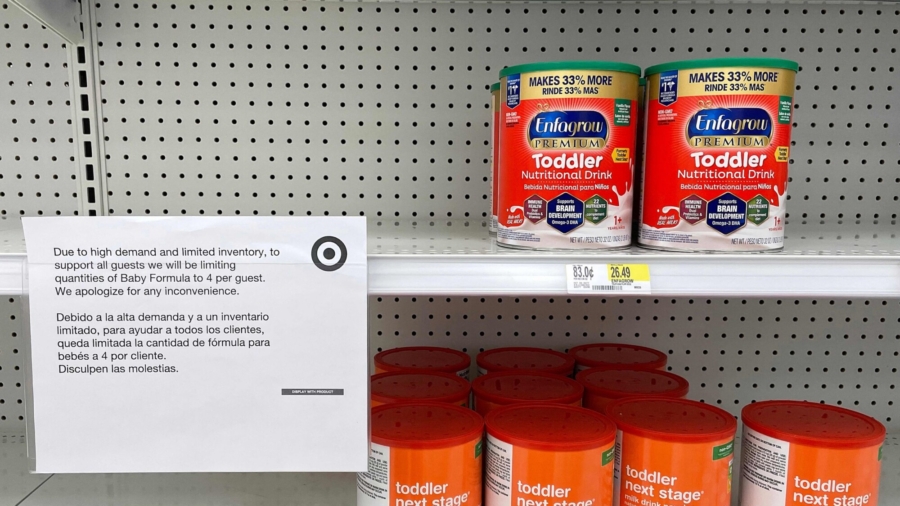
The House passed two emergency spending bills on Wednesday addressing critical nationwide baby formula shortages.
The main legislation—HR 7790 Infant Formula Supplemental Appropriations Act— seeks to provide the Food and Drug Administration (FDA) $28 million in “salaries and expenses” for resolving current and future shortages of baby formula.
HR 7790 will also seek to prevent fraudulent products from entering the domestic market.
The legislation was sponsored by Rep. Rosa DeLauro (D-Conn.).
Republicans objected to the bill with House Minority Whip Steve Scalise (R-La.) claiming that the Democrats’ proposal does not resolve the issue.
Scalise said it simply throws “additional money at the FDA,” while failing to hold the organization accountable for the current shortages.
Rep. Andy Harris (R-Md.) said that the bill “just continues the majority’s reckless spending spree without actually fixing the infant formula crisis this administration caused.”
“Abbott will continue to import formula from FDA-registered facility in Ireland to help alleviate near-term supply shortage,” it added.
Democrats maintained that the FDA does not have enough resources to inspect foreign manufacturers and supported the organization’s role in resuming safe production and ensuring a steady supply of baby formula.
“In the wealthiest nation in the world, babies should not be at risk of going hungry. Parents should not have to play a guessing game and wonder if the food that they are giving their babies is safe,” DeLauro said on the House floor.
Rep. Ashley Hinson (R-Iowa) said the Biden administration ignored warning signs that a formula shortage was imminent.
Access to Baby Formula
Access to Baby Formula Act (pdf), the other bill passed in the House, allows for families who participate in the Women, Infants, and Children (WIC) federal program to gain access to baby formula from additional manufacturers.The Access to Baby Formula Act also seeks to waive requirements that slow down the process to get baby formula back on shelves without sacrificing quality and safety standards.
The bill passed with a 414-9 bipartisan support in the House and currently heads to the Senate.