


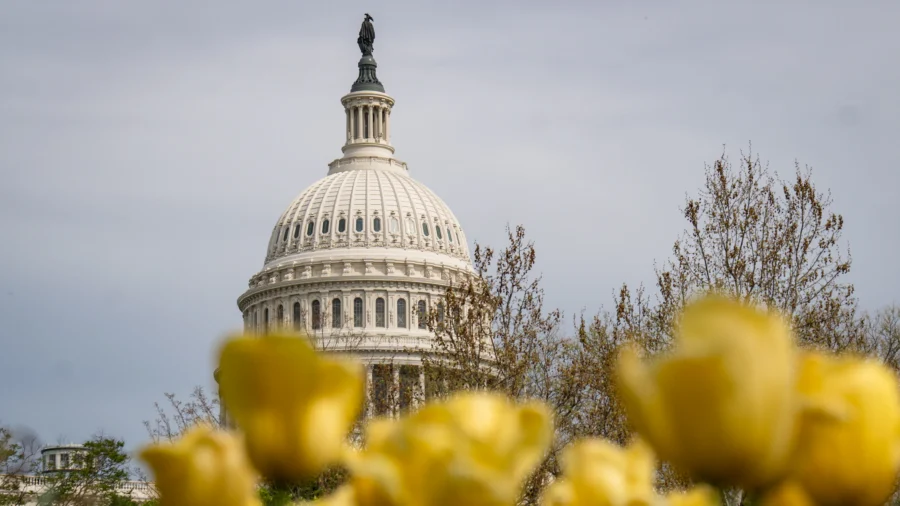
The House of Representatives on April 16 voted down a resolution urging President Donald Trump to end the ongoing war in Iran.
The measure, introduced by Rep. Gregory Meeks (D-N.Y.), failed by a vote of 213–214, largely along party lines, underscoring deep divisions in Congress over the conflict. One member, Rep. Warren Davidson (R-Ohio), voted "present."
The House vote followed similar action in the Senate a day earlier, where lawmakers also rejected a resolution aimed at curbing the president’s war powers.
Despite their support, some Republican lawmakers have expressed growing unease about the duration of the conflict. Several have signaled interest in revisiting the issue if the war continues, suggesting future votes could become a more serious test of support for the administration.
Under the War Powers Act of 1973, Congress must formally declare war or authorize military force within 60 days of the start of hostilities—a deadline set to expire at the end of this month. While the law allows for a 30-day extension, lawmakers from both parties are pressing the administration to present a clearer strategy for concluding the conflict.
After that window closes, “it’s time to fish or cut bait,” said Sen. Thom Tillis (R-N.C.), who urged the administration to develop a formal authorization for the use of military force along with a funding plan.
However, House Armed Services Committee Chairman Mike Rogers (R-Ala.) told The Epoch Times that 60 days will not change things.
Rep. Chuck Fleischmann (R-Tenn.) told The Epoch Times that the Trump administration should be given more time.
"I think support is very strong for what President Trump and the administration and our troops are doing to try to thwart what Iran has done for 47 years, and what they continue to try to do," he said.
The congressional votes come as diplomatic efforts to end the conflict continue. Recent talks between the United States and Iran broke down over the weekend in Islamabad, Pakistan, though mediation efforts continue.
Pakistan has taken on a central role in facilitating negotiations, hosting direct talks that officials say have helped narrow differences between the two sides.
On Wednesday, Pakistan’s army chief, Asim Munir, met in Tehran with Iran’s foreign minister, Abbas Araghchi, in an effort to revive discussions and arrange a second round of negotiations.
The White House indicated that any future talks would likely be held in Islamabad, though no final decision has been made.
Meanwhile, U.S. military pressure continues. A naval blockade of Iranian ports remains in place, and the Trump administration has warned it may intensify economic pressure through additional sanctions on countries that continue doing business with Iran—an approach officials have described as the “financial equivalent” of a bombing campaign.
Iranian officials have responded with warnings of their own. A senior military commander threatened to disrupt regional trade if the blockade is not lifted, while a newly appointed adviser to Supreme Leader Mojtaba Khamenei signaled opposition to extending the current ceasefire.
Even as diplomatic channels remain open, the situation on the ground remains tense, with uncertainty surrounding both the future of negotiations and the trajectory of the conflict.