


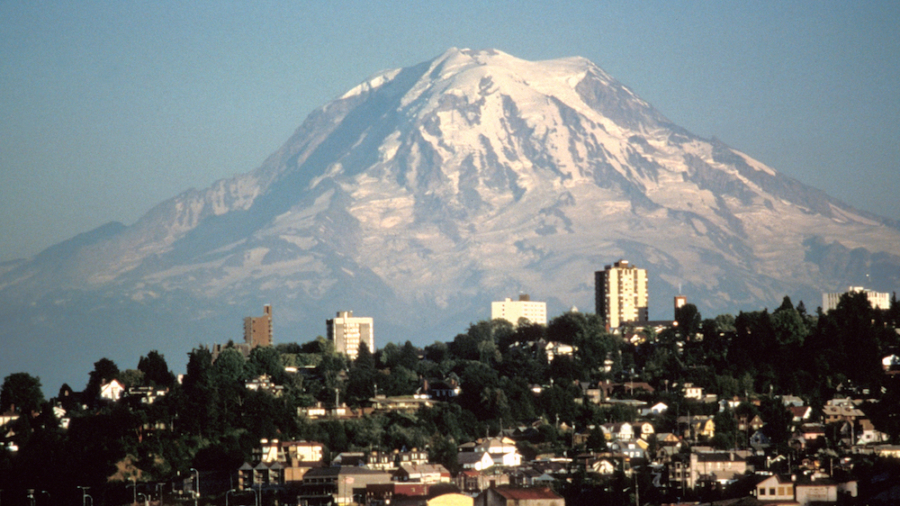
The swarm began around 1:30 a.m. PT and included hundreds of small earthquakes by 1:00 p.m. that same day. An earthquake swarm is a cluster of earthquakes occurring in the same area in rapid succession.
While this is the largest swarm seen since 2009, it does not indicate an increased threat of eruption, according to the USGS. The alert level for Mount Rainier remains at “green/normal,” meaning there is no immediate cause for concern.
The Pacific Northwest Seismic Network (PNSN) is analyzing the swarm by locating the depth, magnitude, and position of individual events. The largest earthquake in this swarm was a magnitude 1.6 event recorded at 4:52 a.m., occurring at depths between 1 to 4 miles beneath the summit. A magnitude 1.6 is far too small to feel, although future events could be stronger, according to the USGS.
“Most swarms at Mount Rainier (there are 1-2 annually) last less than a week,” states the USGS. “That being said, we do not have a good estimate for how long this swarm may last, and whether it will intensify or peter out.”
Throughout the year, Mount Rainier experiences about nine small earthquakes per month. And earthquake swarms like this typically occur once or twice a year. The last large swarm in 2009 lasted three days and included over 1,000 earthquakes.
“Earthquakes are one of several parameters we monitor to indicate what a volcano is doing. Right now, this swarm is still within what we consider normal background levels of activity at Mount Rainier,” states the USGS. “Past swarms have been attributed to circulation of fluids interacting with preexisting faults.”
Mount Rainier National Park reported increased rock and ice fall in recent days, but attributes that to warm temperatures rather than being related to the seismic swarm.
“While the swarm at Mount Rainier has more earthquakes than typical swarms we have seen at Mount Rainier, we have only monitored the volcano well since the late 1980's,” according to the USGS. “Given that the [last] eruption was about 1000 years ago, we still have a lot to observe to understand the entire volcanic cycle at Mount Rainier.” The USGS stated that the volcano is not due for an eruption, nor do they see any signs of a potential eruption at this time.