


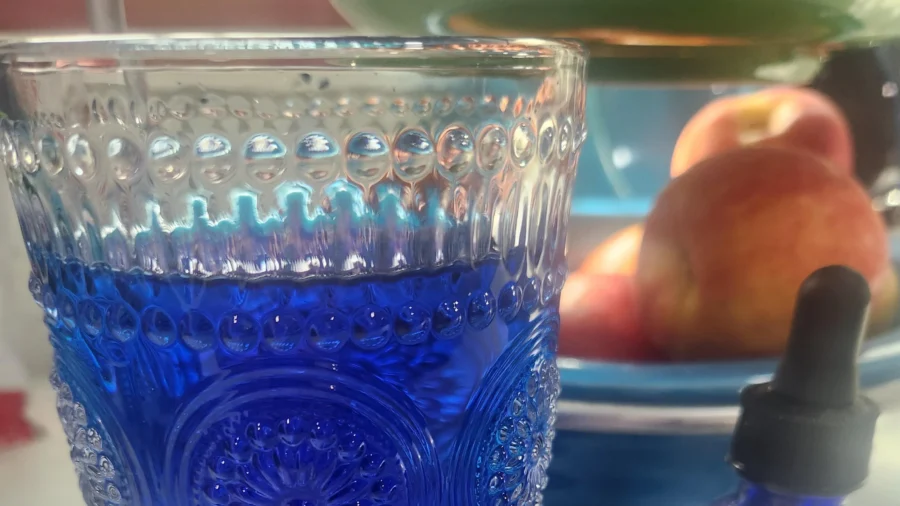
Soon after Robert F. Kennedy Jr. became Secretary of Health and Human Services, some footage leaked to the press showing the outspoken official dripping a cobalt-blue liquid into a glass of water. It was suggested that this was a substance known as methylene blue. And it's visibility on social media and beyond went to astronomical levels.
But why?
In recent months, alternative media—which is known to embrace President Donald Trump's "Make America Healthy Again" program—has, like Kennedy, embraced methylene blue, selling it via podcasts and social media. Talk-show host and firebrand Alex Jones sells it via his program and website and alternative health news site NaturalNews.com features stories about its positive effects.
There are skeptics out there, including Dr. Joe Schwarcz, director of the McGill University Office for Science and Society in Montreal, Quebec, Canada.
Schwarcz explains how methylene blue was discovered as a successful textile dye in the mid-19th century and was later used to kill malarial parasites, like quinine. It was also used by dairy farmers to detect properly pasteurized milk via the dye.
But specifically for humans, methylene blue is successful in treating methemoglobinemia, "a condition in which the oxygen-carrying capacity of hemoglobin is impaired." As it so happens, methylene blue is "an effective electron donor and reduces ferric iron to ferrous, restoring the ability of red blood cells to transport oxygen," writes Schwarcz.
But what about conditions like Alzheimer's disease and cognitive impairment, that many methylene blue pitchmen promote?
"Some laboratory studies using cell cultures have shown that the chemical can detangle the cluster of proteins that characterizes Alzheimer's disease, but early expectations that it can therefore serve as a treatment for the disease have not been met," writes Schwarcz. "Neither are there clinical studies that demonstrate methylene blue having an effect on memory, cognition, longevity, sleep, skin aging or enhanced energy."
NTD reached out to Schwarcz for further comment on methylene blue, and he responded via email, stating that HHS Secretary Kennedy's promotion of it may be why it is so popular, although Schwarcz implied he was not a fan of Kennedy.
Writes Schwarcz: "Aside from treating methemoglobinemia, I don't know of any evidence of benefit aside from the placebo effect."