


The Israel Defense Forces (IDF) said in a March 30 post on X that it had intercepted two drones originating from Yemen, the second attack on Israel from the country since the Houthis entered the Iran war.
The IDF said in a later post on X that it was launching attacks on infrastructure throughout Tehran as part of wider efforts to degrade the Iranian regime’s war-fighting capacity and eliminate senior leadership figures.
The attacks from the Houthis represent a widening of the number of groups now involved in the conflict, which is now in its fifth week.
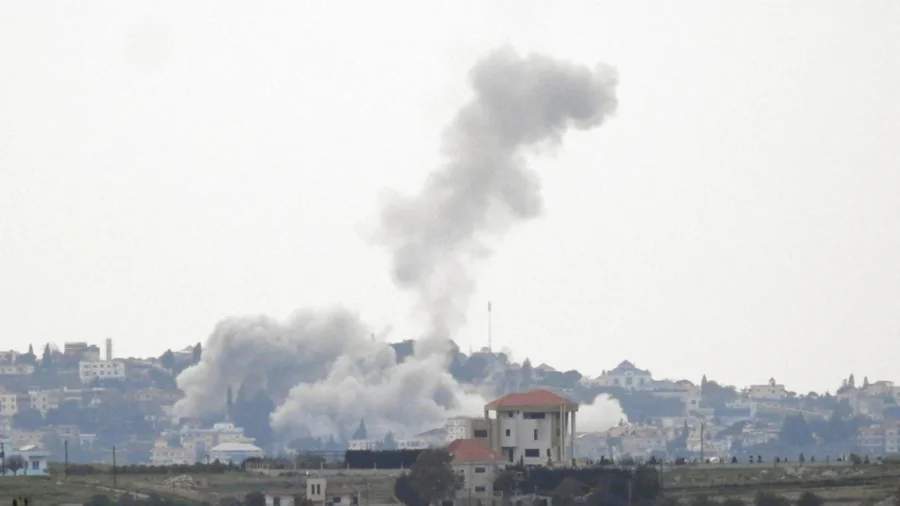
Iranian-backed Hezbollah began its attacks after Israel and the United States began launching airstrikes on Iran on Feb. 28, and Israel has been bombarding southern Lebanon since the early days of the war, striking at the terrorist group.
The IDF said in a post on social media that it had struck at Hezbollah’s infrastructure in Beirut.

Iran has also been striking Gulf State nations that host U.S. military bases, including Saudi Arabia, the United Arab Emirates, and Kuwait.
‘Good Negotiations’
The latest attacks on Israel come a day after U.S. President Donald Trump said that the United States and Iran had been having positive negotiations, both “directly and indirectly.”“We’ve had very good negotiations today with Iran,” Trump told reporters aboard Air Force One on March 29. “We’ll see how it works out, but they’re very good.”
The U.S. president also signaled that Tehran had agreed to partially reopen the Strait of Hormuz, allowing some boats through.
“I would only say that we’re doing extremely well in that negotiation, but you never know with Iran because we negotiate with them and then we always have to blow them up,” he said
Iranian Foreign Ministry spokesperson Esmaeil Baqaei said during a March 30 news conference that Tehran has not held direct negotiations with the United States to date.
Messages received through intermediaries indicated a U.S. desire for talks, he said, according to Iran’s semi-official Tasnim News Agency.
More than 3,500 U.S. sailors and Marines aboard the USS Tripoli arrived in the Middle East on March 27, as the Pentagon continues to build up forces in the region, according to U.S. Central Command.
In a March 28 update on Operation Epic Fury, U.S. Central Command said that since Feb. 28, the U.S. military had conducted more than 11,000 combat flights, striking more than 11,000 targets and damaging or destroying more than 150 Iranian vessels.